


 Nature
 PUBLISHED


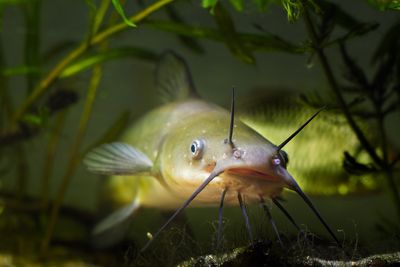


PFAS (per- and polyfluoroalkyl substances), better known as “forever chemicals,” have been found in almost every single fish tested in Illinois rivers, highlighting how these synthetic pollutants have become prolific in the natural world.
In a new study, scientists at the University of Illinois Urbana-Champaign studied 17 different PFAS across nine fish species caught from 15 sampling sites across four waterways in Illinois. Fish were found to be contaminated with PFAS in every one of their 15 test sites, and elevated levels of one specific compound, called PFOS, were found in nearly all fish tested.
Levels were especially high in fish at the top of the food chain, like channel catfish, suggesting that bioaccumulation is at play. They were also higher in fish caught near urban locations and industrial regions.
PFAS are nicknamed "forever chemicals" because they are highly resistant to degradation due to their strong carbon-fluorine bonds, causing them to persist in the environment and living organisms for an extremely long time.
“PFAS contain multiple carbon-fluorine bonds, one of the strongest bonds in organic chemistry. Because of this, they are also very hard to break down. They persist for a long time because they are very, very stable,” Joseph Irudayaraj, a professor of bioengineering at the University of Illinois Urbana-Champaign who led the new study, said in a statement.

Prized for their durability and stability under stresses like high heat or exposure to water, they’re used in a wide variety of industrial and consumer products, including non-stick cookware, water-repellent clothing, food packaging, firefighting foams, and cleaning products.
In recent years, a long reel of studies has shown how PFAS have become ubiquitous in the world’s water, soil, air, and life forms. Concerning levels of the chemicals have been found in everything from drinking water and rainwater to dog poop and breast milk.
“About 99 percent of people living in the U.S. have PFAS in their system,” said Professor Irudayaraj.
Needless to say, this is not good news. PFAS are linked to a host of negative health effects, including liver damage, thyroid disease, obesity, fertility issues, and cancer. However, we are only just starting to uncover the extent of the damage they can cause.
Some action is being taken to address the planet’s PFAS problem, although the scale of the problem means this is no easy task. In April 2024, the US Environmental Protection Agency established the first-ever national limits for PFAS in drinking water. However, the law only limited six types of PFAS, ignoring thousands and thousands of others.
The new study is published in the journal Science of The Total Environment.




 1
1