Nature
 PUBLISHED


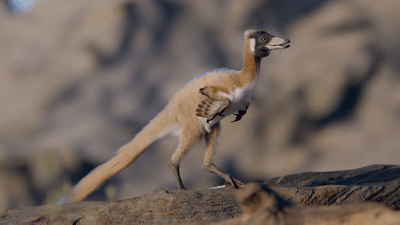


When you imagine a dinosaur, chances are your brain goes to those giants of the era: T. rex, Brontosaurus, Triceratops, or the mighty Patagotitan, that kind of thing. Perhaps less immediately called to mind, however, is Alnashetri: a tiny, bizarre little dino that ate bugs, weighed less than a hedgehog, and was all thumbs – literally.
Still, that doesn’t make the diminutive dinosaur any less important – and a new study of a remarkably well-preserved fossil, found in northern Patagonia, Argentina, in 2014, and dating to 90 million years ago, has recently proved why. Previously only known from scraps of remains, the new Alnashetri cerropoliciensis fossil – an almost complete specimen, which is like winning the lottery, paleontologically speaking – allows the researchers to piece together the species’ story.
“We now have a reference point that allows us to accurately identify more scrappy finds and map out evolutionary transitions in anatomy and body size,” said Peter Makovicky, lead author of the study and a professor in the University of Minnesota Department of Earth and Environmental Sciences, in a statement this week.
“Going from fragmentary skeletons that are hard to interpret, to having a near complete and articulated animal is like finding a paleontological Rosetta Stone,” he said.
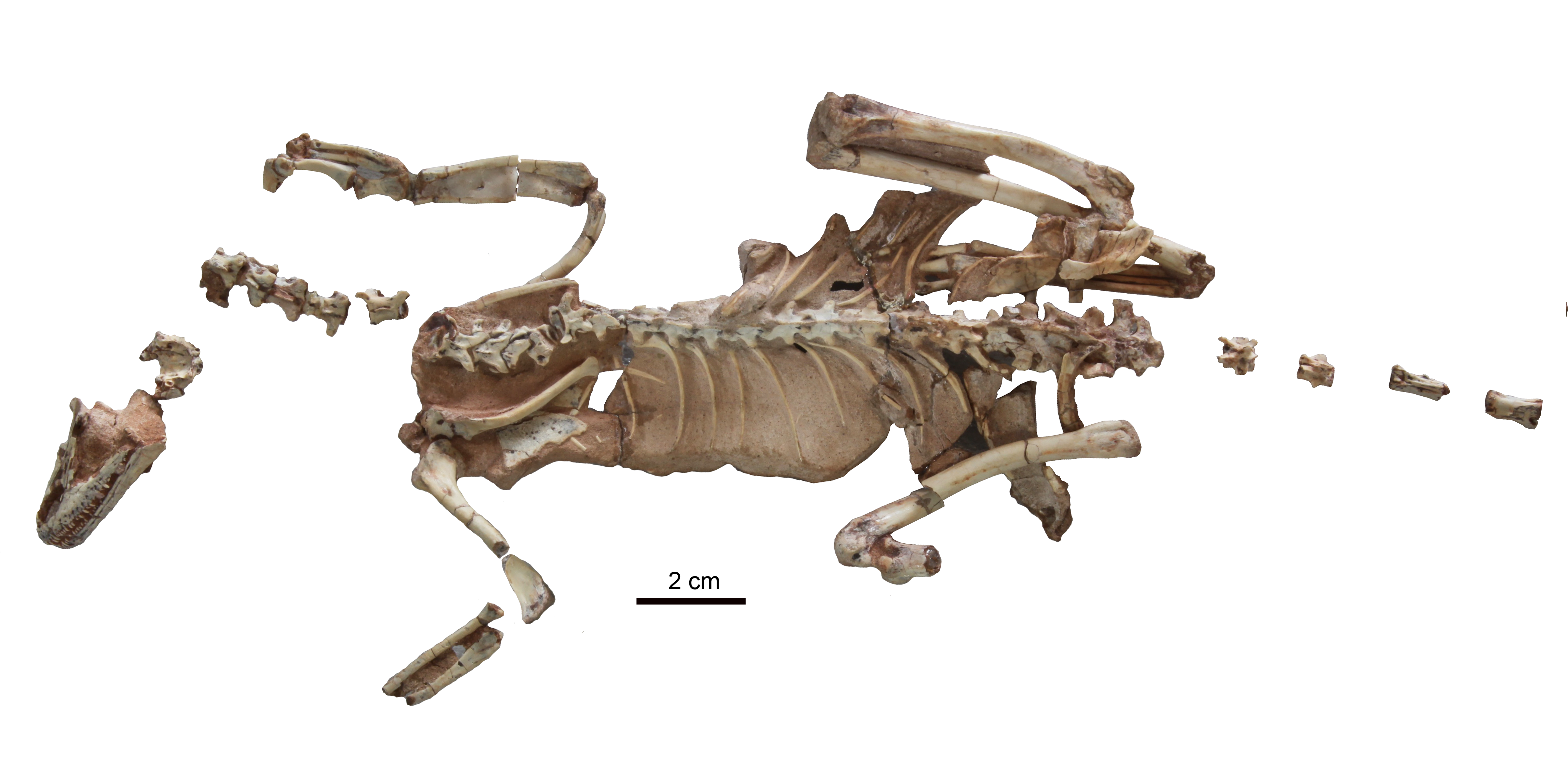
The fossil reveals a picture of a dino that’s – well, for want of a better term, weird. It had long arms, ending in a single, large, thumb claw; its mouth was filled with tiny teeth, albeit not as tiny as the researchers expected. It was also teeny-tiny: microscopic analysis confirmed the animal was an adult, at least four years old – and yet, it weighed less than 900 grams (2 pounds). That’s roughly the same as a small chicken, which rather fits: the group that Alnashetri belongs to, the alvarezsaurs, are so bird-like that some of the first discovered were initially confused for their avian descendants.
It's an odd picture, but an informative one. The unique proportions of Alnashetri imply it was something of a stepping-stone species – already small, but maybe not yet the ant-eating extraordinaire its descendants would be. It reverses what might otherwise be the assumed order of events: the dinos didn’t become small because of their diet; rather, the diet came along because they were already so tiny.
But it also tells us something bigger about the history of the alvarezsaurs – and it clears up a confusion that has plagued the group for decades. While alvarezsaur fossils had been found in South America before, they were always too fragmented to get much information out of. Much better specimens were in Asia, which was helpful, but also perplexing: how could the species be in both continents, given the vast ocean separating them?
The answer, now it’s been found, is strikingly simple. Inspired by the Patagonian find, the team took another look at fossil collections in Europe and North America, and “we found other alvarezsaurs hiding in plain sight," Makovicky told BBC Science Focus. “These species […] helped prove that alvarezsaurs were inhabiting most of the continents before the major rifts between the northern and southern hemispheres occurred.”
So here’s to you, Alnashetri: you may have been a tiny dino, but now, 90 million years after you sucked up your last ant, you’ve definitely made a big impact.
The study is published in Nature.