Nature
 PUBLISHED
 1
1


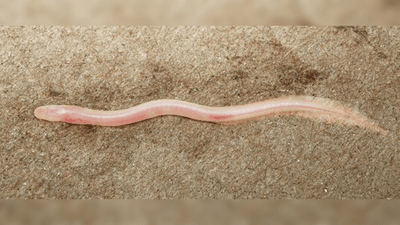


A video of an unusual earthworm-like fish posted on TikTok has resulted in the description of an entirely new species.
Named Gangaichthys indonepalicus, the fish is thought to live deep underground in aquifers, making studying these animals almost impossible.
“We came across a video posted on the social media platform TikTok in 2024 from the India-Nepal border area that showed a tiny, apparently stygobitic fish, with little melanin and reduced eyes, that had emerged from a borewell (a machine-drilled shaft used to access groundwater from underground aquifers),” write the authors in the paper describing the new species.
Based purely on the location where the video was filmed, and the fact that it came out of a borehole, the researchers immediately suspected that this was going to be a new species.
“This prompted us to try to collect specimens of this tiny fish in 2024 and 2025 from the Indo-Gangetic Plain in Bihar, India,” they write. “Many borewells later, we were able to collect one entire live specimen and two damaged specimens.”
Fish that live… in the soil?
The fish belongs to a family known as the Chaudhuriidae, or more commonly the earthworm eels, for, well, obvious reasons. But not only do these fish look like earthworms, they also behave like them, too.
They are part of a wider group that contains some of the least fish-like fishes known to science.
This includes the swamp eels. Many species of swamp eels are found living not in the water of freshwater streams, but in the mud and roots that surround them. Some individuals have even been found burrowing through the soil some 50 meters (164 feet) away from the water source.
Other species, such as this newly described one, are found living deep underground in aquifers. These are layers of water-bearing material, typically formed of fractured rock, gravel, and sand.
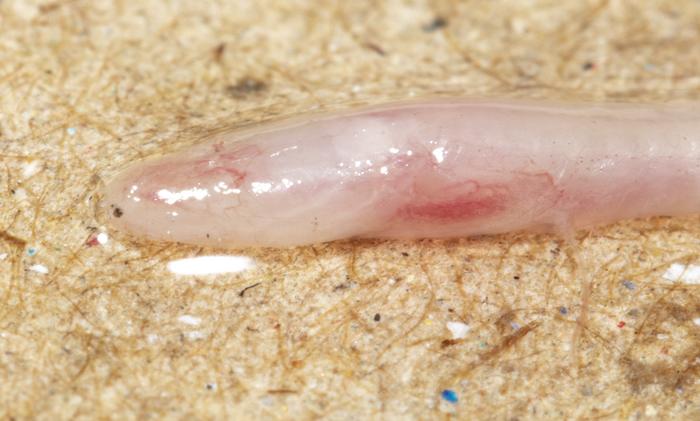
This means that they have all sorts of curious adaptations to their subterranean life. They have evolved long, eel-like bodies, lost their eyes, and done away with any color – there is simply no need to have any pigment when living in perpetual darkness.
This latest species has even lost its ribs, presumably all the better to wind its way between the rocks underground.
How to catch a burrowing fish
The habit of these fish for living deep underground also makes them exceptionally hard to study. Often, they are only brought to the surface either during heavy rainfall when they are literally washed out of the aquifers, or through wells.
“Procuring samples of this unusual fish was challenging,” researcher Akshay Khandekar of the Thackeray Wildlife Foundation explained in a statement.
“Identifying potential handpumps (borewells) and wells, and obtaining permission from their owners to extract water for the purpose of searching for the fish proved difficult. This became more intensive when we finally began manually pumping water.”
The researchers spent an entire week pumping 15 different borewells by hand and managed to collect only three specimens in total, each measuring just 4 centimeters (1.5 inches) long.
“The first specimen emerged after pumping approximately 2,000 litres of water but sustained damage during the process and died immediately,” says Khandekar. “The second and only intact specimen [...] was found from the same borewell after pumping an additional 500 litres of water.”
Despite the paucity of specimens, this was more than enough for Khandekar and his colleagues to describe the fish as a new species. They have named it Gangaichthys indonepalicus in recognition of the Ganges River and the fact that it was found on the border between India and Nepal.
The description is published in the journal ZooKeys.