


 Health and Medicine
 PUBLISHED





Across much of the US, more people than usual for this time of year have been reporting to the emergency room with tick bites. Lyme disease is always a fear during tick season, but there are plenty of other potentially serious diseases that are spread by these irritating little fellas, so it’s handy to know what to be on the lookout for.
The Centers for Disease Control and Prevention (CDC) Tick Bite Tracker keeps a log of emergency room (ER) visits due to tick bites. Peak tick season typically runs from March to October, so it’s the right time of year to see this activity ramping up. But comparing the 2026 data with the last few years, it’s clear that the number of ER visits is higher than usual right now.
According to the most recent data at time of writing (correct up to April 26), there were 34 ER visits for tick bites per 100,000 ER visits in March. So far in April, that’s jumped up to 96, compared with 68 in 2025 and 62 in 2024.
In all regions of the US except for the South Central region (New Mexico, Texas, Oklahoma, Arkansas, and Louisiana), the CDC says weekly visits to the ER for tick bites are trending at their highest levels since 2017.
Ticks are really tiny and their bites can be hard to notice. They’re not always painful, so it’s best to check areas of exposed skin if you’ve been outdoors in areas where ticks may be prevalent. If there is a tick attached to your skin, the CDC recommends that you remove it immediately using fine tweezers before washing the affected area.
Ticks spread all kinds of diseases that you really want to avoid, but the symptoms of these potentially serious infections may not appear until several days after the bite.
The most common is Lyme disease, caused by bacteria in the Borrelia genus and spread by infected deer ticks, aka blacklegged ticks (Ixodes scapularis). These are one of the species known as hard ticks, and it's the females that can sometimes latch themselves onto your skin for days at a time while they feast on your blood.
These ticks are widely distributed across the eastern United States and can actually bite humans at any time of year as long as the temperature is above freezing. As well as Lyme disease, they also transmit other diseases such as ehrlichiosis and Powassan virus disease.
A key sign to look out for with Lyme disease is called erythema migrans, most commonly referred to as a bullseye rash. It occurs in about 70 to 80 percent of infected people and appears on average about 7 days after the actual tick bite. On lighter skin tones, it looks like this:
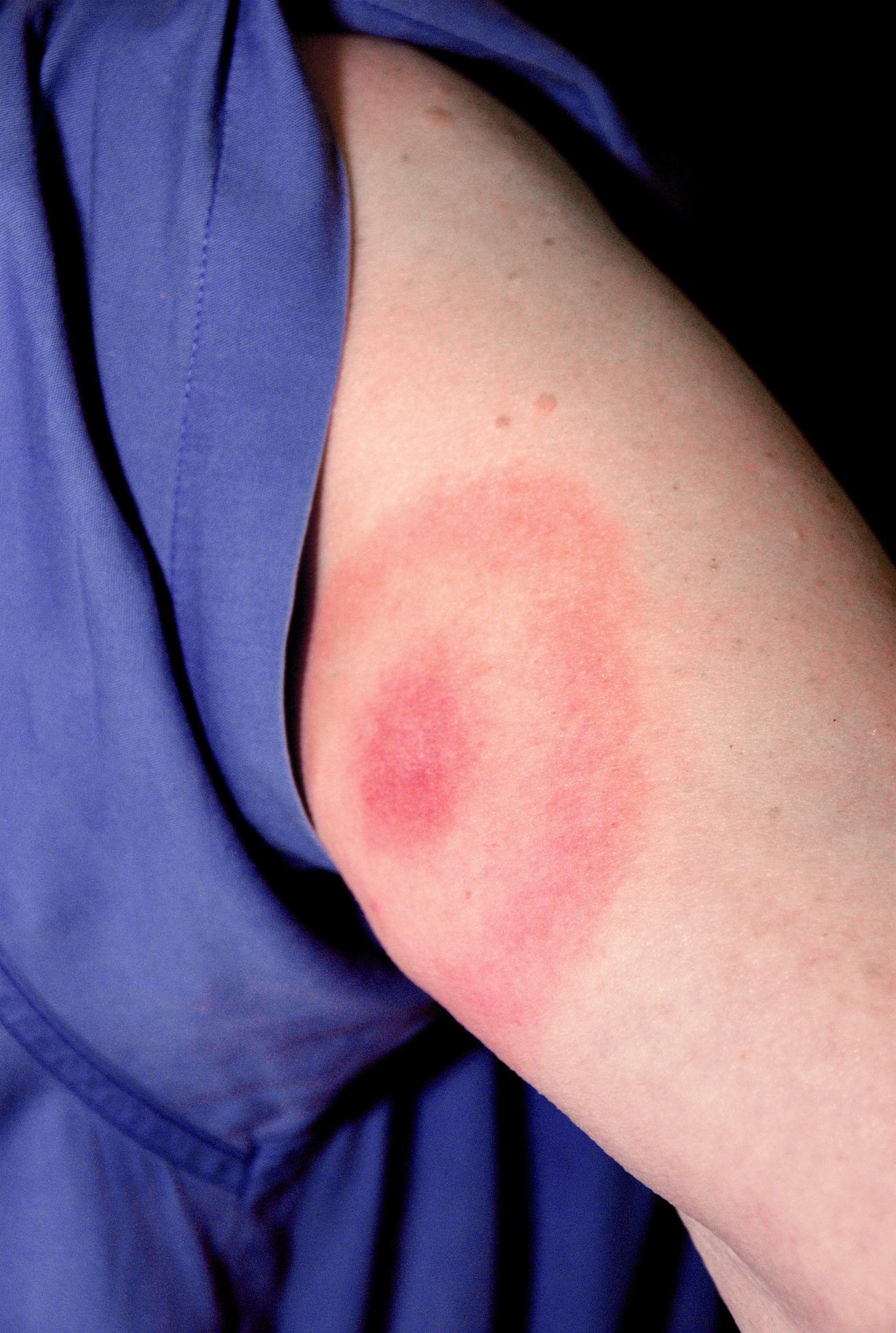
It’s usually not painful, though it can get quite large (up to 30 centimeters or 12 inches across). It can also be harder to see on darker skin tones, resembling a bruise.
The CDC advises that you should seek medical attention if you spot this or other symptoms like fever, headache, and joint pain, especially if you know you’ve been bitten by a tick or have been in a high-risk area.
Another tickborne condition to look out for is alpha-gal syndrome. Affected people develop a potentially life-threatening allergy to the molecule alpha-gal, which is present in red meat, milk, and gelatin. It’s most often associated with bites from the lone star tick, which ranges across the Northeast, South, and Midwest and is known to be “very aggressive”.
Rocky Mountain spotted fever is another potentially life-threatening tick-borne disease. The bacteria that cause it are spread by several tick species with ranges across much of the contiguous United States. Prompt treatment with antibiotics is needed but the early symptoms – things like fever, headache, and nausea – are the same as those for many other infections. That’s why it’s so important to keep track of when you or people in your care may have been bitten.
“Tick season is here and these tiny biters can make you seriously sick. The good news is you have options to help prevent tick bites when you spend time outdoors: You can wear EPA-registered insect repellent and permethrin-treated clothing, do tick checks, and remove attached ticks as quickly as possible,” said Alison Hinckley, PhD, epidemiologist and Lyme disease expert with CDC's Division of Vector-Borne Diseases, in a statement.
“And if you develop a rash or fever in the days to weeks after a bite, or after being in an area with ticks, seek medical care promptly."
About 31 million people per year in the US are bitten by a tick. Not every tick bite leads to an infection, but it’s important to know the signs – and if you do become unwell, to mention to your healthcare provider that you were bitten.




 1
1