Nature
 PUBLISHED
 1
1


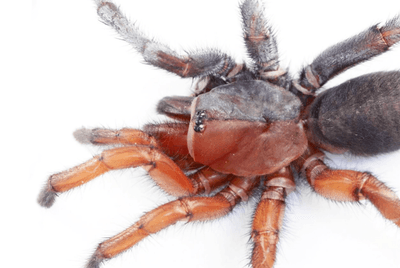


This pocket-sized new spider is rocking a unique look. Near perfectly split down the middle, its left legs are dark orange while its right is a whitish salt-and-pepper color. Remarkably, this is not just an aesthetic division: one side of the body is female and the other is male.
The rest of this article is behind a paywall. Please sign in or subscribe to access the full content.Scientists at Chulalongkorn University and Ubon Ratchathani University were recently surveying a forested area of Phanom Thuan in Western Thailand, not far from the capital, Bangkok, when they came across a new species of spider.
The species was particularly fascinating because it exhibited clear sexual dimorphism, a term used to describe when males and females of the same species appear visibly different.
Many animals show this trait, but the degree of difference varies widely. Consider the peacock, for example. The male has a flamboyant display of color and flashy feathers, while the female is comparatively plain. Or take the anglerfish, where the female is large and dominant, and the male is reduced to a shriveled, parasitic partner.
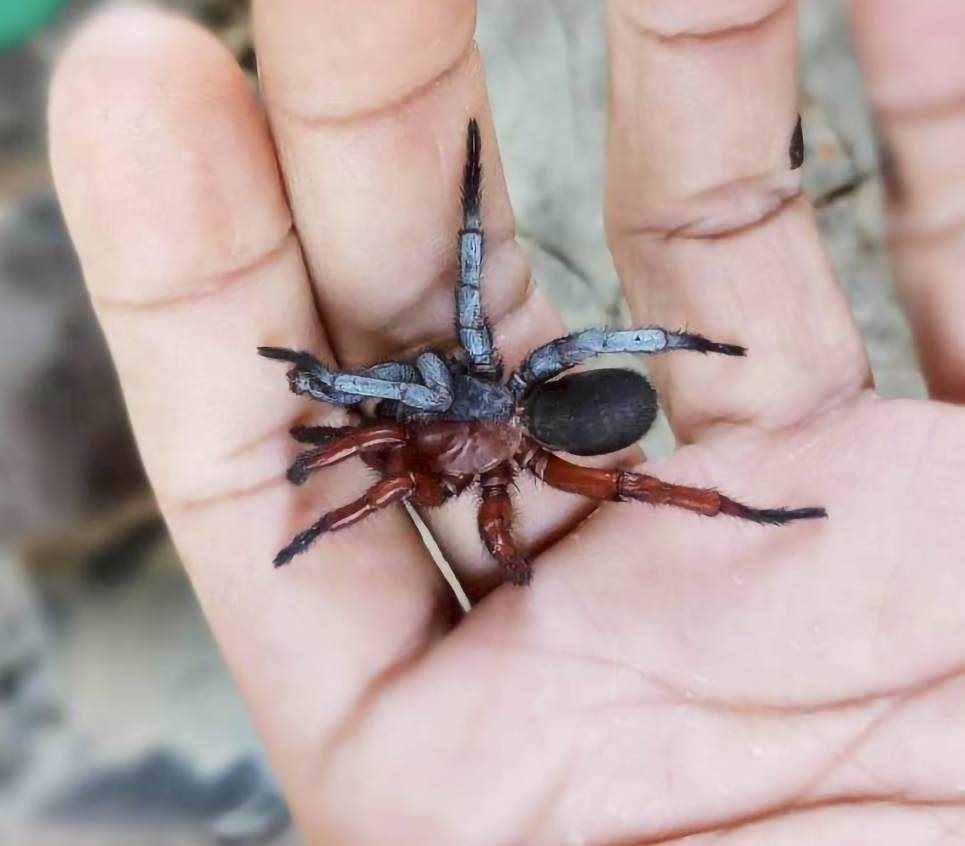
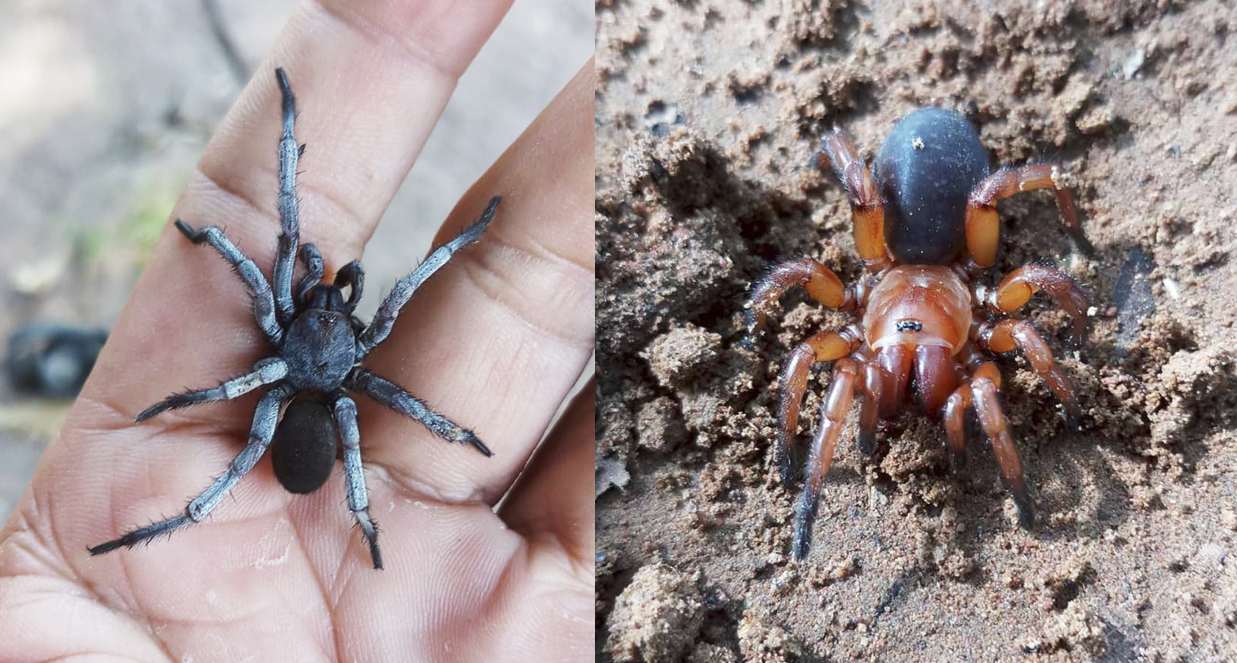
With the new species of spider, sexual dimorphism is very clear: females are predominantly a brown-orange color and males are a speckled white hue.
This difference was made wonderfully vivid when the team came across a member of the new species that was a bilateral gynandromorph whose two halves of the body appear to express different sexual characteristics.
Biological sex is determined by, among other things, the combination of sex chromosomes. For example, in humans and some other species, males have an X and a Y chromosome, while females have two X chromosomes. In insects, birds, and some other species, sex is determined by the combination of Z and W chromosomes, but we'll stick to X and Y in this explanation for simplicity's sake.
It’s thought that the mechanisms leading to gynandromorphism occur during the earliest stages of development. Normally, as an organism’s cells divide, a male (XY) cell duplicates its chromosomes to form XXYY, then splits evenly into two XY cells. In gynandromorphs, however, this process goes slightly awry. Instead of dividing evenly, the cell may split into one X cell and one XYY cell, for example. If this occurs very early in development, large portions of the resulting organism can develop with both cell types, producing the remarkable half-male, half-female appearance seen in the specimen.
It’s a rare condition, but one that has been documented in dozens of species, from birds such as the rose-breasted grosbeak and northern cardinal to bugs like stick insects and nocturnal bees.
Since the spider is a new species, the researchers had the honor of giving it a scientific name. They called it Damarchus inazuma, named after a character from the Japanese manga “One Piece,” known for the ability to change sex between male and female.
The new study is published in the journal Zootaxa.