Nature
 PUBLISHED


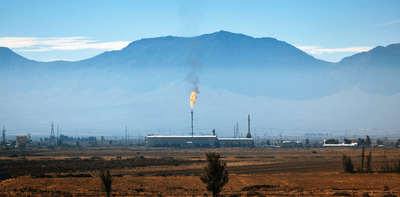


In 1908, oil was first struck in the Middle East when a gusher sprayed 24 meters (80 feet) into the air at Masjid Suleiman in southwest Iran, then known as Persia. Once again, the “cradle of human civilization” was set to change history. But setting aside politics and the foibles of humankind, as much as possible, the origins of this highly sought-after geological juice have a far deeper story.
The Middle East has a wealth of fossil fuels because, roughly 250 to 50 million years ago, the region was home to a giant sea known as the Tethys Ocean. Nestled between the ancient continents of Gondwana and Laurasia, this body of tropical water was teeming with life, including plankton, coral reefs, fish, cephalopods, and marine reptiles like ichthyosaurs.
When the tectonic plates shifted, the African and Arabian plates gradually crashed into the Eurasian plate. This slow-motion collision caused the Tethys Ocean to shrink and eventually close, burying the sea and a massive graveyard of life. This ancient sea is where certain parts of Africa and Eurasia – most notably the Persian Gulf – lie today, sitting on top of these ancient deposits.
Contrary to popular belief, crude oil is not simply a squished syrup of dead dinosaurs. It is the product of millions of years of heat, pressure, and time acting on huge quantities of microscopic algae, plankton, and other marine organisms buried beneath layers of sediment. The energy that these organic compounds absorbed from the Sun over eons was, through a slow and complex process, transformed into the vast deposits of liquid and gas hydrocarbons we burn for energy today.
But this is just one part of the story of why so much oil is harvested from the region. The Middle East accounts for around 30 percent of global oil production, plus 17 percent of global natural gas production. This is chiefly driven by three countries – Saudi Arabia, Iran, and Iraq – although many countries in the region have smaller slices of the pie.
In actuality, the Middle East does not hold the highest volume of total oil resources in the world. Venezuela has the world's largest proven oil reserves, while the US is the world's biggest oil producer.
However, West Asia does have some of the richest supplies of oil that are easy to obtain from the surface as they’re buried in relatively shallow sediments. Considering this major factor, the Middle East holds just over 50 percent of the world’s total remaining recoverable reserves.
There are also many different forms of oil to take into account. In places like Venezuela, vast reserves of fossil fuels are buried within their rich geology, but it is described as “dense and sticky”, making it difficult to obtain and expensive to process. By comparison, much of the oil in the Middle East is considered “light and sweet”, making it far more attractive to global markets.
Last but certainly not least, geopolitics and history play a role in the fossil fuel deposits of the Middle East, which have almost become synonymous with oil in recent decades. Unless you’ve been living under a news-proof rock for the past century, you’ll have some idea that this is still playing out to this day. The Persian Gulf, where this geological story centers, remains pivotal to the great shake-ups of our world today. And something tells us that won't change anytime soon.