Humans
 PUBLISHED





A young man in Bulgaria was left with horrific injuries to his head and limbs after he was mauled by a lion 6,000 years ago. Amazingly, however, the unfortunate chap survived the attack thanks to the care of his Copper Age community, although he probably suffered from physical and mental disabilities for the rest of his short, miserable life.
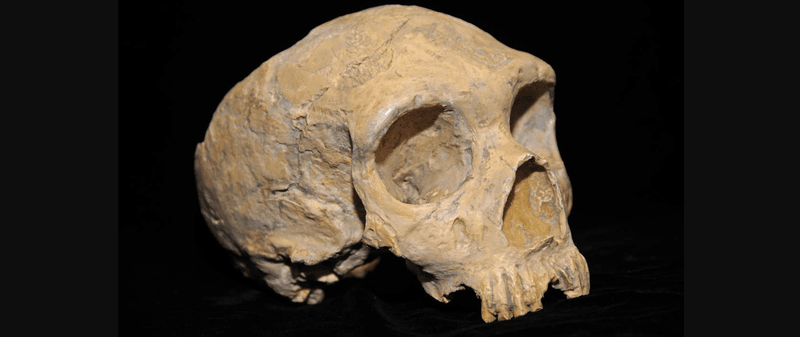
The victim’s skeleton was discovered in a necropolis near the fifth-millennium BCE site of Kozareva Mogila in eastern Bulgaria. Thought to have been between the ages of 18 and 25 at the time of his death, the young man displayed a series of uniquely awful lesions on his skull, arms, and legs.
Suspecting that the injuries may have been the work of a large animal, researchers compared the markings on the man’s bones to the teeth of several carnivorous beasts. Results showed that they most closely matched the upper carnassial teeth of a lion.
“Analysis of the lesions suggests that the individual was attacked by a lion, knocked to the ground, and bitten multiple times,” write the study authors.
But hang on, you may say, there are no lions in Bulgaria. Well, it turns out that between the Neolithic and the Iron Age, there were, as favourable climatic conditions allowed these African felines to expand into the Balkans from about 8,000 years ago.
Exactly how this young man ended up in the jaws of one of these prehistoric lions is unclear, however. According to the researchers, “we have no clues to speculate whether the youngster was a casualty of an incidental encounter, if a predator hunted a vulnerable prey, or if a youth from the prehistoric village performed one of his first serious hunting expeditions.”
What we do know, though, is that the young man was left horribly disfigured by the attack. A gaping hole in his skull, for instance, may well have left him with serious neurological disturbances, while the damage to his arms and legs probably resulted in severe difficulty walking or conducting physical tasks.
Despite the severity of these injuries, however, most of them do show signs of healing, indicating that he didn’t die immediately following the encounter. Interestingly, other skeletons from the site show signs of having undergone cranial surgery, suggesting that the local Eneolithic population may have had a considerable degree of medical knowledge.
And while this particular individual shows no signs of having undergone such a procedure, the study authors “presume that pain relief and inflammation prevention methods were applied for healing, similar to those used in cases of trepanations during the period.”
Ultimately, it’s difficult to say exactly how bad the young man's injuries were, and the researchers note that “the integrity of the brain [was] questionable” following the attack. “Nevertheless, he lived and was cared for by the community, indicating that they took care of their disabled members,” conclude the authors.
The study has been published in the Journal of Archaeological Science: Reports.


 1
1