Nature
 PUBLISHED
 2
2


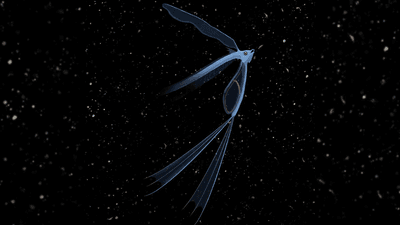


A bizarre ancient fish has scientists stumped as a new review of two fossils says all theories to date of what it might be are probably wrong. The preprint paper, which hasn’t yet undergone peer review, concludes that Pegasus volans’ position in the phylogenetic tree remains unclear, but puts forward some new ideas for where we could place it, including a mysterious new genus name.
The fossilized remains of Pegasus volans were retrieved from the early Eocene Bolca Lagerstatte of northern Italy, dating back around 50 million years. We’ve known about the creature since the 18th century, and we’ve been struggling to make sense of it ever since.
Giovanni Serafino Volta suggested it might a larval form of the extant seamoth Pegasus volitans when he attributed the scientific name Pegasus volans. However, as palaeontologist Donald Davesne, of the National Museum of Natural History (MNHN) in Paris, told Science News, it doesn’t seem like a good fit.
“They have nothing in common,” Davesne said. “I don’t know what this guy was thinking.”
Jump ahead to 2014, and further research suggested it might sit within the Lampriformes, more specifically the elongate Taeniosomi that include oarfishes, ribbonfishes, and crestfishes. However, the preprint suggests this too doesn’t seem to be backed up by the fossils.

We know of P. volans from two fossils, one at MNHN in Paris, and the other at the Museo Civico di Storia Naturale (MCSNV), in Verona, Italy. They’re about the same size, and described as “remarkably similar in morphology” with ribbon-like bodies and bulging skulls that may have sported a frontal crest.
Crucially, they’re both missing the back-end of the fish, so the discovery of a new fossil with the full body intact could be a vital puzzle piece in establishing its identity, including whether or not it’s a larval, juvenile, or adult fish. After all, there are plenty of extant examples of bizarre larvae looking nothing like their adult form.
What we have of the bizarre body plan makes it hard to establish how it might have lived, but by comparing it to extant species we can get some ideas. One, inspired by its long fins, is that these may have helped with camouflage, making it harder for predators to spot them. Alternatively, they could’ve been sensory feature, or a means of attracting prey.
Its namesake seamoth seems like a poor fit, but it’s possible it may instead have sat within the Acanthomorphs, which includes teleost fishes with spiny fin rays. Davesne and preprint co-author Giorgio Carnevale have suggested an alternative genus name that’s a better fit for their findings, one that was reportedly inspired by a late musician, but it won’t be released until the paper is published.
As it stands, the current fossil evidence doesn’t seem to make it a great fit for any fish – adult or larva – living today, but the more we study, the closer we get to separating the good theories out from the bad.
“We know what it isn’t,” said Davesne, “but it’s unclear what it could be.”
The preprint is accessible on bioRxiv.