Nature
 PUBLISHED


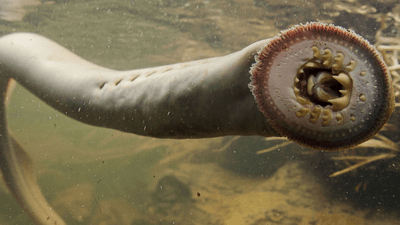


An eel-like parasite with no jaw, no bones, and a thirst for blood has been wriggling its way through Earth’s waterways since before even the dinosaurs walked the Earth. It’s older than trees, even, and yet has endured to the modern day where it’s become the subject of many scientific studies and killed off the odd Medieval monarch. We’re talking about the Pacific lamprey.
Having diverged from its ancestors in an ancient world, it packs some peculiar adaptations. It has no bones, instead being made of up a cartilaginous "skeleton", and on top of its head has a "third eye" that's actually a specialized light-sensing organ.
The Pacific lamprey, Entosphenus tridentatus, could be considered a living fossil given it dates back to the Ordovician, around 450 million years ago. They get their name for the incredible life journey they make, starting out in freshwater rivers and streams before migrating out to the Pacific Ocean.
The epic migration isn’t over yet, however, as when they have reached maturity and are ready to spawn, they have to make their way back to freshwater environments again. Transforming from a marine animal into a freshwater one is no mean feat, and it sees Pacific lamprey undergo a number of changes to its appearance and physiology that enable it to survive the dramatic change in salinity.
The move from freshwater to the ocean and back again isn’t random, either, as Pacific lampreys have a superpower – they can use chemical cues released by larval migrating lampreys to find their way back to freshwater living. They may return to the same waterway they spawned in, but unlike Pacific salmon, it's not a guarantee.
Such transformation and mapping skill is hungry work, and Pacific lamprey have a particularly nasty strategy for feeding. They can wield their spherical, jawless mouths like spiky suction cups, helping them to bite onto the bodies of fish and marine mammals.
Here, they feed on blood and bodily fluids, leaving a nasty spherical wound on their host’s body that looks a bit like an injury from a cookie-cutter shark or snubnosed eel. Pacific lamprey don’t kill their hosts, however, as they’re parasites and need living hosts to feed on.
Pacific lamprey are just one of around 40 species of lamprey that arose from an ancient jawless-fish ancestor during the Ordovician, and as a group they’ve survived at least four mass extinction events, writes Live Science. They’ve survived to fulfil a vital role in ecosystems where they’re fed on by birds, mammals, and other fish, packing a lot of calories in their fatty flesh. It contains 4.1 times as much of the omega-3 fatty oils that we humans covet in salmon, explains High Country News.
Jawless, lipid-filled, without a bone in sight? This is what peak performance looks like.