Nature
 PUBLISHED
 1
1


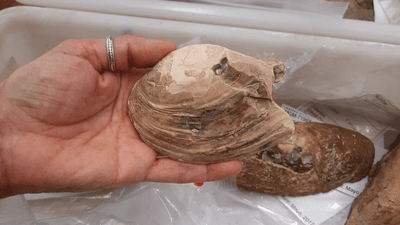


When we think of great mothers of the animal kingdom, a few famous faces pop to mind. The incredible elephant matriarchs that lead generations. The toad that carries her young in her back, and the many spiders that literally become dinner for their young. You think less often about shellfish.
Well, it seems that should change because a newly described fossil containing embryos proves these animals have been protecting and incubating their young since as far back as the dinosaurs. The discovery marks the oldest known fossil evidence of maternal care in shellfish, which includes the likes of clams, mussels, and oysters.
“Until now, this reproductive strategy was known only from living species,” said Dr Martin C Munt, a visiting academic at the University of Portsmouth and a specialist in fossil molluscs, in a statement. “Not only does this discovery provide a rare glimpse into how ancient freshwater shellfish reproduced, but it also helps explain how these animals successfully adapted to life in rivers and lakes millions of years ago.”
The fossil record isn’t an easy story to read. It’s rare that life on Earth gets preserved, and even then we lose a lot along the way. Soft tissues are often the first to go, so finding evidence of the internal squishy mechanics of shellfish is unusual.
And as anyone who has ever eaten a bad clam can attest, shellfish don’t need much encouragement when it comes to decomposition.
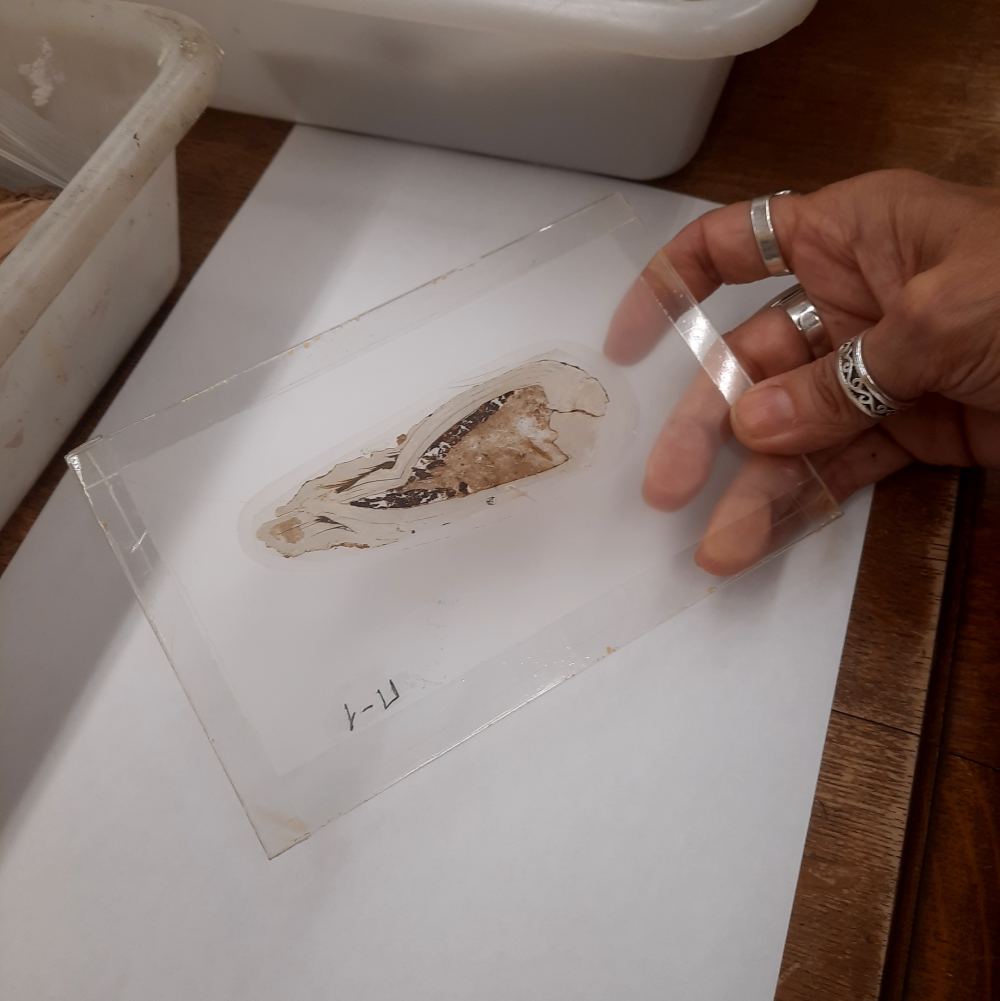
You can imagine the scientists' excitement, then, when they peered inside a 125-million-year-old bivalve and found microscopic embryos and larvae preserved within its gills. The exceptional preservation was seen within Margaritifera valdensis, a freshwater bivalve distantly related to modern freshwater pearl mussels.
It was unearthed on the Isle of Wight in the United Kingdom, the “Dinosaur Island” famous for its rich fossil sites. Once the home of a subtropical river valley, its Cretaceous rocks are constantly eroding away revealing ancient life in remarkable detail. For these bivalves, that included their brood chambers, gill tissues, mineralized supports, and a clutch of babies at varying stages of development.
Baby mussels have a rather peculiar entry into life. Starting out as larvae in their mothers' gills, the young then get released into the water to parasitize fish. Then, they metamorphose into juvenile mussels before detaching from the fish and falling to the riverbed to begin their new independent lives.
A complex reproductive strategy that, as the fossils now suggest, has been around since at least the Early Cretaceous. Protected inside their mother’s shell, these baby bivalves were provided with calcium stores deposited in her gills so that they could grow their own shells and be ready to face the big, wide world.
As well as lifting the lid on the evolution of one of the weirder forms of reproduction in ancient freshwater mussels, the discovery has also revealed the origin of a mysterious dark material coined “molluskite” by British palaeontologist Gideon Mantell.
"We found that this material is actually made up of fossilised soft tissues and reproductive structures that have been exceptionally preserved by minerals," said Rafael Lozano, a geochemist at the Geological and Mining Institute of Spain.
A breakthrough in our understanding, and a mysterious new material brought to light? Now that’s something to shellebrate.
The study is published in the journal Scientific Reports.