Nature
 PUBLISHED


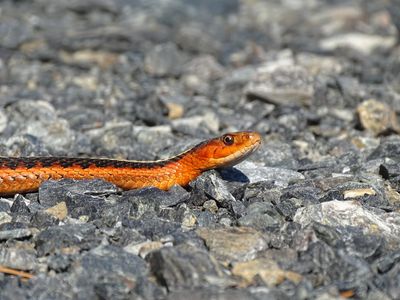


As the Northern Hemisphere faces down the middle of winter, spare a thought for the poor animals left outside in the cold. While many species have a range of incredible adaptations to survive or even totally avoid cold weather, some of Earth’s snakes have evolved to freeze right along with the rest of the ground. But how do they do it?
Red-sided garter snakes (Thamnophis sirtalis parietalis) can grow up to 130 centimeters (51 inches) and typically spend the winter hibernating. In the spring and summer, they breed and have young, which are independent from birth. These snakes will return to their dens for the winter following pheromonal trails from adult snakes. In the winter, these hibernation dens can hold hundreds, if not thousands of snakes, helping them survive the harsh winters. However, the snakes also have a backup plan to survive if they end up being caught in the freeze.
The red-sided garter snake can survive with around half of the water inside its body frozen, at temperatures of -2.5 °C (27.5 °F). "Garter snakes [...] can endure freezing for several hours at -2.5 °C (with ~50% of total body water as ice) or for longer times at -1 to -1.5 °C," explain the authors of a paper from 1993.
However, in a paper from 1992, an experiment found that while the snake could fully recover after 3 hours at this temperature, only 50 percent of the snakes survived a 10-hour freezing, and none of the snakes recovered after 24-48 hours in such a state.
How they are able to survive comes down to two factors. The first is the level of cryoprotectants in the body. These are molecules that can limit the amount of damage ice does to the cells of the snake. In frogs that can survive much longer periods of being frozen, this can look like a large increase in the amount of glucose. But these snakes just send a little amount to the cells that really need it, keeping them going until it warms up.
The second factor is the slowing down of the snakes' internal systems, like circulation and oxygen delivery. This reduction in metabolism helps the cells survive as they use less energy during the freeze period.
While the snakes can survive the freeze, it's far better for them to avoid these conditions in the first place. This is why they tend to gather together in deep dens, reducing their chances of getting caught in the cold.
[H/T: Forbes]