Nature
 PUBLISHED


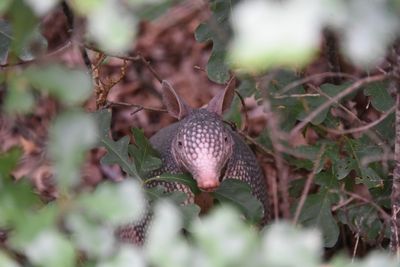


They say we learn something new every day – and sometimes, discovering that something comes in the form of an adorable video of a pregnant nine-banded armadillo getting an ultrasound. Thanks to said video, we now know that not only is our TikTok algorithm superior, but also that our little armored friends are even stranger than they look: they pretty much only ever get pregnant with identical quadruplets.
That might seem surprising upon finding out that, when armadillos get jiggy with it, only one egg is fertilized. But, like humans, nine-banded armadillos are capable of something called polyembryony – the development of more than one embryo from a single fertilized egg. That’s how we sometimes wind up with identical twins and triplets.
However, the nine-banded armadillo shows obligate polyembryony, meaning that this split happens in every single pregnancy and should split into four embryos every time. It’s the only species of vertebrate known to have this trait, although the recent discovery that the nine-banded armadillo is actually four different species could possibly bring a challenge to that.
Exactly why these animals have evolved specifically to almost always produce identical quadruplets is unclear. However, there are potential benefits to popping out multiple babies at once, like increasing the chance that at least one will survive and pass along their parents’ genes.
This isn’t even the only unusual thing about nine-banded armadillo pregnancy either; rather than going straight from fertilization to cozying up in the wall of a uterus, the little armadillo blastocyst hangs about for a few months. Known as delayed implantation, the early embryo is sustained by fluids from the uterus’s lining, until it eventually implants itself and splits.
Unlike the identical quadruplet conundrum, scientists do know why this happens – it means they can give birth at the optimal time, in spring. At that point, the weather is a bit warmer, and food is more abundant. After all, if you’re going to be making milk for four babies, you’re going to need plenty of snacks.
Making sure they get enough calcium in with those snacks is important too. When armadillos are born, their carapaces – their protective bony plates – aren’t yet hardened. However, that changes rapidly, and that’s thought to be because the armadillo pups get plenty of calcium and phosphorus from their mother’s milk.
This might be a bit surprising considering that the diet of a nine-banded armadillo is primarily made up of insects – but hey, if you can consistently make identical quadruplets every time you get pregnant, you can probably do anything.