Humans
 PUBLISHED
 1
1


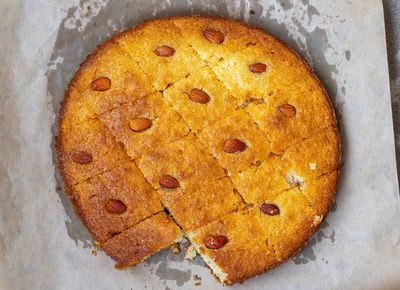


Forget the wheel, the printing press, or the Internet – cake is quite possibly one of humanity’s greatest ever inventions. Case in point: it’s been around for thousands of years, so there must be something about it that we like. And by “thousands of years” we don’t just mean people have been making and eating cake for that long – there’s one cake that’s been preserved for all that time too.
The cake in question was made around 4,200 years ago, which, according to Guinness World Records, makes it the world’s oldest cake (that we know of). It consists of two 10-centimeter-wide (3.9-inch) wheat flatbreads that are thought to be filled with milk, honey, and sesame, which help to qualify it as more cake-like than bread-like. Sounds quite tasty until you remember how old it is.
Still, it’s remained remarkably intact in all that time, and that’s largely thanks to the way in which it was cooked. Baking the cake involved first placing the dough between two copper molds designed to fit together, allowing the contents inside to be heated but also keeping them nicely sealed away once the cake was cooked.
“The moulds were pre-heated in the fire and placed on the damp dough, which led to the formation of air bubbles inside,” explains the Alimentarium, the Swiss food museum in which the cake is on display. “As the cake cooled, these air bubbles escaped thus creating a vacuum in the mould. This ensured that the cake stuck to the metal and allowed it to be preserved to this day.”
Why was it cooked to be preserved for so long? Such delicious bakes wouldn’t last two seconds in my household, but this cake wasn’t meant for a modern-day IFLScience writer craving a cheeky mid-morning snack. It was baked for a member of a governing family – specifically, an ancient Egyptian one.
The cake was discovered in the necropolis of Meir within the tomb of Pepyankh the Middle, a vizier (the highest position a person could achieve in an ancient Egyptian royal court, besides being pharaoh) who served during the reign of Pepi II, who some believe to be the longest reigning monarch in history.
Cakes – and loaves of bread – such as this one were designed to accompany ancient Egyptians like Pepyankh into the afterlife, serving as a symbol of renewed life and giving whoever had popped their clogs a little something to snack on as they traveled to, fingers crossed, the paradisiacal Field of Reeds.
That journey was typically believed to be a long and challenging one, and well, you wouldn’t want your favorite uncle Pepyankh stuck with a moldy cake to eat, so preservation was key – and given that it’s still around over 4,000 years after he died, clearly whoever baked it did a pretty stellar job.