Nature
 PUBLISHED




What you'll discover in this article
- Scientists doing routine RNA extraction from octopus tissues discovered a molecular break that’s not been found in any other animals.
- Experiments revealed this break appears to improve the specificity of Incirrate octopuses’ protein synthesis, but it’s absent in their deep-sea Cirrate octopus relatives.
- As Harvard University’s Dr Amy Lee told IFLScience, it’s possible this more accurate protein synthesis could be an adaptation that helps to support the incredibly complex nervous system seen in these animals.
A serendipitous discovery made by scientists studying octopuses has revealed how some of the most intelligent species have a structural break in their ribosomal RNA that’s never been found in an animal before. So unexpected is the discovery that, at first, it was thought to be a mistake.
Far from a setback, this pivotal break appears to give octopuses protein synthesis superpowers. It’s too early to say if this is the key to octopuses’ enhanced intelligence, but it could be a step on the path to understanding how they’re able to develop such vast and complex nervous systems across their lifetimes.
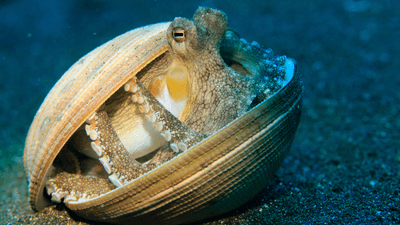
Octopuses are about as alien as life on Earth can be. Highly intelligent, a portion of their brain is shaped like a donut between the eyes (the hole is for their esophagus to pass through). Not content with just one brain, however, they also have “mini brain” nerve clusters along their eight arms.
The break was so unexpected!
Dr Amy Lee
This remarkably complex nervous system expands dramatically throughout their lives. In humans we can expect our brains to increase in size about four-fold from birth to adulthood. The octopus brain, on the other hand, increases 100-fold.
Could this rapid expansion explain why some species are so smart? And if so, what molecular mechanisms are needed to maintain it?
Happy accidents
A team of scientists were conducting routine RNA extraction from octopus tissues when they noticed something strange. Running their samples through electrophoreses, they noticed the 28S ribosomal RNA (rRNA) looked as if it had broken in two.
“The break was so unexpected!” said study author Dr Amy Lee of Harvard University to IFLScience. “Ribosomal RNA is usually incredibly conserved, and in our initial experiments we actually thought we must have made a mistake.”
It was not an experimental artifact but rather something important that nature had evolved.
Dr Amy Lee
Further analyses revealed it was no mistake but an octopus-specific sequence break between nucleotides G4322/C4323 in helix 88 (H88). We’ve found other kinds of RNA cleavage in animals like the naked mole rat, but never before in this specific break site.
The finding was present in a wide range of octopus tissues from different developmental stages. However, the octopus H88 break was lineage-specific, showing it only evolved in Incirrate octopuses that mostly live in shallow regions.
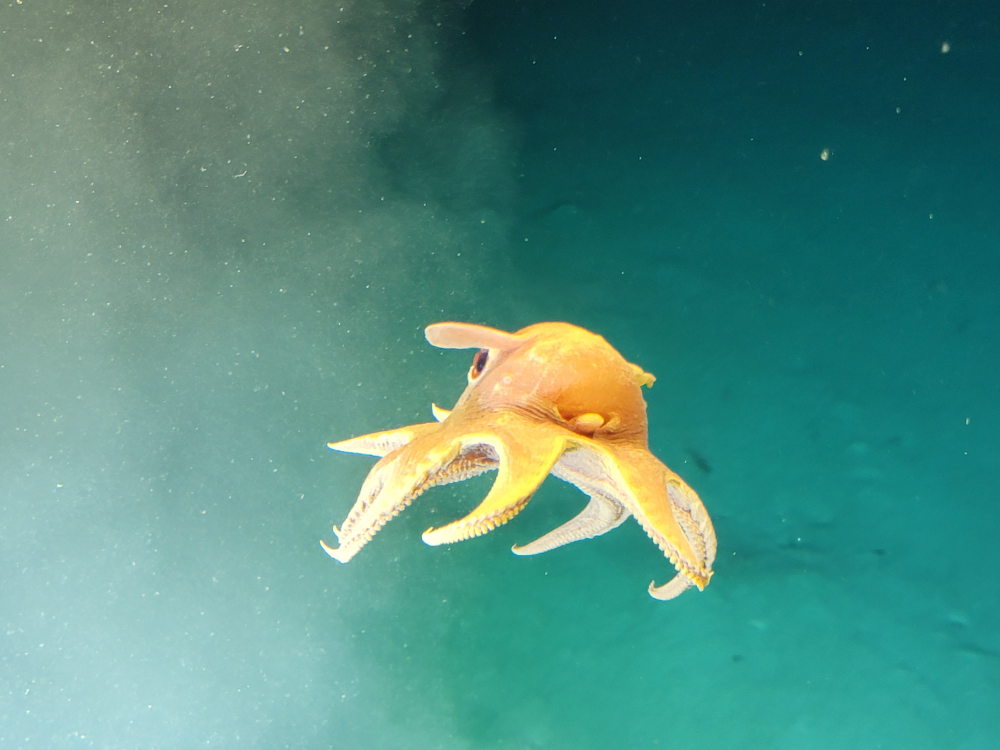
Cirrate octopuses mostly live in the deep sea and include famous faces such as the Dumbo octopus, which was not found to have the H88 break. Curiously, Incirrates are known to be more intelligent than their deep-sea relatives (though I should point out, while a fun coincidence, the Dumbo is named for its ears).
“So, it ended up being exciting to realize it was not an experimental artifact but rather something important that nature had evolved,” said Lee.
RNA, ribosomes, and promiscuous binding
RNA, or ribonucleic acid, is a molecule that makes it possible to turn the instructions written in our genes into proteins. DNA is first transcribed into the messenger RNA (mRNA) that carries the instruction to the ribosome, which reads the message three letters at a time. Matching transfer RNAs (tRNAs) then deliver the amino acids needed to build the protein.
So, what does a new-to-science RNA break do to a creature’s protein synthesis capacity? The researchers were eager to find out.
To find out, they set up some experiments to test how octopus, squid, and human ribosomes behaved when given mRNA containing an edited inosine base. This stands out because it's different from the usual four bases you find in RNA: adenine, guanine, cytosine, and uracil.
The idea was to cause a bit of translation ambiguity because inosine can be read and pair up with other bases in several ways, and it worked.
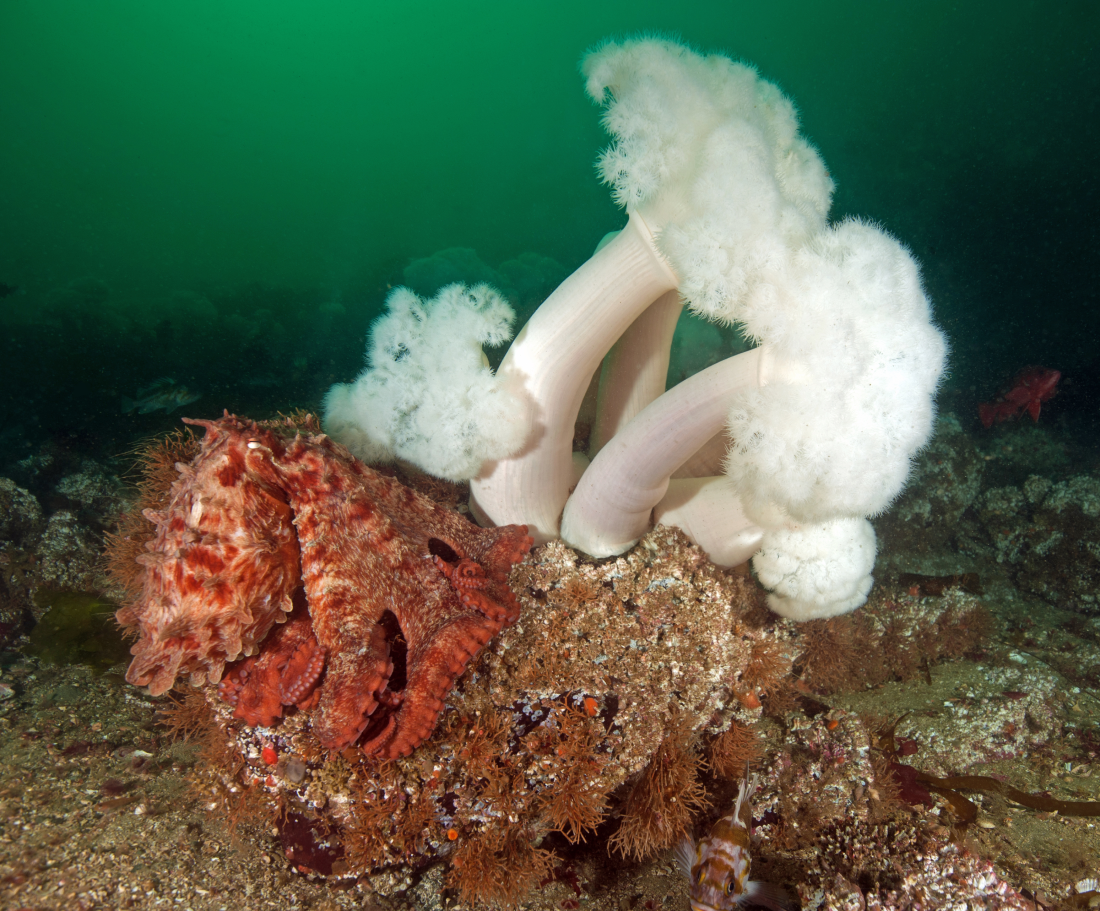
The octopus ribosomes were much pickier about which tRNA they accepted and rejected when synthesizing proteins. Squid ribosomes, on the other hand, showed “promiscuous tRNA binding”, being less choosy about what they accepted and ending up with proteins that were more likely to clump (suggesting they weren’t very stable). Human ribosomes don't cope well with inosine at all and tend to just stop.
To test if it was the break causing this difference, they then engineered the same trait into bacterial ribosomes. Sure enough, they too demonstrated increased protein synthesis specificity.
Potential meets quality control
Where this specificity becomes a superpower is in the context that cephalopods like octopuses are known to extensively edit their mRNA, increasing the potential diversity of proteins they can produce. Having these highly selective ribosomes then prevents all that innovation from descending into molecular chaos.
It’s this combination that could explain how octopuses have evolved to grow such complex nervous systems that increase all throughout their lives.
We like to approach unexpected findings with an open mind and follow where the science takes us.
Dr Amy Lee
“Octopuses have this enormous expansion in the number of neurons they develop,” said Lee. “The more accurate protein synthesis could be an adaptation that helps to support this complex nervous system.”
“We like to approach unexpected findings with an open mind and follow where the science takes us. In this case it led us to discover that the break had a surprisingly important effect on how accurately the octopus can make proteins! Octopus are always leading to new surprises.”
That they are.
The study is published in the journal Current Biology.