Space and Physics
 PUBLISHED


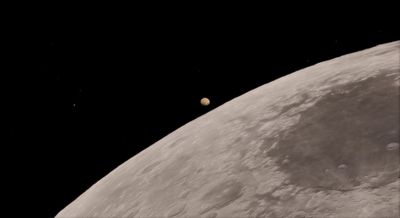


This coming Monday (January 13), grab your telescope, layer up in every piece of clothing you own, and head outside. Why? Because it’s lunar occultation time, baby – and this time, it’s hungry like the wolf.
Okay, there aren’t actually any wolves. It’s just that it’s occurring when there’s a Wolf Moon, a non-astronomical term for the first full Moon of the year. According to NASA, the name has Native American origins, coming from people having heard wolves howling in the depths of winter (though it’s a myth that wolves howl at the Moon).
As for the lunar occultation part, again, there aren’t any supernatural shenanigans going on. Occult and occultation simply happen to share a common Latin root, the word “occultātiōn” or “occultātiō”, meaning hiding or concealment.
A lunar occultation is instead an astronomical event during which the Moon appears to pass in front of another object in the sky, temporarily obscuring it from view. That object could be a star or a planet – on January 13, it’s going to be Mars.
If you’re hoping to catch a glimpse of it, you’ll first need to make sure you’re in the right place. In-The-Sky.org has a full list of the locations where the occultation will be visible, but it covers much of North America and a decent chunk of West Africa.
Even if you’re not in one of those places, with a clear sky most people will still be able to see a close conjunction between the Moon and Mats instead. The night sky is nothing if not generous.
As for when to head out, the occultation is expected to begin at approximately 1:44 am UTC (8:44 pm ET) and wrap up at around 5:52 am UTC (12:52 am ET).
While the event won’t be visible to the naked eye, a telescope will do the job nicely. Then, all you’ll need is the clouds to take a break and an idea of when the occultation will be happening in your specific location. There’s not much you can do about the former, but there is at least software that can help you out with the latter.
This is actually the second lunar occultation of Mars in short succession. The last one was in December, but we doubt you’ll have been particularly bothered to miss it – it started at 7:47 am UTC (2:47 am ET), when any sensible person who might’ve been able to see it would’ve been tucked up nice and cozy in bed.