Nature
 PUBLISHED


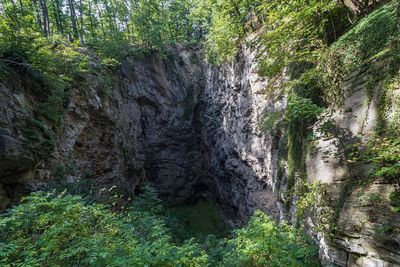


The Hranice Abyss in the Czech Republic is the deepest known freshwater cave on the planet. It’s suggested that it could extend to a depth of 1 kilometer (0.6 miles), but scientists have never actually got the bottom of have deep it truly is.
Back in 2016, a remotely operated vehicle swam into the bowels of the Hranice Abyss and managed to a depth of 473.5 meters (1,552 feet). That’s taller than the Empire State Building. However, it’s now known that the mini-submarine could have gone much further, but was held back by its fiber-optic communication cable.
In 2020, a study used a geophysical survey to understand the shape of the underwater cavern, concluding that it extends to depths of around 1 kilometer (0.6 miles). However, that’s still a pretty rough estimate and the true extent of the flooded cave system remains a mystery.
Also known as the Hranická Propast, there are some fascinating theories about why this underwater cavern runs so deep.
Cavernous underwater tunnels are typically carved by slightly acidic rainwater and meltwater that slowly dissolves away the surrounding limestone. Conversely, some have suggested that the Hranice Abyss might have been formed by bottom-up forces. Instead of a downpour of water, the cave might have been formed by acidic groundwater that has been cooked deep underground by Earth’s mantle and seeped upwards, dissolving the limestone from below.
Along with its sheer size, there are several other factors that make studying the abyss a nightmare, according to a diving blog post from 2021. First up, the waters are murky, chocked full of rotted tree trunks, logs, and foliage that have fallen into the cave. secondly, it’s also extremely acidic water and can sting divers' skin if it's not properly covered. Lastly, the air just above the water is so dense with carbon dioxide, it’s extremely difficult to breathe.
This minefield of annoying hurdles makes studying the Hranice Abyss difficult. However, as remotely operated vehicles and geophysical survey techniques become more refined, researchers will likely be able to hone in on a more accurate – and perhaps deeper – estimate than currently available.