Health and Medicine
 PUBLISHED
 2
2


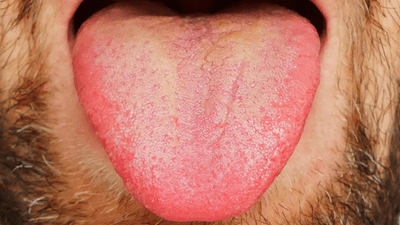


When you were growing up, you may have come across, or even been taught in school, that the tongue has different areas dedicated to different tastes. This, however, isn't true.
According to the map, the tongue has seven different areas, each responsible for detecting distinct tastes in food and drink. Sweet is detected by the tip of your tongue, umami in the center, salt at the front sides, with sour just behind that, and bitter bringing up the rear.
For a long time, this model of how we taste went unchallenged. This is pretty surprising, as it is very easy to disprove for yourself with very little equipment (some food and a mouth). For simplicity, you could take a little salt and place it towards the back of your tongue. According to the tongue map, you shouldn't be able to taste it. But if you try it, you will find that it's perfectly salty on your taste buds. Do the same with other tastes, placing them on parts of the tongue where they are not meant to be detected, and you will find you are still in flavor town.
"The apparent simplicity of the tongue map has made it a popular laboratory demonstration in children's biology classes," a 1993 paper on the topic notes. "The popularity of this laboratory demonstration is particularly amazing considering that it must fail to produce the expected results quite regularly."
So, how did this misconception come about? The problem appears to be due to a 1942 translation by Harvard psychologist Edwin Boring of a paper written by Dirk P. Hänig in 1901.
"Hänig meant to show how sensitivity (the reciprocal of threshold; displayed on the ordinate) changed across the various tongue loci," a 2022 paper on the topic explains. "For each stimulus, Boring calculated the reciprocals of Hänig's thresholds and then divided them by the maximum reciprocal."
In short, Hänig's paper showed different sensitivities to flavors on different parts of the tongue, but Boring's work did not display this subtlety.
"Boring’s graph led other authors to conclude that there was virtually no sensation at the loci where the curves showed a minimum and that there was maximum sensation where the curves showed a maximum," the 1993 paper explains, "and so we have the familiar tongue maps labeled ‘sweet’ on the tip of the tongue, ‘bitter’ on the base of the tongue, etc."
In reality, your tongue is able to detect these tastes wherever you put them.
"Contemporary research has revealed that the taste receptors capable of detecting each of the five basic tastes (bitter, sweet, salty, sour and umami) are all to be found distributed in a somewhat idiosyncratic manner across the surface of the tongue," the 2022 paper explains. "Taste receptors have also been documented at several other locations in the oral cavity, including the soft palate and larynx."
Sensitivity may vary slightly, but there is no truth to the idea that certain parts of your tongue can only pick up certain tastes; being in your mouth should do the trick.