


 Nature
 PUBLISHED


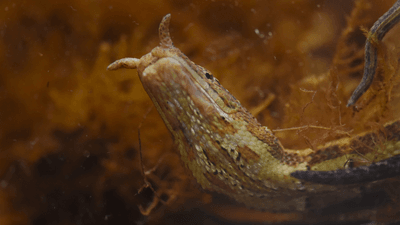


There are animals on Earth with talents we humans would consider a superpower. Frogs that can freeze solid (and not die). Jellyfish that can live forever (sort of). And of course, the most coveted of all: birds that can fly. But might I offer an alternative frontrunner? A tentacled snake that can predict the future (albeit by influencing the past).
Yes, in case you weren’t already aware there is a snake on Earth slithering around with tentacles on its face. Known, sensibly, as the tentacled snake (or Erpeton tentaculatum, if you want to get technical), it’s an aquatic snake found in countries across Southeast Asia.
They feed primarily on fish, but they don’t rush around in pursuit of their prey. Oh no, the tentacled snake rocks one of the most specialized fish-hunting strategies of any snake.
Time to touch on those tentacles, I suppose. The two sensory appendages sit above the mouth and though they are known as tentacles they don’t move as spectacularly as those of an octopus. They have limited movement because they don’t have to touch the environment to sense if something is there – they can feel it through the water.
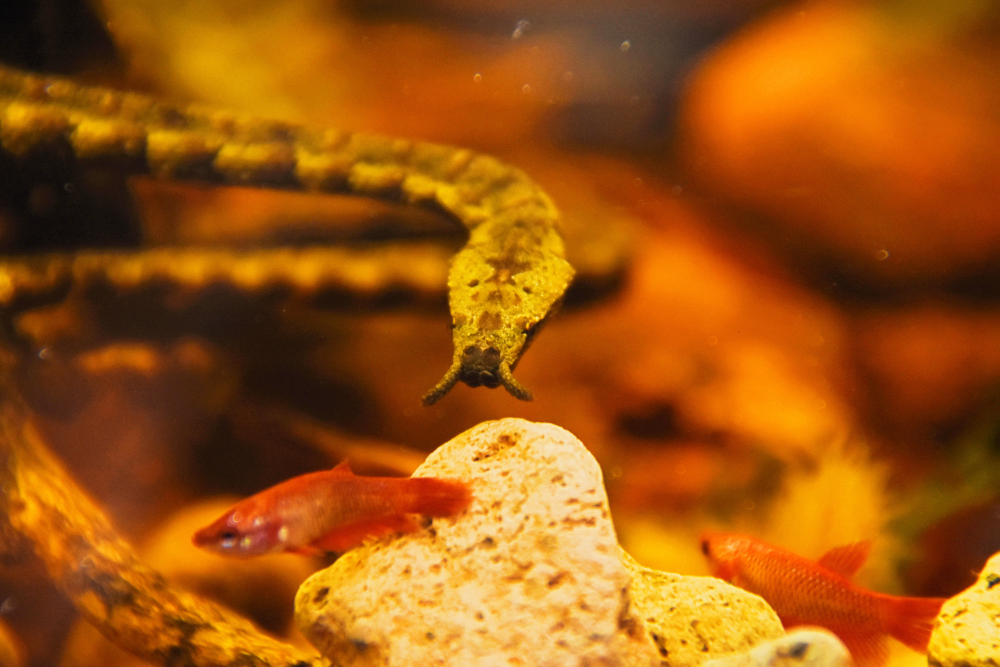
That was the conclusion of a 2010 study in the Journal of Experimental Biology that investigated the function of tentacled snakes’ tentacles. Through behavioral and anatomical investigations it revealed that the tentacles are packed full of tiny nerve endings that can detect water vibrations and movement. That information gets sent to the brain and, combined with information from the eyes, makes them better hunters.
What was really cool to see was that the snakes could even catch fish when their vision was extremely limited due to poor light conditions. This meant the tentacles were sensitive enough that they could hunt by tentacle alone, but it gets cooler.
A 2009 study in the journal PNAS revealed how tentacled snakes have evolved to exploit an adaptive predator response in fish. A common prey item, many fish have evolved what’s known as a C-start reflex whereby the detection of danger in the water triggers them to rapidly dart away in the opposite direction. Typically that takes them to safety, but not when tentacled snakes are around.
Tentacled snakes will lurk in an ambush J-posture, using their eyes and tentacles to detect when a fish is nearby. Once their prey is located, the snake uses its body to create a small disturbance, which the fish darts away from – predictably and crucially – in the opposite direction. The tentacled snake has clocked onto this, and will strike where the fish ends up.
Their super-power tentacles help them precisely track prey through water movements, allowing them to accurately predict where the fish will end up after the feint. It’s an epic example of the co-evolutionary arms race that exists between prey and predators. The fish evolved an escape mechanism only for it to be exploited by the tentacled snakes, turning an adaptive behavior into a weakness.
Remarkably, the behavior on the part of the snakes appears to be an innate one. In 2010, a study published in PLOS One put captive tentacled snakes to the test. It revealed that the behavior was woven into the nervous systems of newborn tentacled snakes that could catch fish this way without ever being taught.
Predicting what's going to happen next is as inbuilt to these creatures as their curious tentacles. Just don't go asking them for any lottery numbers, something I learned the hard way.




 1
1