Space and Physics
 PUBLISHED


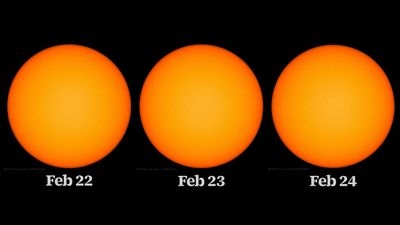


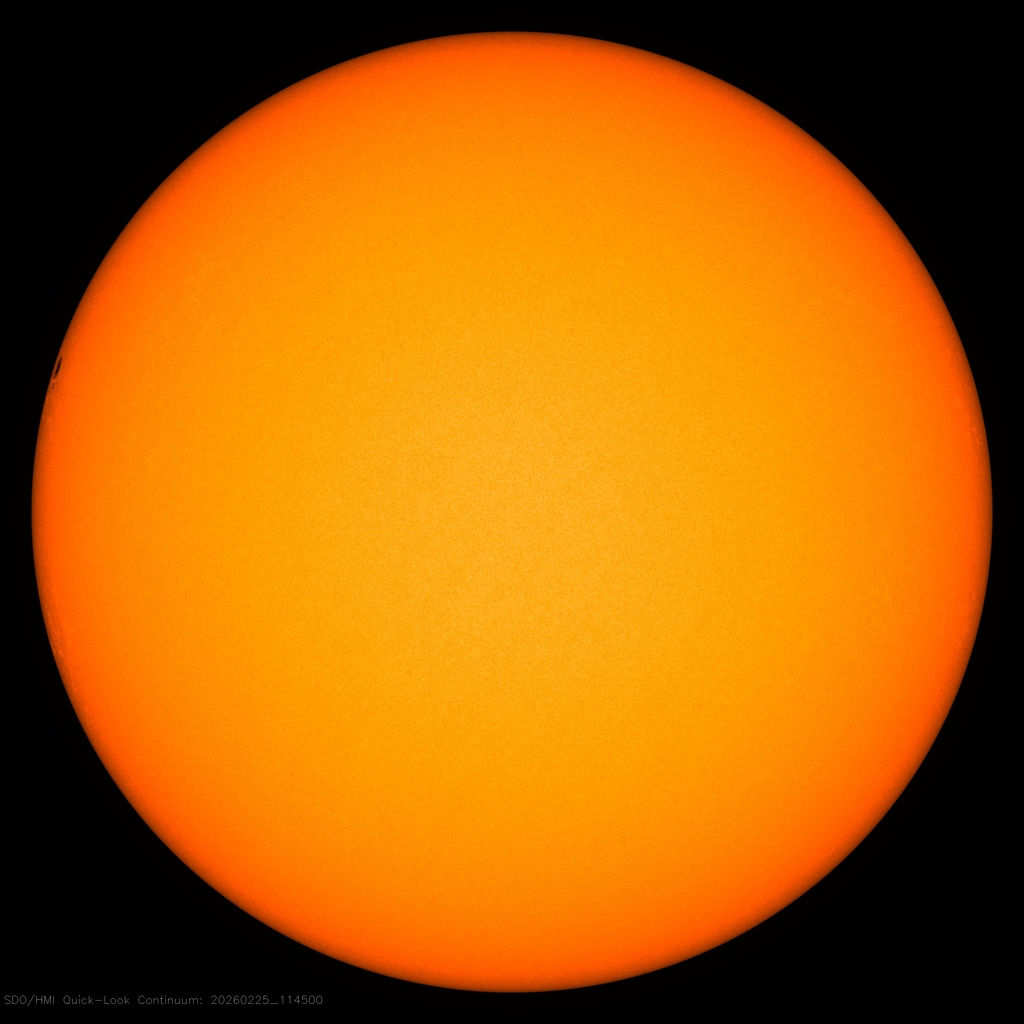
From February 22 to February 24, the Sun experienced three spotless days. It is the first time in four years that the Earth-facing side of the Sun has not sported any sunspots. These are not simple blemishes, but cooler regions with intense magnetic fields. Their disappearance, at least for a few days, tells us that the solar cycle is now moving into its quieter phase.
The Sun undergoes a cycle of activity that repeats every 11 years or so. The peak of activity is the maximum, which is worked out as the peak in the number of sunspots on the surface of the Sun. There are bigger changes to the Sun, like the flip of its magnetic poles, but while related, the two do not happen at the same time and on the same timescales.
“The definition of the solar maximum is when the sunspot number is at its highest,” Dr Rachel Howe, a solar physicist at the University of Birmingham, UK, previously told IFLScience. “At the same time, you tend to see that that's when this polarity reversal happens. Then in the next cycle, it all happens again, but the other way around.”
For this current cycle, Solar Cycle 25, the peak happened in October 2024. Around the peak, there was an increase in solar flares, coronal mass ejections, which continued until a few weeks ago. Now, all of a sudden, the Sun is getting some respite with a clear face, although it seems that it is about to stop. Observations on February 25 already show a sunspot about to do peekaboo from the solar limb.
Solar minimum is expected to be reached in 2030, so we have years still to go. While the minimum is indeed a much quieter time, it doesn’t mean that the Sun ceases all of its activities. One of the most powerful flares of the previous cycle happened in 2017, just two years before the minimum of 2019. Researchers also spotted the magnetic hallmarks of the next cycle a while ago on the Sun.
“Sometimes you can see towards the end of a cycle, regions that belong to the next cycle propping up at higher latitudes, and you can tell that they're a new cycle because they're the other way around,” Dr Howe told IFLScience.
The poles have reversed, the Sun is experiencing spot-free days, and the powerful flares are fewer and farther between. The solar minimum approaches.
[H/T: spaceweather.com]