Space and Physics
 PUBLISHED
 11
11






Magnetic field reversal is a fascinating topic. You are brought up to think that the compass, pointing to the north, is an infallible instrument, and then you find out that the magnetic pole moves, and once every couple of 100,000 years, the field flips completely. At least, the Earth isn't like the Sun, where the flip happens every 11 years.
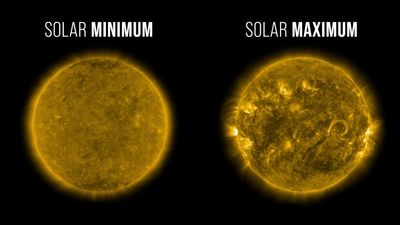
The Sun’s polar reversal is linked to our star’s cycle of activity, which also lasts 11 years. The flip does tend to coincide with the solar maximum, the peak of activity, but not exactly. The solar maximum is estimated by the number of sunspots and cooler regions on the Sun’s surface, and is usually defined after the fact, given that the maximum number of sunspots changes from cycle to cycle.
“The definition of the solar maximum is when the sunspot number is at its highest,” Dr. Rachel Howe, a solar physicist at the University of Birmingham, UK, told IFLScience. “At the same time, you tend to see that that's when this polarity reversal happens. Then in the next cycle, it all happens again, but the other way around.”
The flip, too, is difficult to point out, even though there are measurable effects that we can track. The Sun’s magnetic field extends far outside the star; some field lines are looped closely to the surface, while the polar ones stretch out into the solar system. On top of that, the Sun’s moving magnetic field produces a sheet of current extending from the solar equator. The current is tiny, just one ten-billionth of an amp per square meter, but it is almost as wide as our planet, and it extends for billions of kilometers.
Both the changes in the polar magnetic field strength and the changes in the current sheet reveal the flip. The polar fields weaken first, becoming more chaotic and eventually dropping to zero, before the opposite polarity emerges. During the same time, due to the changes in the field, the current sheet gets very wavy. So, why is it so difficult to say: “Ah, it's happening”? Because the process is neither instantaneous nor distinct. The field oscillates around zero, and going from chaotic to flip to stable can take years.
.gif "the animation shows the magnetic field lines of the sun. It starts with colorful lines coming out fo the poles and a nice round donut of lines around the equator. by the end of the anuimation, all the lines are messed up.")
Dr. Howe's research was actually able to point out the beginning of magnetic activity related to Solar Cycle 26, the next one, while we were still many months away from the maximum of Solar Cycle 25. The current cycle reached its peak in October 2024.
“Sometimes you can see towards the end of a cycle, regions that belong to the next cycle propping up at higher latitudes, and you can tell that they're a new cycle because they're the other way around,” Dr. Howe told IFLScience.
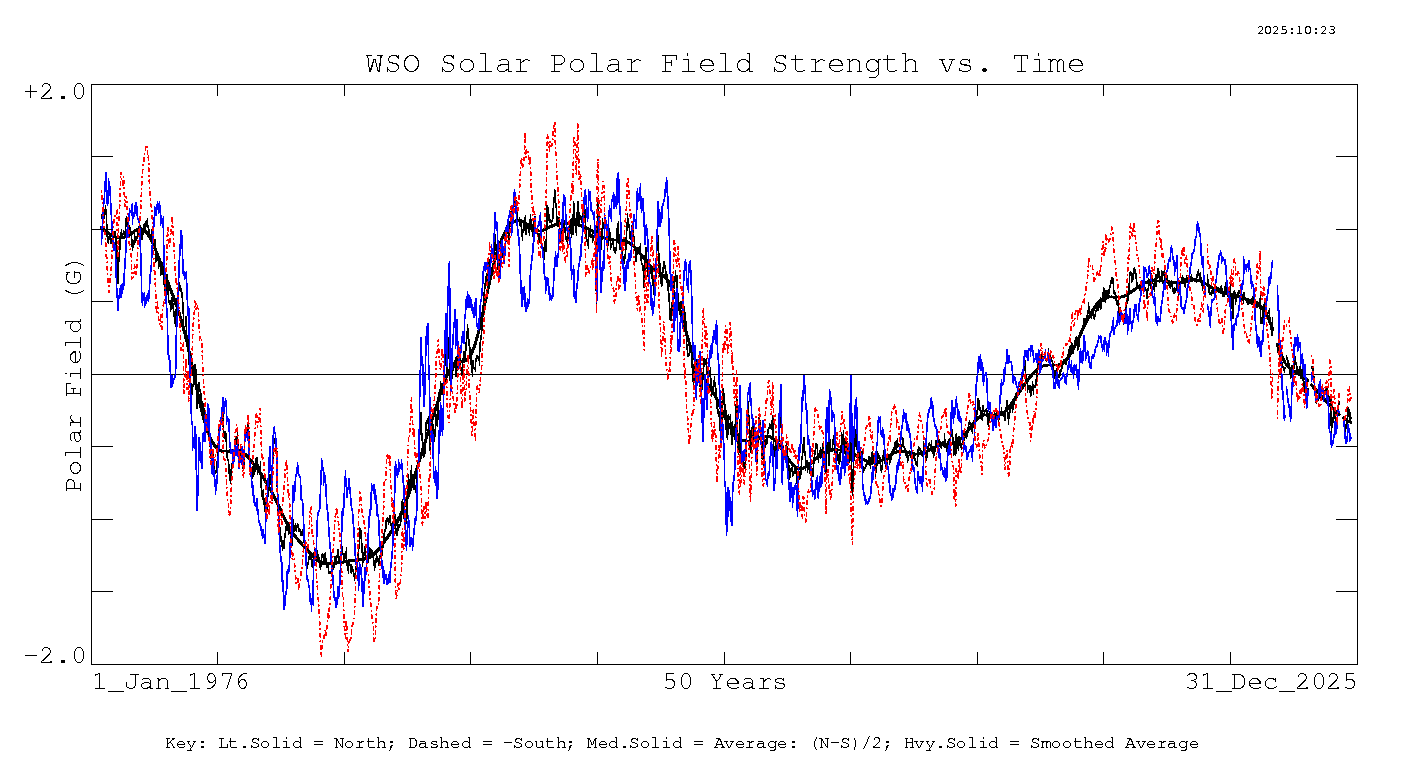
Stanford’s Wilcox Solar Observatory is one of the few places that tracks the Sun’s polar magnetic fields, and it has been doing so since 1976. It has recorded five grand reversals, the fifth one belonging to this current cycle. The smoothed average of both the polar field strengths shows the flip happening in late 2023, months before the maximum, but the measurement of each pole shows wide variations, part intrinsic and part due to how we observe it, with the south pole going up and down around zero, well into 2025.
The pole reversal seems to have been flipped for good now, and the solar maximum is well behind us, too. We are going towards the quieter part of the solar cycle now, but that doesn’t mean the Sun won't still produce some powerful flares.