Nature
 PUBLISHED


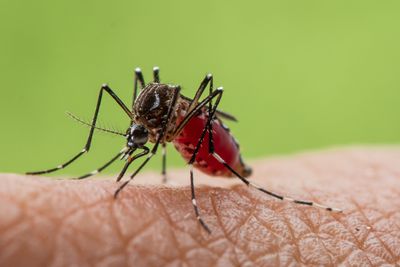


Mosquitoes are one of the biggest killers of humans, and they transmit an array of different diseases. Due to the nuisance they cause, scientists have created a wide array of insecticides that can be coated onto different surfaces to kill these terrors – but unfortunately, insecticide resistance is on the rise.
The Aedes aegypti is a striking-looking mosquito, and its black and white stripes make it very distinctive. This zebra-patterned mosquito is a vector for many arboviral infectious diseases, including yellow fever, Zika, chikungunya, and dengue. Dengue is the most common of these diseases, and in the last 50 years there has been a 30-fold rise in cases with almost half of the global population living in areas that have a high risk of dengue.
One of the main insecticide classes is the pyrethroids, which have been marketed as insecticides since 1977 and target the insect’s nervous system, causing paralysis and eventual death. Insecticide resistance is a big problem, and one of the main resistance mechanisms that mosquitoes develop is a change to the target site, typically on a voltage-gated sodium channel (VGSC).
Researchers from the National Institute of Infectious Diseases in Japan collected 23 A. aegypti populations in Vietnam, Ghana, Indonesia, and Taiwan, as well as populations from Cambodia. Their results show that some of these mosquitoes collected from Vietnam and Cambodia have mutations in VGSCs.
In fact, one of the most concerning mutations (called L982W) was found in over 78 percent of the populations collected. When the scientists investigated the populations further, they found that the individuals with the L982W mutation were highly resistant to the pyrethroid insecticide (permethrin) in the laboratory.
The permethrin dosage used was 5.9 nanograms of permethrin per female, which means that it should have killed 99 percent of the mosquitoes. However, in some populations, there was only a 20 percent mortality.
Insecticide resistance is always a major concern, especially for A. aegypti. Dengue is a disease that has limited treatments and prevention methods. So, many of the local health organizations rely on insecticide to control the disease – the fewer mosquitoes, the lower the chance of the disease being transmitted.
"It is important to be aware that the insecticides we normally use may not be effective against mosquitoes," the first author of the study, Shinji Kasai, told ABC News. “Governmental health officers should chose appropriate, more effective insecticide for controlling mosquitoes”.
Mosquito research is always important, as constant monitoring can help organizations to adapt to disease outbreaks. However, this is a worrying development with the limited amount of insecticides available.
This work was published in Science Advances.