Humans
 PUBLISHED
 2
2


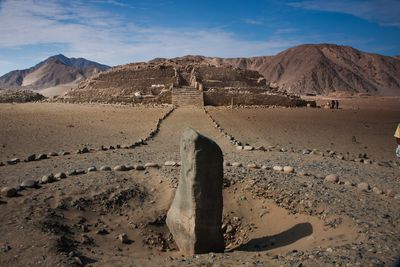


Thousands of years before the warrior-like Inca, Aztec, and Maya empires fought their way to prominence, the seeds of American civilization produced their first green shoots at a little-known site along the arid coast of central Peru. Known as Caral, this 5,000-year-old settlement was the continent’s first truly complex city-state, and is thought to have flourished for over a millennium without the use of violence or repression.
First discovered in 1905 in the Supe Valley, Caral boasts 32 monumental structures, including the 18-meter-tall (60-foot) Pirámide Mayor. Initially, archaeologists suspected that the site was relatively recent, although radiocarbon dating conducted about a century later revealed that the it was constructed around 3000 BCE.
This means that Caral’s heyday coincided with that of ancient Egypt, and pushed back the start of civilization in the Americas by more than 1,000 years. Amazingly, though, this probably wasn’t the most extraordinary thing about Caral.
As archaeologists continued to excavate the ancient settlement, they discovered a number of impressive ceremonial and residential features. Based on these findings, it’s estimated that the city housed about 3,000 people and hosted elaborate ritual and political gatherings.
However, no weapons or evidence for fortifications of any kind have been found at Caral, suggesting that the civilization was entirely peaceful. Instead of relying on brute force, Caral may have developed a strong trading network linking the Pacific coast, Andean mountains and Amazonian rainforest, as a means of consolidating its power and security.
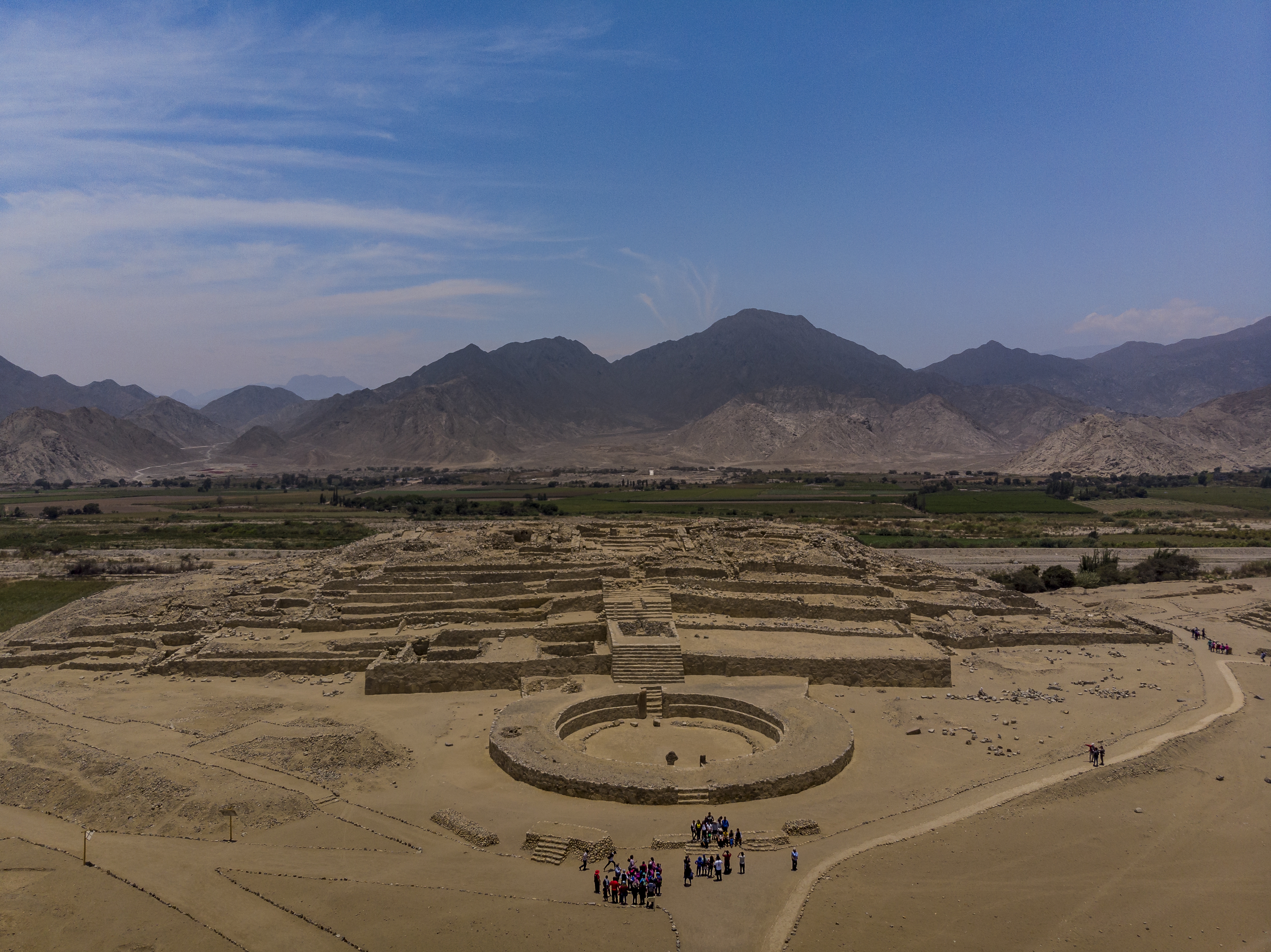
And as the city’s inhabitants didn’t have to busy themselves waging wars, they had more time to focus on art and creativity. Music, for instance, appears to have played a major role in the culture of Caral, as evidenced by the discovery of a spectacular amphitheater.
Excavations at this performance arena have yielded dozens of flutes made from pelican and condor bones, as well as cornets fashioned from the skeletons of deer and llama. Not only do these instruments underscore the importance of music at Caral, but they also illustrate how trade with far-flung regions of South America contributed to the cultural and ritual offerings at the ancient site.
Unfortunately, however, a catastrophic drought appears to have brought devastation to Caral and its inhabitants about 4,200 years ago. Some researchers believe this event may represent a global mega-drought that also brought down a number of ancient civilizations in Mesopotamia and Asia.
Despite massive crop failures and widespread famine, though, the civilization that started at Caral wasn’t entirely extinguished. Instead, those who survived the disaster appear to have relocated in search of water.
The recently-discovered city of Peñico, for instance, is located 16 kilometers (10 miles) east of Caral, near the source of glacial-fed water sources higher up in the mountains. Thought to have been established around 1,800 BCE, Peñico features numerous monumental buildings that resemble those at Caral, while friezes found on some of these structures appear to tell the tale of drought and famine.
Eventually, Peñico itself was abandoned in approximately 1,500 BCE, bringing an end to the Caral civilization once and for all. By the time the next great society rose in the Americas, this age of peace and music had been consigned to history, to be replaced by warrior states and organized violence.