


 Nature
 PUBLISHED


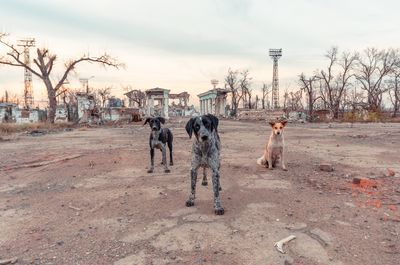


Some say that war is the engine of human history. The same could be said about wildlife and the ecosystems they inhabit. Recent research has examined how the Russo-Ukrainian conflict has affected the natural selection of stray dogs living in the midst of tanks, bombs, and drone swarms.
Scientists from the University of Lviv in Ukraine with colleagues from Poland and Austria collected data from 763 dogs across three regions of Ukraine: one near the frontline in the east, one in the central “dangerous territories,” and one in the relatively safe western regions.
At the population level, dogs living in war-affected environments tended to have smaller bodies, pointier ears, and longer snouts than those in safer areas. These so-called “wild-type” traits – features more commonly associated with their wolfish ancestors – appear to offer advantages in harsh, unstable conditions.
Malnutrition seems to be one of the primary drivers. With daily human life disrupted, reliable food sources have dwindled. Dogs near the frontline showed smaller body sizes and a lower body mass index (BMI), consistent with chronic scarcity.
It also appears that traits usually selected by humans for aesthetic or cultural reasons – such as stubby snouts and floppy ears – were scarcely found among dogs living close to gunfire. In a landscape shaped by artillery and abandonment, cuteness offers no advantage and survival favors function over form.
Indeed, the study notes that there were very few elderly or sick individuals near the frontline, most likely because they did not survive the extreme conditions.
However, it's not yet clear whether these changes will reflect a long-term molecular evolution at the genetic level, since the conflict has only lasted for a few generations of dogs. Instead, it appears that domesticated traits may have made survival more difficult and reduced reproductive success. Nevertheless, this is still natural selection in action.
“Our study shows that wars can be factors of strong and fast natural selection, with the effects comparable to large-scale natural or anthropogenic disasters,” the study authors write.
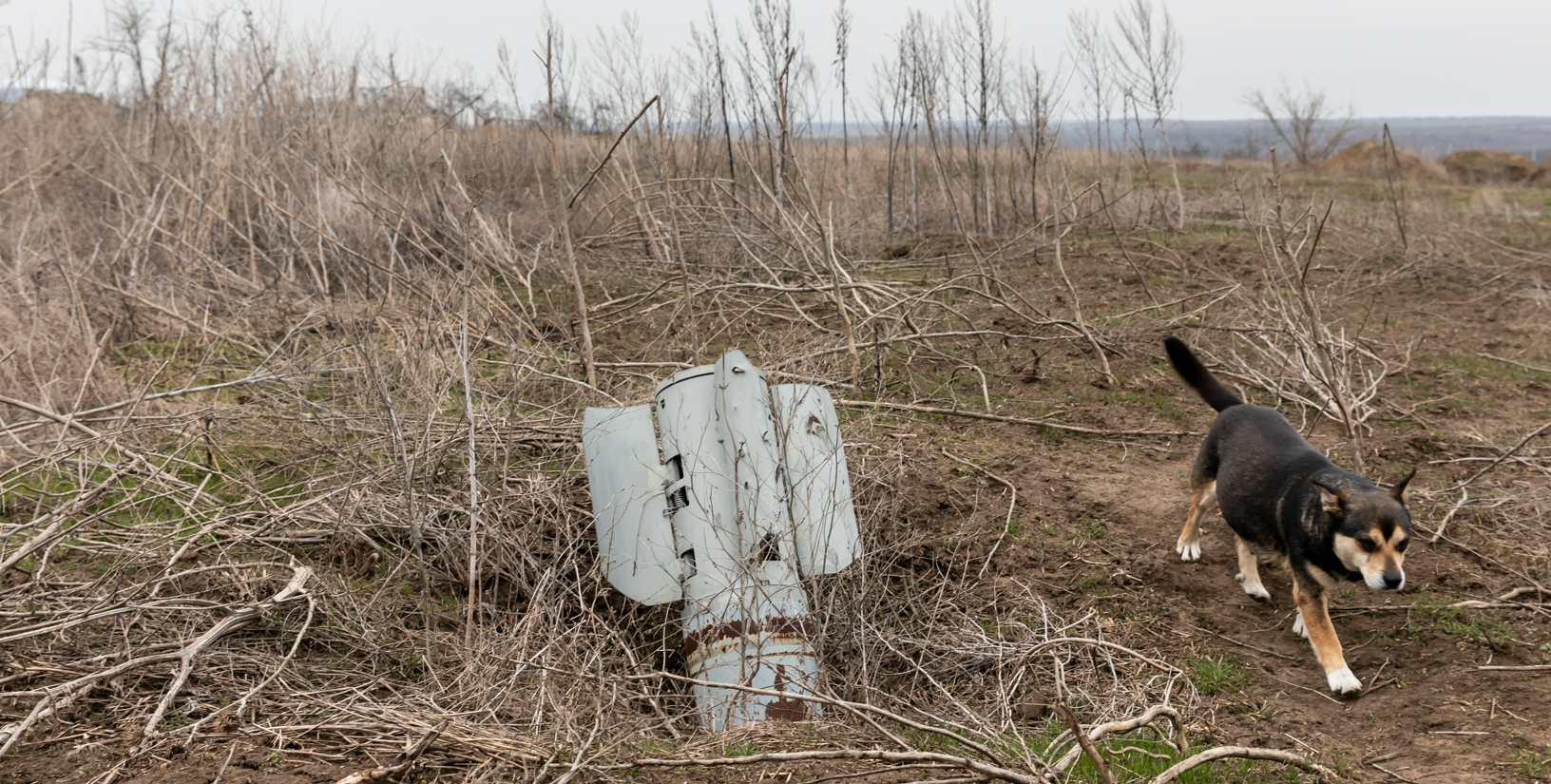
The paper also highlights how war can impact the well-being of free-ranging domestic dogs. Up to 12 percent of stray dogs living on the front lines had visible diseases or injuries, including leg injuries, missing limbs, eye loss, open wounds, scars, and skin diseases. One individual was even found with bullet wounds in its body.
In other cases, the researchers documented their behavior being pushed to grim extremes.
“During our study, three cases of dogs feeding on human corpses in an open area have been observed at the front line. These dogs were Laika-type (spitz-type dogs, with wolf-like body proportions), avoided humans and were aggressive when approached; therefore they could not be sampled,” the paper added.
Once again, given the relatively short timeframe of the conflict, it’s impossible to say how these selection pressures might pan out on a population-wide, genetic level.
However, history offers parallels. During the Mozambican Civil War, both sides financed their campaigns through ivory poaching. The intense slaughter created powerful evolutionary pressure favoring tusklessness in female elephants, resulting in a dramatic rise in the number of female elephants born without tusks.
War is a constant of history. While it's easier to see its consequences in textbooks and treaties, these studies are a solid reminder that the impact of armed conflict ripples deep and far, even beyond the immediate, tragic consequences for humans.
The study is published in the journal Evolutionary Applications.


 1
1