Health and Medicine
 PUBLISHED


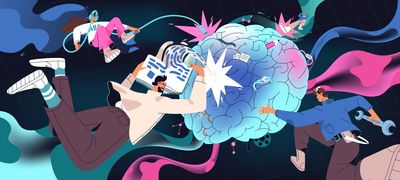


Your brain is an astonishing thing. Yes, I admit to being slightly biased – I defy anyone to study neuroscience and not come away with that opinion! – but it really is. It has 86 billion neurons, all linked up via trillions of connections, and scores of other cells too. It handles more information every day than we can even conceptualize and somehow makes sense of our environments for us. It’s where our decisions and dreams are born. Yet all too often, we take it for granted.
Dr Hannah Critchlow is a neuroscientist, broadcaster, and author whose new book, The 21st Century Brain, takes readers on a journey through some of the challenges that modern life throws at the human brain and how we might better overcome them.
It’s a timely work against the backdrop of the meteoric rise in generative AI technologies and their widespread adoption in homes, schools, and workplaces. No one could have predicted how quickly these tools – which themselves would not have been possible without a scientific understanding of the human brain – would become enmeshed within our lives. But were our brains really ready for them?
“We've developed this incredible technology of artificial intelligence. It's very much been inspired or based on our understanding of how our own neural networks operate. Our brain has evolved over at least 300,000 years and there's a huge amount of intelligence that has arisen from that evolutionary process,” Critchlow told IFLScience.
“I wanted to use that new neuroscience knowledge of how our intelligence arises, how our different behaviors arise, and instead of applying it or outsourcing it to artificial intelligence technologies, I wanted to actually flip that back and start to apply it to ourselves – so that we can appreciate the innate human intelligence that we have, so that we can better access that incredible cognitive capacity”.
The book addresses seven areas of challenge, from emotional intelligence to long-term thinking to adapting to uncertainty. Each chapter comes with practical exercises to apply, such as making time for 30 minutes of physical exercise per day, or ensuring that you are prioritizing good sleep.
Critchlow told us that these tangible, practical tips were inspired by the talks and workshops she is asked to give to business leaders. “Those exercises have kind of sprung out of all of those interactions that I have with people when I go and talk to them face to face. And it's also exercises that I've found to be particularly useful for myself.”
The final chapter is an exploration of what a healthy long-term relationship with AI could look like. It may be easy to view this technology with skepticism, even suspicion. You don’t have to look hard to find people sounding the alarm about the perceived dangers AI poses to humanity; the naysayers are as loud as the proponents. But what struck a chord with me when reading Critchlow’s book is the ever-present vein of optimism running through it.
This, Critchlow told IFLScience, was a conscious writing choice.
“What happens to the brain if we're put in a place of fear or we feel like we're under threat is that it's actually then very difficult to think imaginatively, to collaborate and to problem solve. And so, you know, it's a good idea to be aware of threats, but just not to get overwhelmed by it,” she explained.
“It's very important that we do actually see potential for opportunities and possibilities and to think how we can innovate, and problem solve, and work around issues. That's really what the book is trying to do. It's trying to calm our nervous system down and then make the most out of that incredible creative problem-solving ability and agility and nimbleness that we have within our own brain, within our own nervous system.”
Clarity, energy, and flexibility
One of our most human attributes is “our ability to have emotional intelligence, to empathise with others, to be able to take on board other people’s perspectives and to think in their shoes, if you like, or to feel in their shoes.” Critchlow told me that her favorite chapter in the book is the one that deals with the bioenergetic basis of how we’re able to do that, fueled by the action of mitochondria.
“[O]ur ability to think longer term and to imagine ourselves and other people into the future or even our descendants into the future – all of that requires a lot of nimbleness and mental gymnastics within our own brain and underpinning all of that agility, that ability to think in different ways is basically synaptic plasticity,” she said.
“It's basically the mitochondria providing the energy in our brain so that we can do those mental gymnastics so that we can keep up with all of these changes and think in different ways. So that’s why the chapter that’s looking at how we look after our mitochondria, especially as we age, is really my favourite chapter because it brings everything together.”
Mitochondria are the cells’ own energy factories; only red blood cells don’t have them. They’re fascinating in their own right for their peculiar origin story, enigmatic behavior, and the fact they carry their own genome, separate from the one in the nucleus of the cell – but their main function is to house the reactions that provide all the energy for the processes that keep us alive.
Critchlow spoke to researchers whose cutting-edge work suggests that healthy mitochondria are a significant factor in cognitive health and the brain’s resilience to the aging process. The evidence is beginning to suggest that there are ways we can support mitochondrial function, such as getting enough sleep and eating a diet rich in unprocessed, unsaturated fat-rich foods. These all feature in the exercises at the end of this chapter.
Another of these exercises talks about shoring up the brain’s plasticity and adaptability by regularly exposing it to novelty – meeting new people and discussing new ideas. Peppered throughout the book are conversations between Critchlow and scientists, clinicians, and people with lived experience of the topics she covers. “They were all incredibly generous and I'm very, very grateful to them,” she said. “And also, I had a brilliant time exploring these topics with them. So I was loving it!”
I enjoyed the reflections of artist Geraldine van Heemstra on her hyperphantasia, a condition in which people experience a hyper-vivid visual imagination. Everyone falls somewhere on a spectrum between hyperphantasia and its opposite, aphantasia – the complete lack of a “mind’s eye” – but most of us are somewhere in the middle, so it’s fascinating to hear from someone at one of the extremes.
For Critchlow, her highlight was her visit to James Cook University, Australia, to meet with Professor Zoltán Sarnyai, who is investigating the use of the ketogenic diet as a treatment for schizophrenia.
“This is the world's largest randomized clinical trial on this area,” Critchlow told IFLScience. She was able to speak not just to the trial investigators and nursing staff, but also directly to some of the patients who are experiencing benefits from the treatment.
“I was hearing their incredible stories of how they had been really negatively affected by their conditions. And then, just within a few weeks of being on this intervention, of fuelling their brain in a different way, they’re able to suddenly think very clearly, and it had just been life-changing for them.”
Schizophrenia is an extreme example of disordered thinking, but the exercises in that chapter of the book suggest ways we could all try to maximise our focus and concentration in a world where so many things are competing for our attention. A big one – and a theme that comes up several times in the book – is giving our minds time to wander.
Harnessing creativity in a switched-on world
“Our society has been quite goal-driven,” said Critchlow, when I lamented about the “always-on” nature of modern life. “It’s been […] celebrating very goal-driven, competitive individuals, but actually our species success has really been based on our ability to collaborate with one another and to allow us to have the space to innovate, and to daydream, and to wander and conjure up new ideas.”
“As I argue in the book, I think these are the skills that we really need to cultivate into the future.”
You may have practiced this yourself without really realizing – when you’re wrestling with a difficult problem or decision, do you ever find it helps to go outside, step away, take your mind off it for a few moments? That’s something Critchlow advocates for.
“Just going for a little walk in nature has been shown to increase alpha waves within the brain, which is the slowest of the awake brainwave frequencies of oscillation. And those alpha waves have been associated with having calm, creative thoughts.”
It’s about giving our brains space to “breathe”, Critchlow explained. “There have been some lovely studies looking at how our brains, generally speaking, spend about 25 percent of their daily awake time in that mind-wandering, not goal-focused time.”
Making time for these periods of rest can help us feel restored mentally, but they also unlock our brains’ creative problem-solving abilities – something that can get short shrift in adult life.
“There's some incredible stuff that happens within a young child's brain,” Critchlow told us. “They’re kind of primed to explore the world around them and to learn, to soak up information from their experiences.”
As we grow up, our brains accumulate experiences and memories that they use to “simulate” a lot of what we experience. We’re bombarded with so much information – “something in the region of 11 billion bits of data that enter our senses every single second” – that we can’t possibly process it all, so only a tiny fraction gets through. The rest is filled in by the stunningly capable prediction engine that is the human brain, and it’s so accurate that most of the time, we don’t notice.
But there’s something to be said for the brain of a child, Critchlow posits. “[T]hey don’t have that backlog of data and so they’re really seeing the world afresh all the time. And that actually allows them to be a lot more creative, because they’re joining dots rather than assuming and making assumptions.”
The exercises that tackle this theme in the book are about trying to get closer to that childlike creative state as best we can. Sleep comes up again here – famous creatives like Salvador Dalí are reported to have used something called the spoon test to harness what they believed was the pinnacle of human creativity, the liminal moments between wakefulness and sleeping.
By taking a nap whilst holding a metallic object like a spoon, the idea is that they would drop what they were holding and the sound would wake them up, allowing them to quickly write down whatever creative inspiration had struck just as they were nodding off.
That may not be the most practical idea, depending on your lifestyle, but Critchlow’s tips are much more achievable. Getting enough sleep is always a good idea for brain health, but so is giving yourself permission to daydream, she suggests, and – if you’re feeling brave – ditching the headphones next time you go out for a walk or run.
“I make sure that every morning I go for a run or a bike ride and I purposely don’t listen to anything apart from my own mind. So I just allow my mind to wander, and think about whatever it’s thinking about, and see where it rests.”
Back to the future
The Millennium might feel like a long time ago (I get a frisson of horror every time someone describes Y2K fashion as “vintage”), but we've only just got through the first quarter of the 21st century. The book is about how we can move into an uncertain future working with our brains and their innate capacity, not against them.
Perhaps the most pressing embodiment of this conflict in many people’s lives is the place from which we began our conversation – our growing relationship with AI.
“Perhaps these technologies that we’ve developed, AI for example, will help us to really appreciate those innate human skills that we have, in a paradoxical way,” Critchlow reflected.
“Humans have been compelled to develop this technology as we did with writing, with books, and as we did with calculators. And we’ve developed these technologies and now I think we need to raise the bar and set new standards for what we expect people to do with these technologies, while still making the most of the incredible innate intelligence that they have at their disposal within their own brains.”
Some examples of this are illustrated in the book – the study that used deep learning to identify a promising new antibiotic, and the biotech company using AI to find treatments for rare diseases.
What stands out in each of these cases is that the AI approach offers something that human brains simply couldn’t do in the same way. In the case of the antibiotic, halicin, the compound was discovered after screening huge amounts of data, and when it was shown to be successful at treating infections, the human investigators were initially baffled as to how it actually worked – the AI had seen something that they could not.
In the case of rare diseases like neurofibromatosis type 1 (NF1), the AI leveraged by the company Healx allows the process of drug discovery to proceed much more rapidly so that investigators can zero in on those treatments with the highest chance of success. Conditions like NF1 have only a small patient population, meaning these R&D efforts have largely not been considered profitable for traditional pharmaceutical companies. With AI in the mix, that changes.
Critchlow does not shy away from the costs associated with AI use. “It’s not just about the potential worries about eroding our own computational power, our own intelligence,” she explained, but also the environmental issues around water and electricity use in data centers.
“Is that an intelligent use of the energy that we have available to us?” she asks. “What are the byproducts of that for our environment?”
Perhaps a good way forward would be to take what neuroscience teaches us about how to maximize the potential of our brains and then add in judicious use of AI to fill the gaps.
“Appreciate it and make the most of it”
Another thread that permeates the whole of The 21st Century Brain is the idea that we’re none of us on this journey alone.
“If you look at all of the technologies that we’ve been compelled to create, a large number of them are basically helping us to communicate with each other as never before, to share our perspectives with one another,” Critchlow said. “All of these technologies are allowing us to share our knowledge, to share our intelligence, and to start to think in new ways.”
“Homo sapiens are the ones that have survived on this planet, and if we look at what has driven that success, part of it is our desire to explore new territories, to share ideas, and to kind of collect diverse ways of thinking. And that’s really underpinned our species’ survival in the past and to date.”
“If you peered into your brain right now, you’d see all this agility, all this nimbleness, all this movement, all this electrical dance of oscillations – allowing you to think, allowing you to feel, allowing you to have new ideas. We’ve got this incredible organ on the top of our head that’s the product of thousands and thousands of years of evolution. […] I think, maybe, just appreciate it and make the most of it.”
After finishing the book, I certainly came away with a renewed appreciation for that incredible organ – and more than a little extra optimism for the future, and the role of the human brain in it, than when I started.
The 21st Century Brain by Dr Hannah Critchlow (Torva) will be released on April 30, 2026.
This article was updated to quote Dr Critchlow as our brains evolved for at least 300,000 years, not 50,000 as previously stated.