Nature
 PUBLISHED


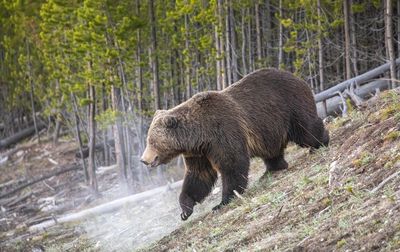


With the spring’s first warm whispers in the air, the first grizzly bear of the year has been spotted in Yellowstone National Park. That means it's time to "bear aware".
Biologists from the National Park Service (NPS) spotted the bear on March 9, 2026, in the park's northern range. The grizzly had recently emerged from its period of winter denning and wasted no time breaking its long fast to feed on the carcass of a bull bison.
This year's sighting fits neatly into the historical pattern: the first grizzly of 2025 appeared on March 14, in 2024 on March 3, and in both 2022 and 2023 on March 7. It's always the males who venture out first. Females with cubs are more cautious and need more time, typically waiting until April or even early May before making their appearance.
This period of winter rest is often called hibernation in casual conversation, but that may not be strictly accurate. Brown bears and black bears do enter a state of months-long dormancy over winter, though their body temperature doesn't dip significantly compared to true hibernators. For this reason, some scientists prefer to call it torpor, a kind of “hibernation light” marked by a slower metabolism but not the deep, body-chilling sleep of smaller mammals.
To prepare for this period of rest, bears pile on the pounds throughout summer and early fall, stocking up on fat reserves to sustain them through months of not eating. This is, of course, the origin of the beloved Fat Bear Week, held each year in late September or early October.
When grizzlies do emerge, they're ravenous. Having burned through much of their fat reserves over winter, they rely heavily on scavenging. Elk and bison that didn't survive the cold months become critical early-season meals before other food sources become available in the warmer months.
As the year progresses, Yellowstone grizzlies will start to eat a more varied diet, including elk calves, wolf-killed carrion, trout, insects, plants, berries, fruits, and roots.
Understandably, bears can be pretty cranky when they emerge from denning. The NPS warned that bears can react aggressively to encounters with people when feeding on carcasses. As such, they advised visitors to Yellowstone to be "bear aware": stay alert, carry bear spray, and keep at least 100 yards (91 meters) away from black and grizzly bears. Make sure you store your food, or dispose of it, where bears can't access it. It's also a good idea when hiking trails to make plenty of noise to let the bears know you are there. No one wants to come face-to-face with a surprised bear.
And whatever you do, don't run.