Nature
 PUBLISHED


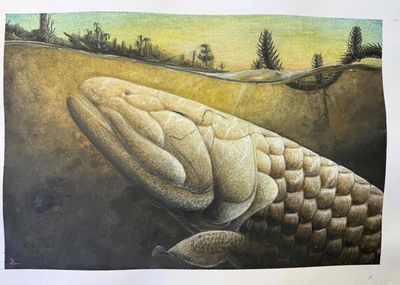


Hundreds of millions of years ago, animals crawled out of the oceans for the first time and ventured onto dry land. The rest is history, except that much of this chapter in Earth's story remains unwritten. Could this bone-headed fishy fella hold some answers?
Koharalepis jarviki is an extinct fish that lived 380 million years ago during the Devonian Period, nicknamed the “Age of Fishes”, just as the great vertebrate conquest of land was getting underway. As a predatory lobe-finned fish from this era, scientists believe it was among the first fish to start the transition from sea-dweller to landlubber.
Its fossilized remains were found decades ago in what might seem like a very unexpected place: the Lashly Mountains of Antarctica. When K. jarviki swam the oceans, and perhaps crawled the shores, this part of the world wasn’t a remote region of snowy mountains and ice sheets but part of the supercontinent Gondwana.
Scientists have only found one fossilized specimen of the species, but it’s in incredible condition with its skull still largely intact, and there's still much to learn from it. In a new study, scientists at Flinders University in Australia have returned to the specimen, paying close attention to the internal bones of the skull.
“We chose to focus on Koharalepis as it is the only fossil in the entire family to preserve the internal bones of the skull, which gives us valuable insights into its braincase and neuroanatomy,” lead author Corinne Mensforth, a PhD candidate from the Palaeontology Lab at Flinders University, said in a statement.
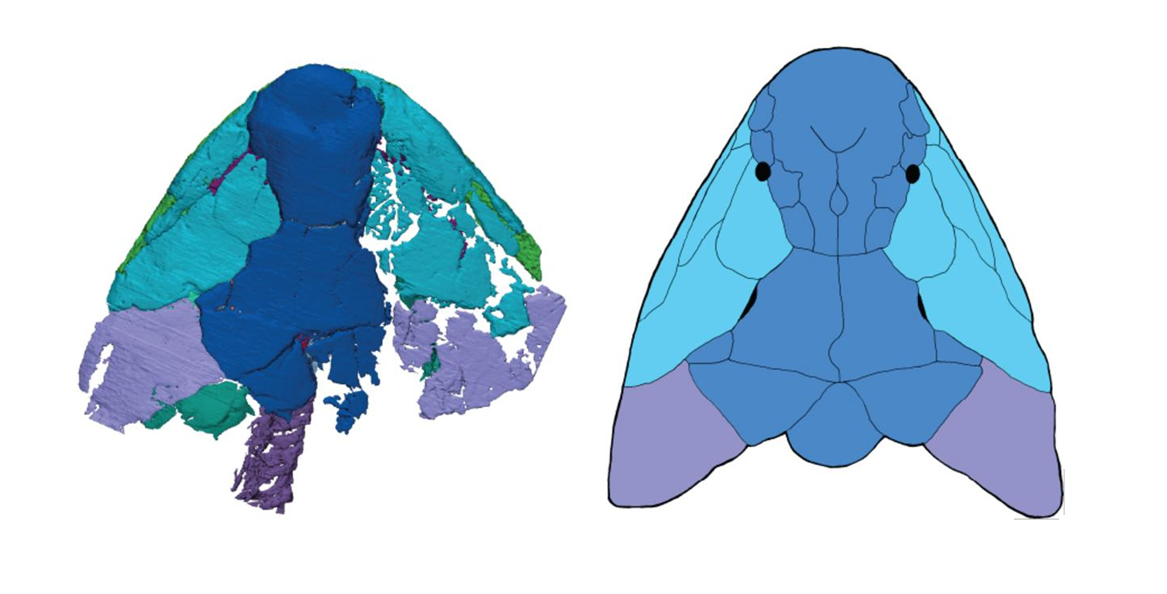
The researchers beamed the skull with neutrons to image its anatomy in extraordinary detail, uncovering new clues about how fish made the leap onto land.
“We found evidence that the brain of Koharalepis was similar to those of the fishes that straddle the vertebrate water-to-land transition. We also found adaptations to life near the surface of the water, including openings in the top of the skull for additional air intake and an organ within the brain that detects light and circadian rhythms,” explained Mensforth.
“Koharalepis which grew to about 1 metre [3.3 feet] was an ambush predator that preyed on other smaller animals in their environment, and with relatively small eyes it must have relied heavily on its other senses to capture its prey,” Mensforth added.
Fossils like this aren’t the only clues we have about the vertebrate invasion of land. The closest living link to these ancient land-colonizers is the lungfish, which is exactly what it sounds like: a freshwater fish with a unique respiratory system that lets it breathe air. By sequencing the genomes of these aquatic freaks, scientists are able to gain some insights into how the transition to dry land unfolded.
It's unlikely to have been a single event, however. Some research has indicated that the transition from aquatic to terrestrial may have occurred dozens of times across several different species – a fascinating little factoid that suggests the story may be even thornier than first thought.
The study is published in the journal Frontiers in Ecology and Evolution.