Humans
 PUBLISHED
 1
1




Modern ideas on gender are weird – and if you want proof, just look at what we used to consider normal. Pink used to be for boys, for instance, and coding was considered ideal women’s work; FDR famously grew up in skirts; before that, high heels were once strictly for men, and before that women were considered the sexually insatiable gender, who men had to fend off for the sake of their purity.
Today, any one of those examples might be considered boundary pushing, at least – but the truth is, even some of the most controversial topics of modern life have been normal aspects of society for, well, as long as society has existed. It was only last year that the Trump administration sought to politicize and legally confine people’s gender; since then, we’ve seen increasingly draconian measures against trans people’s rights to, for example, play sports or get a passport or pee in a public toilet, all with an appeal to tradition and (heavy quotes here) “science” as justification.
Go back a few millennia, though, and the idea that somebody could be born with a body that suggests one gender but perceive themselves as another was far from controversial.
In fact, in some places, it was sacred.
Who were the Enarees?
For 400 years, the Scythian culture flourished across a vast swathe Classical-era Eurasia. It “spanned from around the Black Sea sort of area, like modern-day Ukraine, all the way out almost to the Korean Peninsula,” explains Sophie Edwards, a historian, researcher, and host of the YouTube channel We Have Always Existed: Transgender History. “They were a very widespread culture.”
Now, if you’re wondering why you’ve never heard of them, the answer is simple: they “were an illiterate culture,” Edwards tells IFLScience. “They never developed writing – so everything we know from them comes from archaeological evidence or from their neighbors who visited them and wrote about them, including the Greeks.”
That’s important, for at least two reasons. First, it means we don’t know how the Scythians lived, or why, from their own unambiguous perspectives – only what we can glean from physical evidence like grave goods. And second, it means anything we can read about them from the time is hardly objective: it’s more like the gawkings of anonymous Greeks, the same people who thought Libya was home to a bunch of headless dudes with faces in their torsos.
Still, all that said, there are some things we know about the Scythians. They loved horses, archery, and gold; they were nomadic warriors; they worshipped seven or eight deities, with the chief one being Tabiti, the fire goddess – although it was her granddaughter, the Snake-Legged Goddess, who created humans. It’s complicated.
But there’s one aspect of Scythian culture that’s especially intriguing: the Enarei, or Enarees. Why? Because these women – priestesses and soothsayers, tasked with some of the most important duties of the day – were trans.
“They were what we might call today ‘assigned male at birth’,” Edwards explains. “But they adopted a feminine persona, and they served a feminine role within their society.”
The life of an Enaree
Being an Enaree priestess was a full-time gig – at least, as far as we can tell. They “speak like women, wear women’s garments, act like women, and work with other women doing women’s work,” according to Ancient Greek contemporaries; even their name, Enaree, is a corruption of the Scythian Anarya, meaning “non-manly”.
And life as an Enaree seems to have rocked, honestly. They appear to have been well-respected in their society: Greek writers of the time reported that laypeople prostrated themselves before the Enarees, and saw their transfemininity as a gift from the divine. They even got to get high, worshipping as they did Artimpasa, the goddess of fertility, priestly force, and, ahem, plant life.
Oh – and they had just the most beautiful, badass accessories.
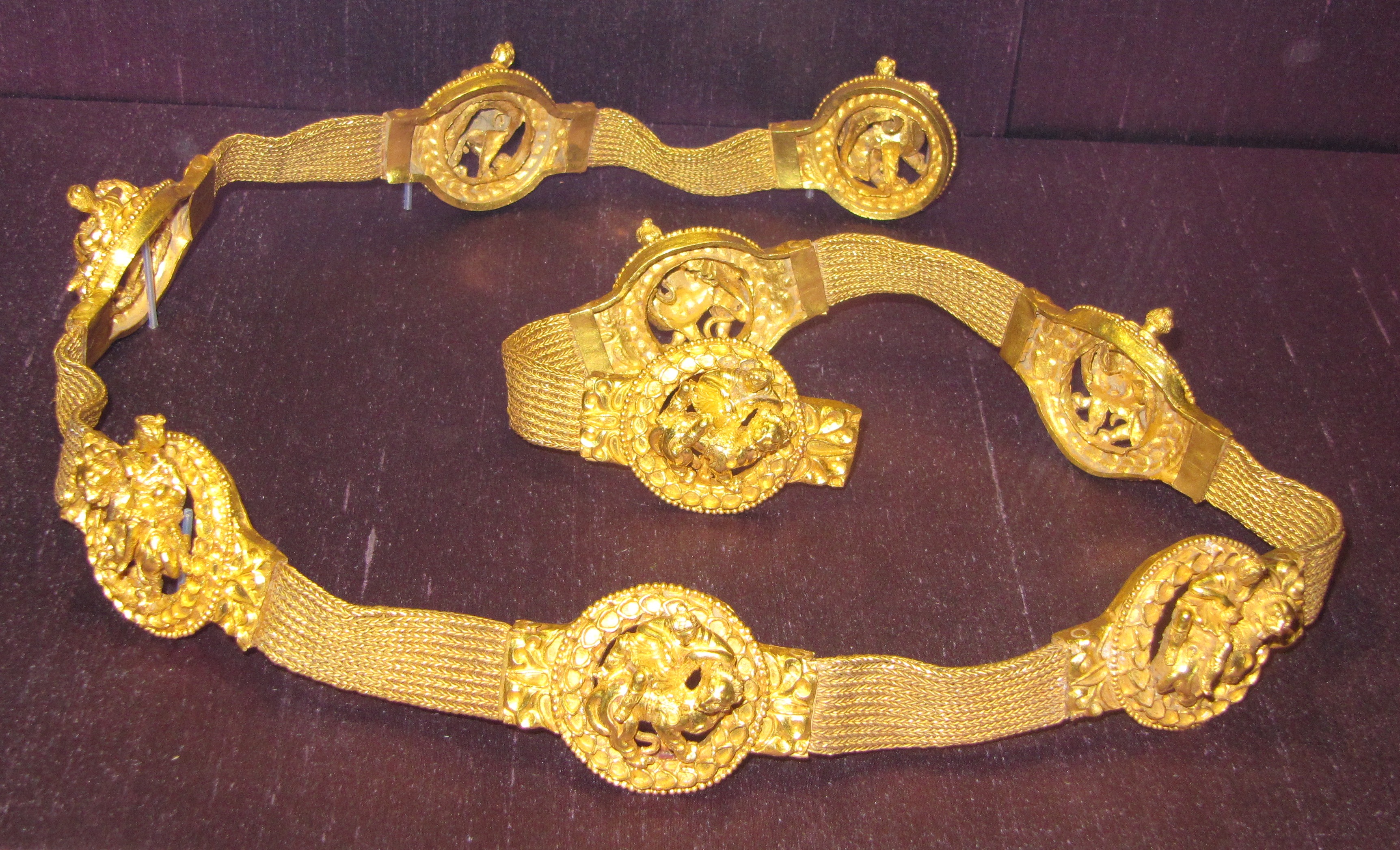
“This is really cool,” says Edwards. “This is probably the most exciting thing that I've come across in my research. We have found a grave of what could be interpreted as an Enaree priestess.”
“It is in Bactria, which is modern day northern Afghanistan, near the border with Tajikistan,” she tells IFLScience. “There's six graves, they're priestesses, and some of them are warrior priestesses. And in that grave [...] the grave goods are pretty similar to what we found in the ladies' graves, but osteological analysis, like analysis of the bones, shows that this is what we would call assigned male at birth.”
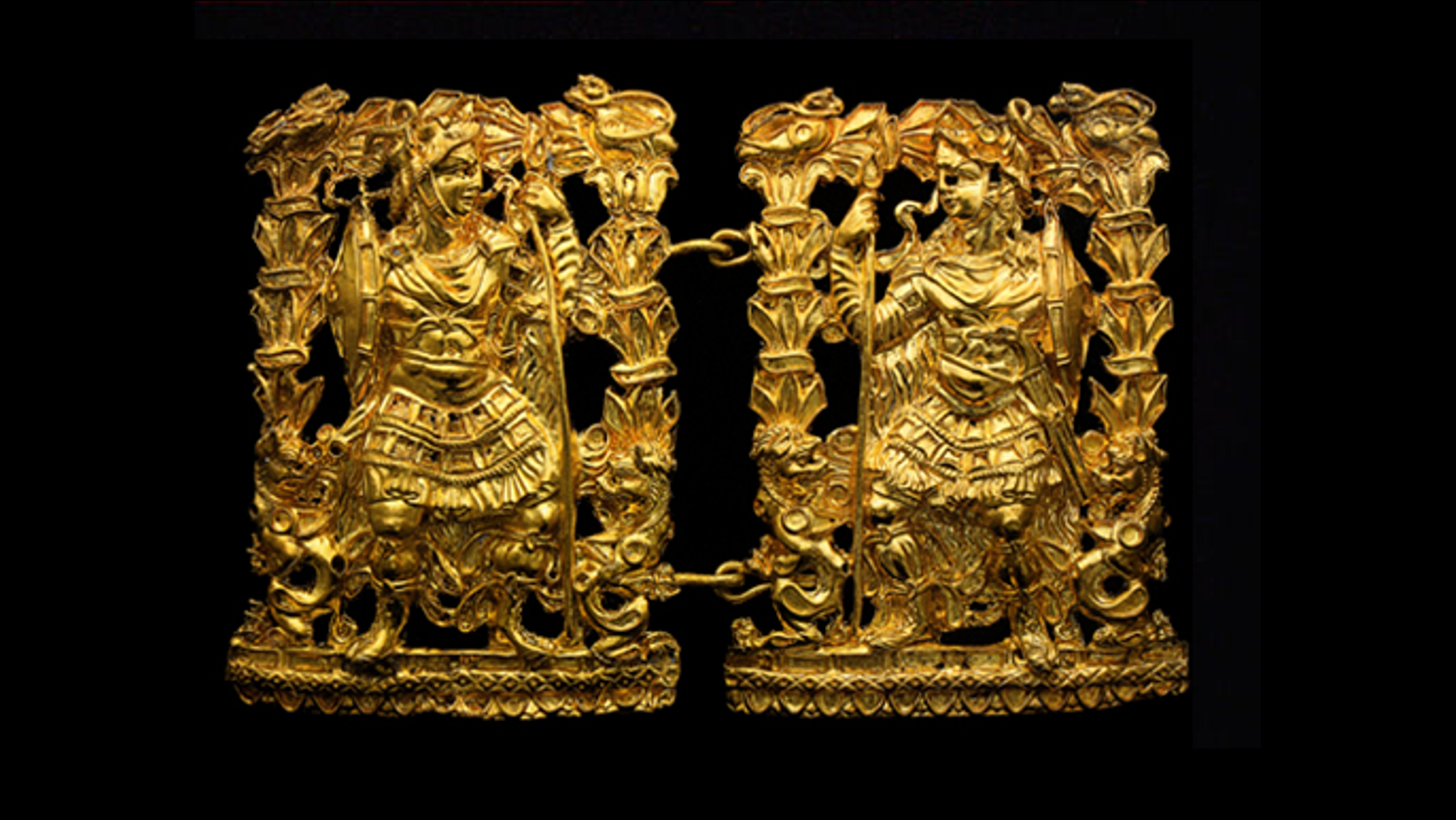
“And so, the fact that the grave goods are ladylike, but the bones are male, and this is within Scythian territory, and a lot of the art tells us that these are Scythians – it tells us that this is probably the grave of an Enaree priestess,” Edwards explains. “There isn't a better explanation that I've found.”
Like other trans, nonbinary, or androgynous people in many cultures, the Enarees were considered mystically gifted: “They were kind of like soothsayers,” Edwards explains. “The only role we know that they had was that, when the king was ill, they would summon the three best Enarees to figure out what was making [him] sick.”
“Assumedly the king didn't get sick every day, so they must have had some other role to play in their society,” she adds. “But unfortunately, we don't know a whole lot about it.”
Generally, then, a pretty good life. With maybe just one exception.
Did the Enarees drink horse pee?
Weren’t expecting that to be the next subtitle, were you? But it’s not our fault. “Some people think that it's possible that the Enarees drank pregnant horse urine,” says Edwards, “in order to trans their gender.”
We promise, that’s not as weird as it sounds. Pregnant mare urine is such a potent source of estrogen that it’s still how we create hormone replacement therapy today: indeed, one of the most commonly prescribed estrogen replacement medications is Premarin, a name literally derived from its main ingredient, Pregnant mare urine.
It’s also historically feasible. “The Scythians have lots of horses,” points out Edwards. “They're very much a horse-based culture […] If you take like, five Scythian artifacts at random, it’s pretty much a guarantee you're going to have at least a couple of them that have horses in them.”
“We also know that the Romans, at least, knew that the extract of pregnant mare urine could be used as a topical beauty cream,” she adds. There is, overall, just one problem with the hypothesis: “Based on the amount you'd need for even the minimal amount of feminization, you can't drink that much,” Edwards explains. “It’s not possible.”
So, case closed? Not quite. “There’s been research on this,” Edwards says. “If you take pregnant mare urine and soak cheese curds in it, [the cheese] will draw the estrogen into it. And then if you toss out the horse piss and then get some more horse piss and put the cheese back into it, [the cheese] will absorb more estrogen.”
Repeat this cycle a few times, and eventually, “you can get a tasty treat that gives you all the estrogen you might need,” explains Edwards. Now, is there evidence that they did this? No – “but I don't know what kind of evidence there could be,” she says. “You're not going to find 2000-year-old cheese curds – and even if you did, the odds that some researcher is going to think, ‘oh, well, let me see if there's any estrogen in these cheese curds’, that's just not going to happen.”
“So, I don't know if we could ever prove this sort of thing, but it's interesting to think about.”
Were the Enarees really trans?
It’s reasonable to be cautious, with claims like these. After all, we’ve already outlined two very important reasons why: ideas on gender have changed dramatically within even a few decades, and we have next to no evidence of how this very ancient culture thought about it. Should we really be grafting modern concepts like “being transgender” onto a culture so very far removed from our own?
It’s a fair question – but it’s certainly not one that historians haven’t thought to ask already. “Because ‘transgender’ is a word that has come into widespread use only in the past couple of decades, its meanings are still under construction,” acknowledges Susan Stryker, a historian and currently a visiting professor at Stanford University's Michelle Clayman Institute for Gender Research, in the introductory chapter to her 2008 book Transgender History. “I use it […] to refer to people who move away from the gender they were assigned at birth, people who cross over (trans-) the boundaries constructed by their culture to define and contain that gender.”
“It is the movement across a socially imposed boundary away from an unchosen starting place” which is important, she writes, “rather than any particular destination or mode of transition[.]”
It's certainly true that people’s ideas about gender have changed over time and geography; it’s also very true that we should avoid, wherever possible, “presentism” – that is, the practice of interpreting the past through a modern value system. But “at the same time, it's clear that there are people who transcended the boundaries of gender within their societies, even though that didn't look like how we as modern people transcend the boundaries of gender,” Edwards tells IFLScience.
“Of course it's not going to look the same, because it's a different society,” she says. “But to argue that they didn't […] transcend the boundaries of their gender in society? Of course they did.”
In that respect, they’re far from a rare phenomenon. From the Gallae of Rome to the Māhū of Hawaii and Tahiti; from the Chukchi of Siberia to any number of other traditional gender roles outside of the modern Western binary, trans and non-binary people “were pretty much everywhere,” Edwards confirms.
“There are a lot of examples of transfeminine priestesses, that we find all over the world,” she says. “We find examples throughout time and throughout [the world].”