Humans
 PUBLISHED


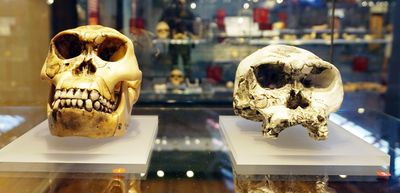


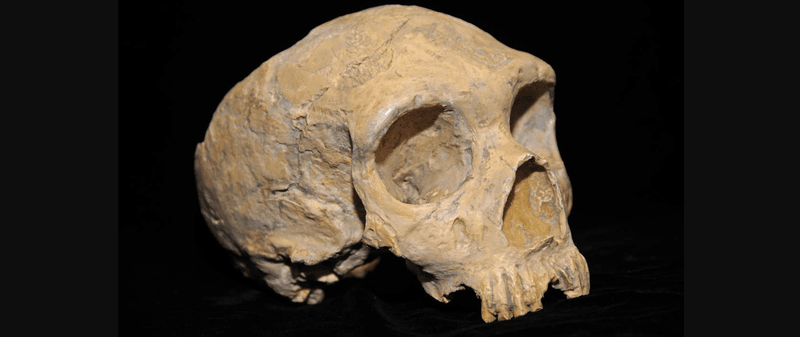
In 1964, legendary palaeoanthropologist Louis Leakey came up with the name Homo habilis to describe a 2-million-year-old jawbone in Tanzania. In doing so, he bestowed human status on this mysterious specimen, placing it at the very beginning of the Homo lineage to which we ourselves belong. But perhaps he was wrong to do so.
“Don't be misled by the Homo habilis thing. It should never have been put into the genus Homo to begin with,” says Ian Tattersall from the American Museum of Natural History. “The type species for the genus Homo is Homo sapiens, so anything that you put into the genus has at least to have something in common with Homo sapiens,” he told IFLScience. “And none of the habilis stuff, of course, has that.”
The debate over the identity of Homo habilis has recently been reignited by the discovery of the most complete skeleton belonging to this enigmatic species ever found. Unearthed in Kenya, the new fossils give us our first ever glimpse of the limbs and body of this ancient hominin, revealing that it is far more ape-like than any bona-fide member of the genus Homo.
Palaeoanthropologists work on the basis that if it's not Australopithecus, it's Homo, and if it isn't Homo then it has to be Australopithecus. That's why we have the mess that we are in today.
Ian Tattersall
In a commentary about this discovery, Tattersall outlines the current state of play regarding H. habilis, tracing the confusion back to Leakey’s original error. Back then, he explains, researchers were enamoured with the idea of “Man the Toolmaker”, which posited that humanity was defined by the ability to fashion utensils rather than by our morphology.
At the time, Leakey and his wife Mary were searching for the creators of the so-called Oldowan tools – the earliest known hominin tools, dating back around 2.5 million years ago – found in Olduvai Gorge, when their son Jonathan happened upon the prehistoric jawbone. “They naturally jumped on it as an early member of Homo because it was associated with the tools that were found at the bottom of the gorge,” says Tatterall.
“It didn't look much like a member of the genus Homo, but on the definition of Man the Toolmaker, it had to be in the genus Homo by their reckoning. But that was never a good way of determining whether something is a member of the genus Homo or not,” he insists.
Despite this, anthropologists have remained reluctant to reclassify the specimen simply because it doesn’t seem to fit into any other box. For instance, the other hominin genus knocking around East Africa 2 million years ago was Australopithecus, but it’s hard to say which clade this particular fossil belongs to.
“Palaeoanthropologists work on the basis that if it's not Australopithecus, it's Homo, and if it isn't Homo then it has to be Australopithecus,” says Tatterall. “That's why we have the mess that we are in today.”
In this particular case, he says, “we're looking at something that is not necessarily ascribable to Australopithecus, but is certainly not Homo. Ergo, it's something else.”
“But nobody's done the basic spade work to determine what it ought to be called.”
Toolmaking abilities aside, the specimen known as Homo habilis shares very few attributes with the other members of the Homo genus. In fact, the morphological characteristics that define our lineage begin with Homo ergaster - also known as the African Homo erectus - and many researchers now consider this to be the first true human species.
The commentary has been published in the journal The Anatomical Record.


 5
5