Humans
 PUBLISHED



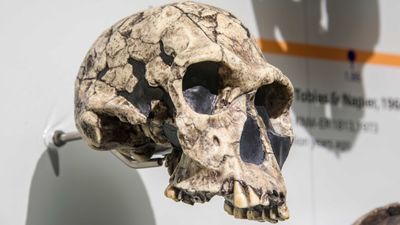


Modern humans are the latest in a long line of creatures belonging to the Homo genus, although until now we knew relatively little about the earliest member of our line. Yet the discovery of the most complete Homo habilis skeleton ever found has finally changed that, revealing that this prehistoric ancestor remained surprisingly ape-like in appearance.
Often credited with being the first true human species, Homo habilis first appeared a little over 2 million years ago in Africa. Previous discoveries of teeth, cranial bones, and stone tools left behind by this extinct hominin have given us glimpses into its brain size and cognitive abilities, both of which exceed those of earlier hominids like the Australopithecines or Paranthropus.
Yet a lack of postcranial remains meant that we didn’t really know what kind of body H. habilis possessed - until now. Reporting the discovery of an exceptionally well-preserved skeleton from East Turkana in Kenya, researchers say that despite the human-like intelligence of this archaic species, its body was unexpectedly primitive.
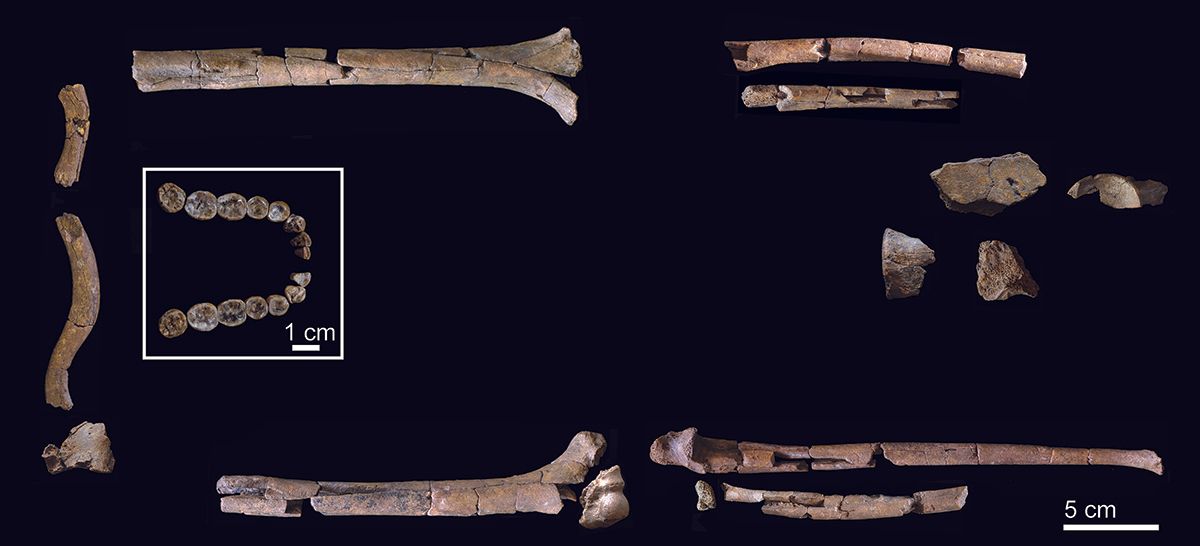
Dated to between 2.02 and 2.06 million years ago, the skeleton consists of both collarbones, both upper arm and forearm bones, parts of the pelvis, and a piece of the sacrum, a triangular bone at the bottom of the spine. Immediately noticeable is the fact that the forearm of H. habilis was much longer in relation to its body than that of later human species like Homo erectus, and in fact falls within the range typical of gorillas.
In this regard, H. habilis matches with hominids that existed millions of years before the Homo lineage appeared, including the likes of Australopithecus afarensis, of Lucy fame. Given that Lucy and her kind lived mainly in trees, this finding opens up the possibility that H. habilis may also have been largely arboreal.
At the same time, however, the study authors note that the shape of the pelvis indicates that Homo habilis may have been adapted for walking upright − although the fact that no leg bones were found makes it impossible to confirm whether this was the case.
In light of this uncertainty, the researchers are reluctant to make any definitive claims about how H. habilis lived or moved around. “The relatively long forearm of H. habilis may have enabled a greater degree of arboreal locomotion in this species than in H. erectus, but whether arboreality was indeed practiced by H. habilis must remain a matter of speculation,” they write.
What’s clear, though, is that at 160 centimeters tall (5 feet 3 inches) and weighing just over 30 kilograms (66 pounds), Homo habilis lacked the large, lanky human body plan that has been noted in Homo erectus and all subsequent members of our lineage.
This, in turn, suggests that Homo habilis may not have been the direct ancestor of Homo erectus, as has previously been theorized. Exactly how we made the jump from intelligent, long-armed, ape-like animals to the tall, leggy beings we are today, however, remains an anthropological mystery.
The study is published in The Anatomical Record.