Space and Physics
 PUBLISHED



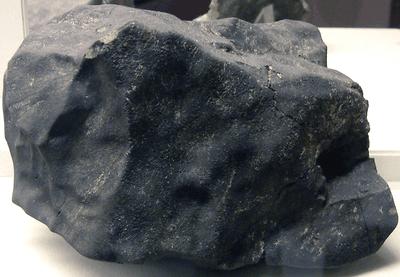


The metal left behind by the meteorite that caused the Chicxulub impact crater and put a temporary dampener on the majority of life on Earth has a distinctive isotopic signature.
Scientists have been able to use this to reveal the class of asteroid responsible. An analysis of the nickel deposited in a layer around the planet marks the offending space rock as a carbonaceous chondrite, challenging one of the leading theories of how the extinction unfolded.
In the decades since a devastating impact was established as the cause of the non-Avian dinosaurs’ demise, there has been debate about the nature of the maker.
Either an asteroid or a comet could have left a crater like that. While most media reports continue to refer to an asteroid, some astronomers have maintained a comet from the Kuiper Belt or beyond was much more likely. For what it’s worth, Hollywood prefers the comet theory, too.
But a new study including Dr Philippe Claeys of the University of British Columbia has been looking into whether they can narrow this down further.
Recently arrived meteorites can be categorized by the abundance of their elements or basic molecules such as water. This can include the traces of metal left behind.
Classifying the dinosaur-killing space rock
One of the things that first made geologists suspect a space rock ended the Cretaceous was a metal-rich band preserved in the rocks. Known as the KPg boundary, it marks the exact point in time when the Cretaceous came to a close and the Paleogene began.
But more importantly, it also includes metals rare in the Earth’s crust that contain a mix of isotopes whose ratios can be very revealing.
“This is challenging work,” Claeys said in a statement. “Only a minute fraction of the projectile is preserved in the planet’s [KPg] clay layer because the entire meteorite vaporized upon impact.”
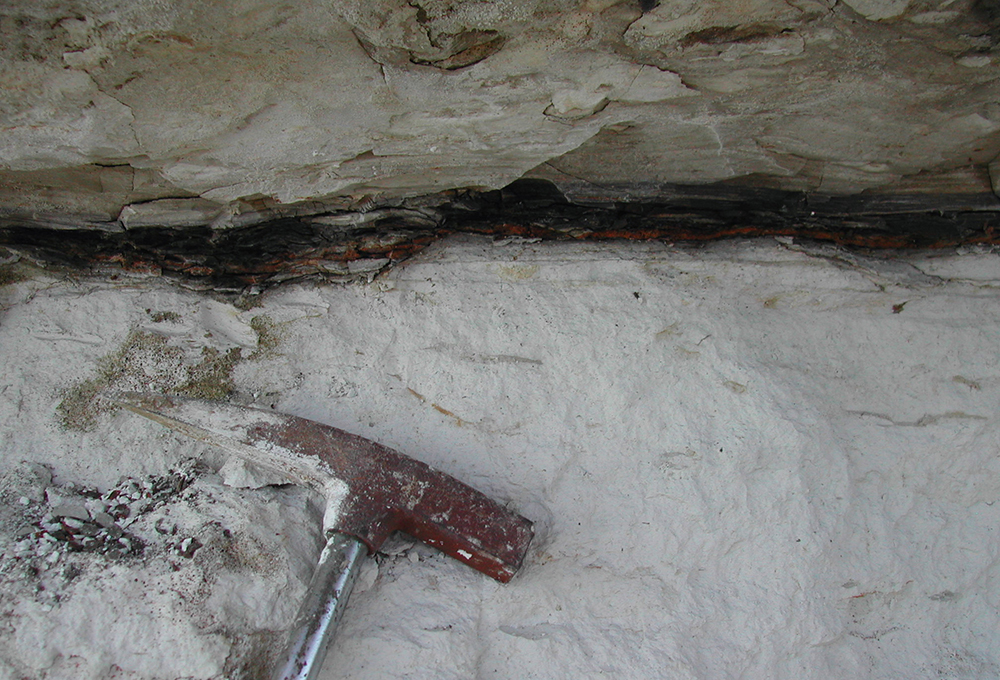
Previous research has indicated that the asteroid was probably a carbonaceous chondrite, a class of space rock that represents only 5 percent of known meteorites and, as their name suggests, are rich in carbon.
Despite their rarity, carbonaceous chondrites are relatively well-known because planetary scientists get so excited when they are found. That’s because some of them contain complex molecules and water that could have contributed to the formation of life.
Claeys and co-authors studied the ratios between the five stable isotopes of nickel in samples from the KPg layer around the world. Despite the difficulties, they identified the ratios of isotopes as matching those from a rare subgroup of carbonaceous chondrites known as the Ornans class.
“Carbonaceous chondrites of the Ornans class are definitely not like the typical meteors you find in museum collections,” Claeys said. “A CO contains much less volatile elements—like carbon, zinc, water and particularly sulfur—than other classes of meteorites we’ve discovered so far on Earth.”
What happened in the aftermath?
Historically, models of the post-impact Armageddon have given sulfur a big part to play. It has been thought that it contributed to the particles that blocked out the Sun for years, and so helped cause most life to die.
If it turns out that there wasn’t much sulfur in the asteroid to begin with, then thoughts must turn to what could have produced a similar effect.
“It doesn’t alter our theory of what caused the extinction event,” Claeys said, “But it makes it less likely that sulfur contained in the impactor was the smoking gun. The fine debris thrown into the atmosphere would have the primary factor.”
“Being impacted by such a rare, distant projectile really underscores how unlucky the dinosaurs were,” Claeys noted. They were spared the sulfur rain other types of carbonaceous chondrites would have delivered, but died out anyway.
The study is open access in Science Advances