Space and Physics
 PUBLISHED
 1
1




NASA has fixed a problem with Curiosity on Mars, when the rover got stuck to a rock after 13 years on the Red Planet.
The Curiosity rover, which began its mission by landing at Bradbury Landing in the Gale Crater in August 2012, has had a bit of a rough time of things lately. Earlier this year, engineers monitoring the wheels of the rover by photographing it every now and then using the Mars Hand Lens Imager found that its wheels were showing signs of significant damage. That's a bit of a problem, given the lack of Goodyear outlets in space.
While NASA is unable to physically go to Mars and fix these issues, they do plan for them ahead of time. Using Scarecrow, a double of Curiosity here on Earth, the Curiosity team found that the rover could continue to roll along the Martian soil "indefinitely" on the remaining portion of the wheel, if they were able to shed the broken grousers away from it.
NASA has practiced several maneuvers to achieve this using Scarecrow, essentially getting the wheel caught on a rock and then driving with the other wheels until the damaged portion snaps off. So far it is unclear whether NASA is concerned by the damage or considering trying this technique. Though the damage appears pretty hefty, the rover is still able to drive.
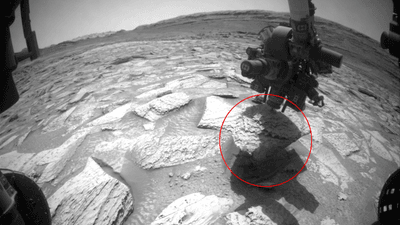
But in on April 25, Curiosity hit another problem, getting its drill stuck in a piece of rock it was investigating.
"Curiosity drilled a sample from a rock nicknamed 'Atacama,' which is an estimated [0.5 meters] 1.5 feet in diameter at its base, [15 centimeters] 6 inches thick and weighs roughly 28.6 pounds (13 kilograms)," NASA explains in an update. "When the rover retracted its arm, the entire rock lifted out of the ground, suspended by the fixed sleeve that surrounds the rotating drill bit. Drilling has fractured or separated the upper layers of rocks in the past, but a rock has never remained attached to the drill sleeve."
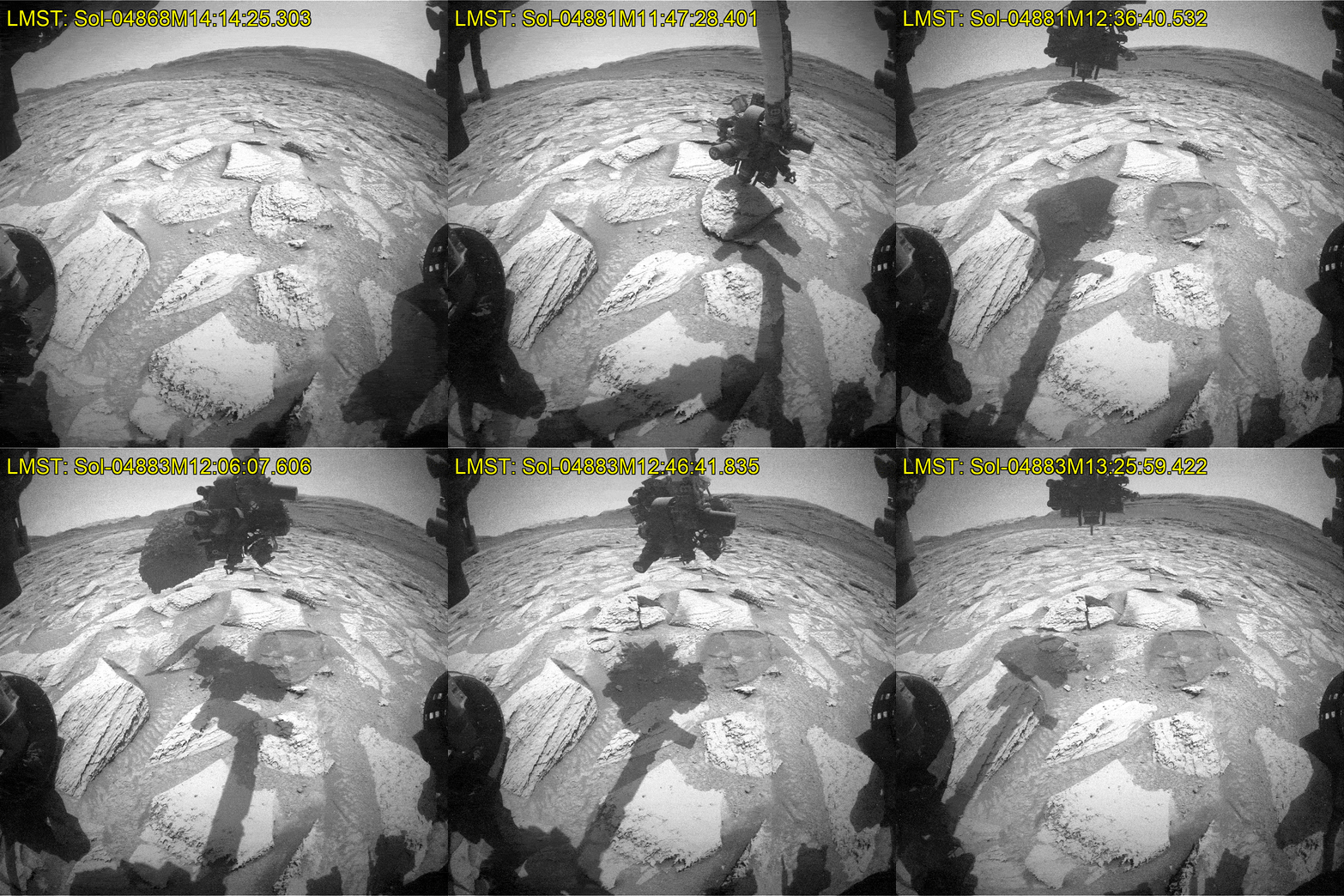
It's a thing that happens to just about everyone at some point whilst attempting DIY, but is a little more problematic when getting a replacement drill bit to Curiosity would cost hundreds of millions of dollars, if not more. Fortunately, NASA had a simple plan for this too: vibrating the drill until the rock plops off.
The first attempt did not shift the rock, nor did it fall off during the second attempt on April 29. On May 1, NASA planned several attempts at getting it off there by vibrating it, rotating the arm, and spinning the drill bit. However, this time it came off on the first attempt, with the rock shattering on the Martian surface. The rover will now continue its job of exploring the Red Planet, finding interesting rocks, and hopefully not getting stuck in them.