Space and Physics
 PUBLISHED


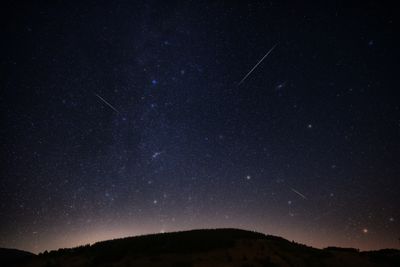


The Arietids is a very annoying meteor shower. It is quite prolific, averaging a meteor every couple of minutes at its peak. But you wouldn’t know that. The peak of the shower is during the daytime.
The radiant of this shower – the region of the sky from which the meteors appear to originate – is the constellation of Aries, which in June is still very close to the Sun. This makes the best option to try and spot meteors the hour just before dawn.
The fact that the peak is during the daytime, when it is difficult to confirm the number of meteors, produces a bit of a challenge in determining the right day for skywatching.
According to the International Meteor Organization calendar, the peak this year is on Sunday, June 7. The American Meteor Society disagrees. They place the peak of this daytime shower on June 10.
Basically, it is soon, and every morning is a good chance to catch some cosmic grains burning through the atmosphere.
How can I watch the spectacle?
If you are committed to pre-dawn skywatching (or you are just coming back home), remember that it is best to look for meteors with your naked eyes. They move too fast for telescopes and binoculars.
Find some place dark and let your eyes adjust (no phone!). Then look east, where you will find the constellation Aries, AKA the Ram. This is not the easiest constellation to spot, but you'll have some great help this year. Mars and the Pleiades will rise in the east just after Aries, so it is easier to find where the radiant is.
But basically, look east and it should be easy enough to find.
I am not waking up at 3 in the morning unless it’s 100 meteors – what else is in the sky?
Alright, alright – if catching up with this meteor shower is too much of an ask, there is plenty more in June, from rare clouds to a different but more unpredictable meteor shower. It is also the best time to see the core of our galaxy and the Summer Triangle. On top of that, there’s a cosmic kiss on Monday and Tuesday.
On June 8 and 9, Jupiter and Venus – the brightest planets in the night sky – will be less than two degrees apart. The conjunction, this cosmic kiss, will be very easy to spot: look west after sunset, and they will be there. They are very bright, so you can’t miss them.
And as the sky darkens, you’ll be able to see two bright stars nearby. These are Castor and Pollux, the brightest stars in the constellation Gemini (the Twins).