Nature
 PUBLISHED


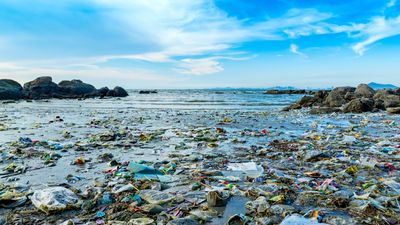


Three species of bacteria in combination are capable of breaking down PAE diethyl phthalate, an important component in plastic pollution. Yet none of the three can do the same thing in isolation to the plasticizing agent, which has proven a challenge for other plastic-eating bacteria as well.
The plastic crisis has inspired a search for organisms capable of safely breaking down various forms of artificial material currently polluting land and water. So many different types of plastics are in widespread use that it’s not surprising some have turned out to be more susceptible to biological breakdown than others. However, it’s also possible the search has been hamstrung by a focus on finding a specific bacterium capable of breaking the bonds of each type of plastic, rather than looking for a collection capable of doing the job together.
Dr Christian Eberlein and colleagues at the Helmholtz Centre for Environmental Research decided that instead of searching for plastic-eating bacteria in extreme places like hydrothermal springs, they should see what colonized the materials in their own lab. They found a biofilm growing on the polyurethane tubing in the lab’s bioreactor and incubated a sample, giving it PAE diethyl phthalate (DEP) as a growth medium. DEP is added to many common plastics to make them more flexible, but leaches into the environment and may harm animals that consume it.
Initially the microbes struggled, but after the team repeatedly moved cells from one culture to another they eventually formed a community that could consume all the DEP in samples within 24 hours when warmed to 30°C (88°F).
Sequencing of the DNA revealed two members of the genus Pseudomonas (putida and fluorescens), along with a previously unknown Microbacterium species. When isolated, none of the bacterial species could devour the DEP on their own in any conditions the team tried.
The team report evidence the Microbacterium breaks the DEP into molecules that serve as nutrients for the others, a process known as cross-feeding. The enzymes the bacteria used in this process have not been identified before.
This sort of synergy between bacteria has been observed in long-standing ecosystems, but not when feeding on plastic, which none of the three could have encountered until the last century or so.
“Here we show the degradation of various phthalate esters (PAEs) through the cooperative activity of several bacterial strains,” Eberlein said in a statement.
Notably, however, once the DEP exceeded almost 1 gram per liter concentration, it started to kill the microbes, rather than feed them, a warning of what it might do to other more complex organisms.
The human team started their microbial counterparts on DEP because it is used as a model plastic when studying phthalate ester plasticizers, but were excited to see the same combination can tackle three common PAEs: dimethyl phthalate, dipropyl phthalate, and dibutyl phthalate.
“This broad substrate range enhances the potential value of the consortium for biotechnological and environmental applications, as it can degrade multiple PAEs commonly found as plasticizers in contaminated environments,” they write.
The speed with which bacteria evolve has created an antibiotic resistance crisis, but sometimes it works in our favor. Nevertheless, this capacity to break down PAEs collectively did not spring from nowhere.
Eberlein said it is likely that “[t]he initial reactions rely on pre-existing enzymes that originally evolved to break down natural molecules that contain ester bonds. Since then, persistent contamination with PAEs in nature has presumably created a strong evolutionary pressure, forcing microbes to adapt and develop more specialized enzymes that can break down PAEs much more efficiently.”
Humans could provide the trio with an even greater evolutionary reward if we find a way to deliver them to places where plastic pollution collects.
“The next step will be to test our new consortium in actual wastewater samples containing microplastics, to assess its ability to remove PAEs. Introducing these bacteria into polluted natural environments, a process known as bioaugmentation, could potentially help reduce PAE contamination in real-world settings,” said Dr Hermann Heipieper.
Even if that works, the findings are far from a universal cure for plastic pollution. The authors could not coax the bacterial community to break down polyethylene or polypropylene, both of which PAEs are frequently added to, and have non-ester bonds none of these enzymes can break.
However, with PAEs suspected of being more toxic than the plastics they leach out of, breaking them down would be an excellent start.
Longer term, the work suggests that if we can find, or genetically engineer, the capacity to degrade non-ester bonds, it might still be needed to be backed up with other bacterial species. One can imagine the capacity to tackle all common plastic pollutants might require, say, eight more bacterial species, leaving the salvation of the marine environment to an “oceans’ eleven”.
The study is published open access in Frontiers in Microbiology.



 1
1