Nature
 PUBLISHED


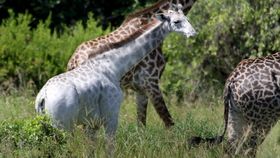


Meet Omo, the extremely rare white giraffe named after a popular detergent brand.
These photographs were taken by Dr. Derek Lee, an ecologist and founder of the Wild Nature Institute (WNI).
He initially saw the rare giraffe calf last year in Tarangire National Park, Tanzania, and was lucky enough to cross paths with her again this month. On the WNI blog, he reported that the giraffe appeared to be doing well.
Dr. Lee went on to explain that Omo has a genetic condition called leucism, not albinism.
“Leucism is when some or all pigment cells (that make color) fail to develop during differentiation, so part or all of the body surface lacks cells capable of making pigment,” he said. “One way to tell the difference between albino and leucistic animals is that albino individuals lack melanin everywhere, including in the eyes, so the resulting eye color is red from the underlying blood vessels."

Omo, the leucistic giraffe, roaming around Tarangire National Park. Image credit: Derek Lee/Caters News
The female giraffe is around 15 months old, meaning she has grown past her vulnerable time as a calf when lions and hyenas can easily prey on her. However, Dr. Lee has warned that her threats now come in the form of poaching and hunting.
Speaking to IFLScience, Dr. Lee said: "Being so bright and visible could be a disadvantage when hunted by visual predators like humans. However, many poachers use leg and neck snares which are indiscriminate killers.
"It is illegal to kill giraffes in Tanzania, as it is the national animal, but illegal market hunting for meat is well known to be rampant around Tarangire," he added. "Unfortunately all giraffes, not just the white ones like Omo, are threatened by bushmeat poaching.
"Fortunately, Omo lives in a national park where our research found she has the highest chance of survival thanks to anti-poaching efforts in the area."