Ad

nature-iconNaturenature-iconanimals
clock-iconPUBLISHEDMay 22, 2024
share350

Super Rare Pacific Footballfish Washes Up On Oregon Beach – And It's Terrifying

Just look at those teeth!

Eleanor Higgs headshot

Eleanor Higgs

Eleanor Higgs headshot

Eleanor Higgs

Digital Content Creator

Eleanor has an undergraduate degree in zoology from the University of Reading and a master’s in wildlife documentary production from the University of Salford.

Digital Content Creator

Eleanor has an undergraduate degree in zoology from the University of Reading and a master’s in wildlife documentary production from the University of Salford.View full profile

Eleanor has an undergraduate degree in zoology from the University of Reading and a master’s in wildlife documentary production from the University of Salford.

View full profile
EditedbyMaddy Chapman

Maddy has a degree in biochemistry from the University of York and specializes in reporting on health, medicine, and genetics.

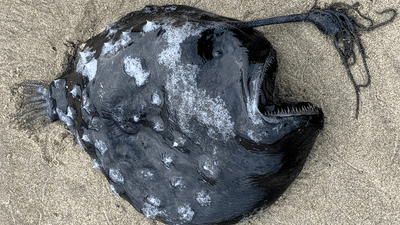
Large round black fish with huge mouth and sharp pointed small teeth. There is a anglerfish lure protruding from the head of the fish. The dead specimen is lying on the sand.

Adds Pacific footballfish to list of reasons not to go to the deep sea.

Image Courtesy of Seaside Aquarium


Beachcombers just south of Cannon Beach, Oregon, came across a Pacific footballfish (Himantoliphus sagamius) washed up on the shore. While this might look like a monster from the deep – and in fact it is – Pacific footballfish sightings and specimens are extremely rare.

The rest of this article is behind a paywall. Please sign in or subscribe to access the full content.

Seaside Aquarium shared the news on their Facebook page, writing that “only 31 specimens have been recorded around the world.”  The footballfish is one of over 300 species of anglerfish that live in the deep ocean. It is thought that H. sagamius lives in almost total darkness at 609-914 meters deep (2,000-3,000 feet).  

The specimen on the beach is a female. Male anglerfish can be around 10 times smaller than females and are what is known as sexual parasites. The males fuse themselves to the females, eventually losing their internal organs and becoming just a pair of testes attached to the female, write the California Academy Of Sciences.

From the top of the female's head protrudes a modified fin called the illicium that ends in a light-producing bulb called the esca. The esca contains light-producing bacteria that act as a lure, drawing other deep-sea creatures such as crustaceans, squid, and other fish closer to her waiting mouth. 
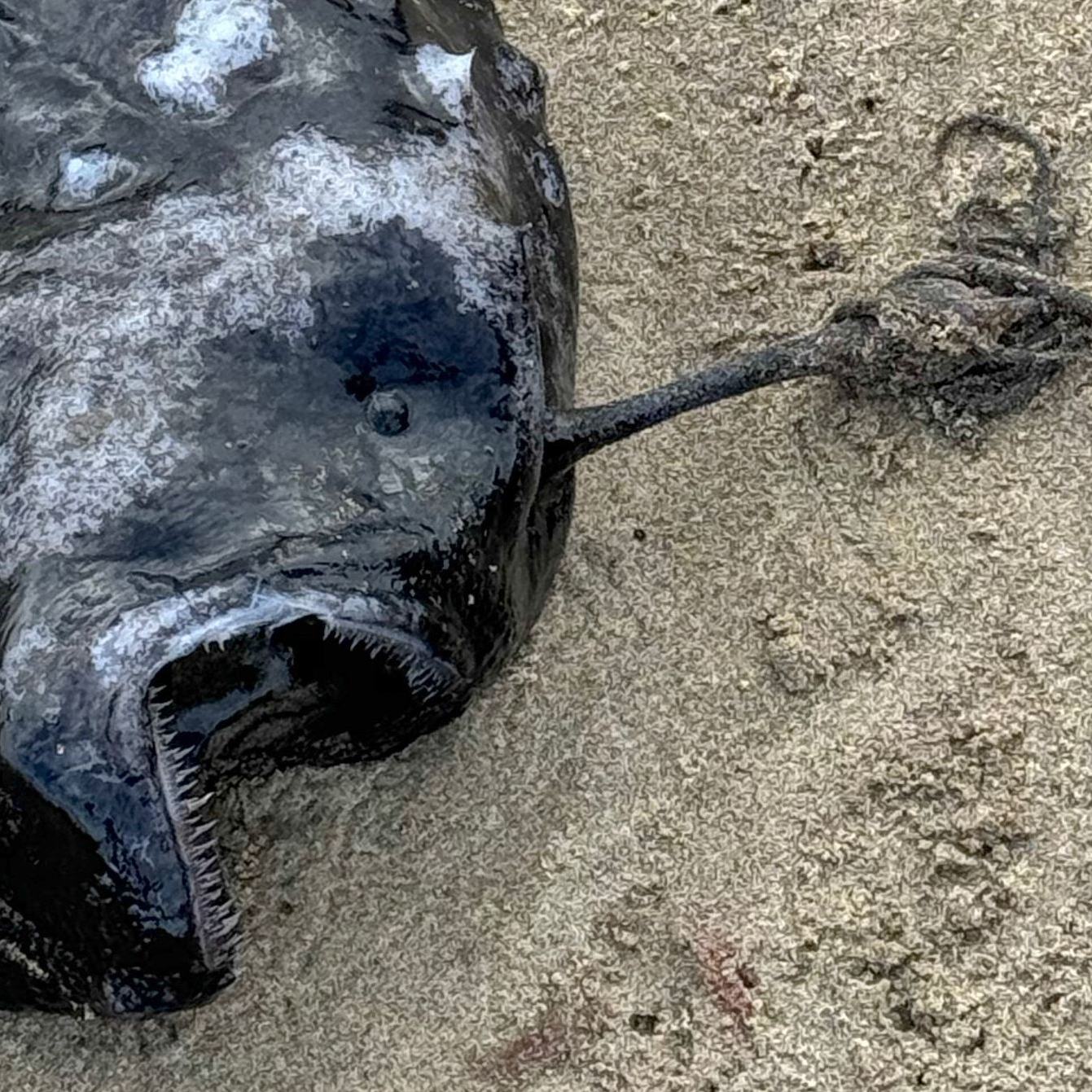
Close up of the footballfish showing the eyes, rows of sharp teeth and the lure.
Millions of light-emitting bacteria live within the bulb, or esca, of the lure.
Image Courtesy of Seaside Aquarium

The aquarium goes on to say that “ this is the first [footballfish] reported on the Oregon Coast to our knowledge”. Last year in October 2023, the same species of marine monster washed up on the shores of Crystal Cove State Park in California, while three washed up in a single year in 2021


Written by 

Add us as a Google preferred source to see more of our
trusted coverage in Search