Nature
 PUBLISHED


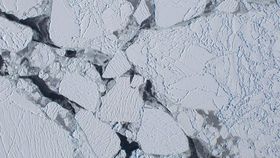


There's something unusual – and very, very hot – going on beneath the ice sheets of Antarctica.
A new study has shown that the Antarctic Ice Sheet at the South Pole has a giant “hotspot” – triple the size of London – under its bedrock.
As reported in the journal Scientific Reports this week, the freakishly hot zone is not likely to melt away Antarctica any time soon. However, the researchers note that its extreme heat has caused a 100-by-50 kilometer (62-by-31 mile) area of the ice layers to sag and droop downward, as you can see in the graphic below.
“This was a really exciting project, exploring one of the last totally un-surveyed regions on our planet. Our results were quite unexpected, as many people thought this region of Antarctica was made of ancient and cold rocks, which had little impact on the ice sheet above,” lead author Dr Tom Jordan from the British Antarctic Survey said in a statement. “We show that even in the ancient continental interior, the underlying geology can have a significant impact on the ice."

It’s unknown how long the hotspot has been there, but it’s certainly nothing new. The researchers estimate that it’s been there for thousands of years, perhaps even millions. That said, the outside environment is changing fast. With global temperatures continuing to rise, this portion of Antarctic ice might become especially vulnerable to melting.
"In the future the extra water at the ice sheet bed may make this region more sensitive to external factors such as climate change," added Dr Jordan.
It’s thought that the heat is being generated by unusually radioactive rocks in the Earth’s upper crust, as well as geothermically heated water coming from deep under the ground. However, truth be told, the scientists are not certain about this as they can't access the rocks.
The British Antarctic Survey team reached this conclusion by using radar data collected from an aircraft to peer through 3 kilometers (1.8 miles) of ice, providing them with all kinds of insights into the thickness, structure, and conditions of the ice sheet and its layers.
This project also sought to fill in the gaps of an incredible European Space Agency mission that used gravity-mapping satellite data around the South Pole to peer at the Earth’s lithosphere beneath the ice. The results were pretty outstanding. As documented in a recent study, their work managed to discover a patchwork of long-lost continents and geological features on the Earth’s lithosphere.