Humans


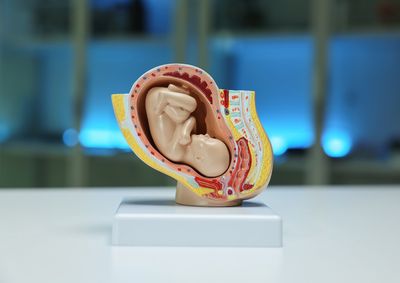


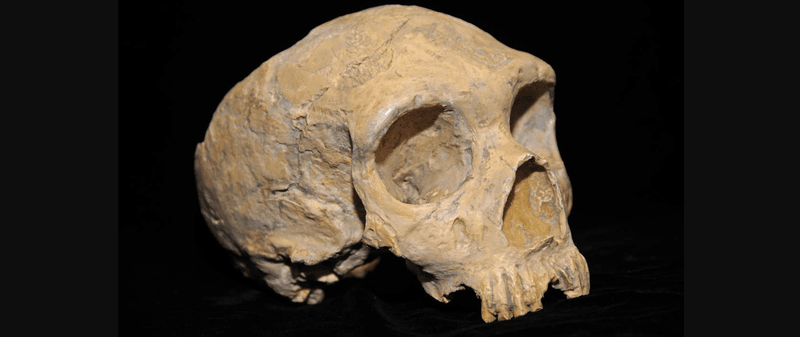
As scientists slowly piece together the realities of Neanderthal life, some researchers are beginning to ask questions about the phase of life before birth. To try and answer some of these, the authors of a new study have reconstructed the fetal bone growth pattern of an unborn Neanderthal that died with a gestational age of about 8 months.
Discovered at the Sesselfelsgrotte Cave in Germany, the specimen is estimated to be between 50,000 and 60,000 years old and is known as Sesselfelsgrotte 1. A total of 12 bone fragments belonging to this prenatal Neanderthal have been unearthed, yet until now it was unclear how these compared with the bones of Homo sapiens fetuses and newborns.
The researchers used microcomputed tomography to analyze how the bones had formed in Sesselfelsgrotte 1 and compared it with two baby Neanderthal skeletons found at La Ferrassie and Le Moustier in France, as well as modern humans. Overall, they found that Sesselfelsgrotte 1 was most similar to Romano-British pre-term babies aged 30 to 36 weeks, recovered from archaeological sites under 2,000 years old.
“The micro-CT scans of bone microanatomy of fragments of the femur, humerus, ulna, fibula, three ribs, mandible, vertebra and frontal bone of Sesselfelsgrotte 1 revealed skeletal tissue structure partly consistent with late third trimester gestation in H. sapiens,” write the study authors. “All bones showed broad microanatomical patterns consistent with modern human fetal growth in the final trimester of pregnancy approaching eight–nine months,” they add.
Such a finding suggests that the growth trajectory for Sesselfelsgrotte 1 was more or less equal to that of a Homo sapiens around a month before birth. However, the study authors caution that it is impossible to make generalized comments about Neanderthal fetal development based on a single incomplete skeleton.
Still, the team’s findings are particularly interesting given that recent research has highlighted the differences in growth patterns between Neanderthals and modern humans once they exit the womb. For instance, one recent examination of a five-and-a-half-month-old Neanderthal baby concluded that it was about as tall as a 14-month-old human boy.
The accelerated growth of Neanderthal infants may reflect the fact that this extinct hominin evolved in the freezing Eurasian climate and therefore needed to get chunky fast in order to survive. However, until now it was unknown if this rapid expansion in size began in the womb or only after birth.
Addressing that uncertainty, the study authors state that “our analysis also brings new information about Neanderthal in utero development of the skeleton, showing remarkable similarities to modern human fetal bone microstructure this late in the final trimester of pregnancy.”
In addition to this finding, the researchers also uncovered evidence of possible vitamin D deficiency in two other Neanderthal children whose remains were found at Sesselfelsgrotte. The teeth of these youngsters displayed interglobular dentine, which is caused by poor mineralization and is often seen in modern human children suffering from rickets.
According to the authors, this discovery marks “the earliest evidence of metabolic bone disease in a non-anatomically modern human to date.”
The study has been published in the journal Royal Society Open Science.



 7
7