Nature
 PUBLISHED


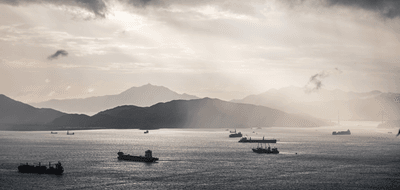


Silver has been building up in certain parts of the coastal seabed since the 19th century – and researchers believe its mounting abundance is due to a blend of furious monsoons, microscopic life, and climate change.
In a new study, scientists from the Hefei University of Technology and Guangdong Ocean University in China studied a sediment core spanning the last 3,200 years of geological history, retrieved from the seafloor off the coast of Vietnam in the South China Sea at a depth of 1,878 meters (6,161 feet).
This part of the sea is an upwelling area where wind-displaced surface waters are constantly restocked with cold, nutrient-rich water from the deep sea. As dynamic parts of the sea, upwellings are very sensitive to environmental changes and can provide an important insight into wider global shifts.
They found that levels of silver buried in the seabed have drastically shot up since 1850, a period that neatly coincides with the Industrial Revolution and the rise of atmospheric CO2 levels. As such, the researchers argue that the increase in silver in the seabed might be the result of human-induced global warming.
Natural processes, like rain and wind, can weather silver-bearing rocks and force them to disperse the metal into the environment. However, the majority of silver that enters the environment is from industrial activity and manufacturing, most notably in the making of some photography equipment.
Although increased industrial pollution might play a role in the latest discovery, the researchers believe that climate change is the prime factor.
They posit that the East Asian Summer Monsoon has consistently increased in intensity along with warming temperatures. With heavier rain and stronger wind, there’s more upwelling to bring nutrients to the sea surface and support marine productivity, the rate at which marine organisms (primarily microscopic phytoplankton) produce organic matter through photosynthesis.
These flourishing marine organisms take up the silver, as well as other trace metals, before perishing and becoming entombed in sea sediment, burying the silver with them.
While the study focused on a small part of the Sea China Sea, the findings might apply to other upwelling areas found along many parts of the world’s major coasts.
It remains to be seen whether the increasing quantities of silver and other valuable minerals are enough to spark further interest in mining the seafloor, although there is plenty of intrigue already. The seabed is loaded with copper, silver, lead, gold, and other raw metals needed to make batteries, like cobalt, copper, manganese, and nickel. Corporations are increasingly keen to get their hands on this loot, but it could have a disastrous impact on the marine environment.
The study is published in the journal Geophysical Research Letters.