Nature
 PUBLISHED





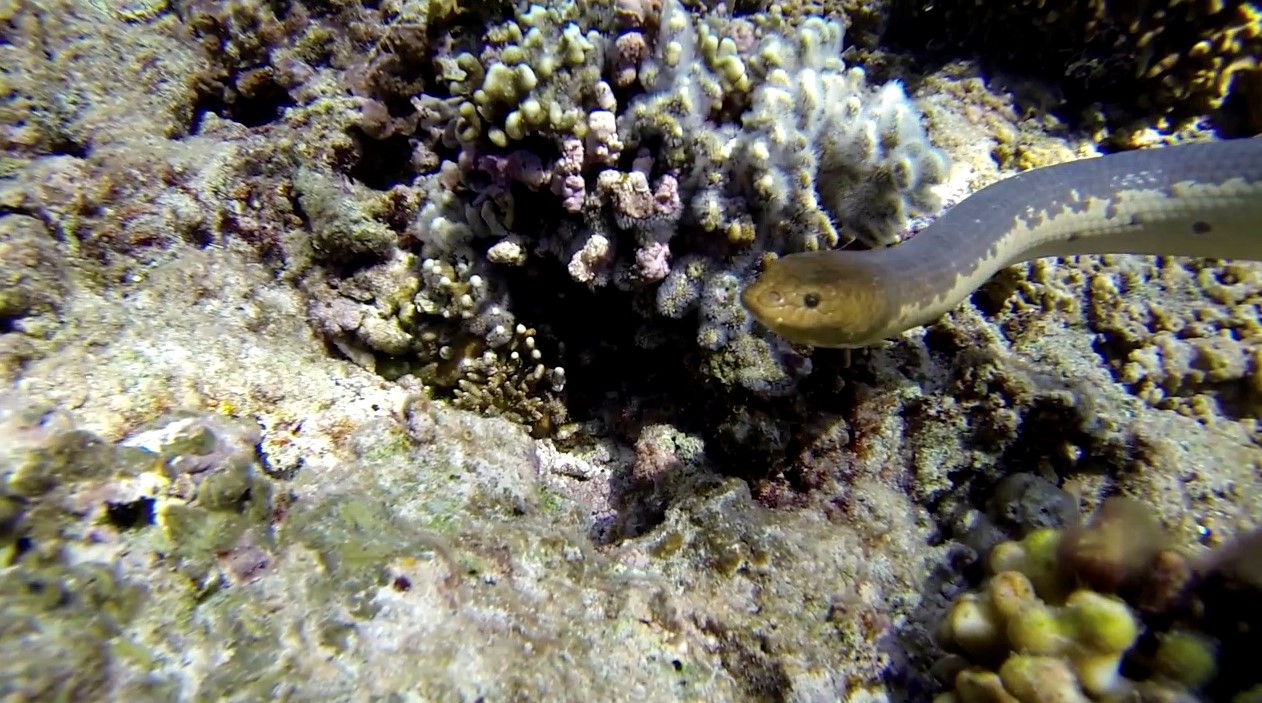
Snakes, while incredible animals, put some people a little on edge and for some, it’s to do with the unique and sometimes slightly unsettling way they glide across the ground. This slithering movement became all the more unusual when some species first took to the water to become sea snakes some 15 million years ago. Ever since, they’ve been adapting to their new environment and a recent study published in Current Biology shows that the way their vision has changed is one of the most amazing adaptations of all.
Led by researchers from the University of Plymouth, UK, the study investigates how snakes’ vision changed to adapt to the varying light conditions involved in ocean living. They discovered that sea snake’s vision has changed from the limited vision of terrestrial snakes, despite being descended from highly visual lizards, to sight capabilities more comparable to that of fruit-eating primates.
They investigated the development of spectral sensitivity in elapids, the family of snakes that have short, hollow fangs, by analyzing their opsin genes, which code for visual pigments and sensitivity to ultra-violet and visible light. They also compared retinal photoreceptors and eye lenses.
Their analyses showed that sea snakes had undergone a remarkable degree of diversification of their visual pigments compared to their terrestrial cousins. One particular lineage of sea snake had expanded its UV-Blue sensitivity, which aids them in seeing well throughout the water column where light conditions can vary significantly. Sea snakes forage on the seafloor but must surface to breathe, so being able to see at all depths is an important adaptation in ensuring they remain alert and able to defend themselves at all times.
In vertebrates, sensitivity to color is dependent on pairs of chromosomes that have two copies of a gene that codes for different aspects of vision. These gene variants can differ from one another, creating a broad spectrum of color vision. This study indicates that some sea snakes have developed a similar degree of color vision through the same mechanism, possessing genes that contain UV sensitive and blue-sensitive variants, demonstrating a surprising shared evolutionary adaptation with a very far removed species.
“In the natural world, species obviously have to adapt as the environment around them changes. But to see such a rapid change in the sea snakes' vision over less than 15 million years is truly astonishing. The pace of diversification among sea snakes, compared to their terrestrial and amphibious relatives, is perhaps a demonstration of the immensely challenging environment they live in and the need for them to continue to adapt in order to survive,” said Dr Simões, a former Global Fellow at the University of Bristol and University of Adelaide, in a statement.
"Our study also shows that snake and mammal vision has evolved very differently in the transition from land to sea. Sea snakes have retained or expanded their color vision compared to their terrestrial relatives, whereas pinnipeds and cetaceans underwent a further reduction in the dimensions of their color vision. This contrast is further evidence of the remarkable evolutionary diversity of snake eyesight."


 1
1