Nature
 PUBLISHED
 1
1


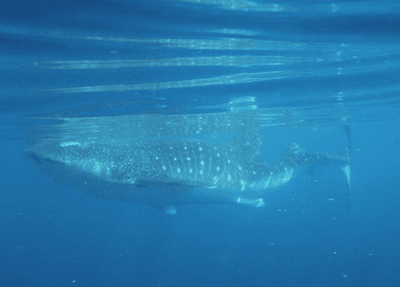


While keeping tabs on the whale sharks around the US coast, scientists came across one individual with an unusual bent back, curved like a curly S towards its tail. They believe the animal might have a form of kyphoscoliosis, making it the first whale shark with a spinal deformity ever recorded.
The 6-meter (nearly 20-foot) long whale shark was first spotted in 2010 by researchers from the National Oceanic and Atmospheric Administration (NOAA)'s National Marine Fisheries Service during regular whale shark distribution monitoring in the north Gulf of Mexico. It was bumped into again in 2013, and a satellite tag was attached to its body, allowing the team to monitor its movement and behavior.
Despite its condition, the whale shark seemed to be doing remarkably well. Over the 98 days the tag remained attached, the shark traveled 2,062 kilometers (1,280 miles) around the Gulf, suggesting the deformity hadn’t stopped the species’ natural inclination to migrate large distances.
The researchers also observed the individual feeding on fish eggs at the water's surface, similar to all other whale sharks in the group.
They noted that spinal deformities have been reported in a range of free-living shark species, but never in the largest of them all: the whale shark.
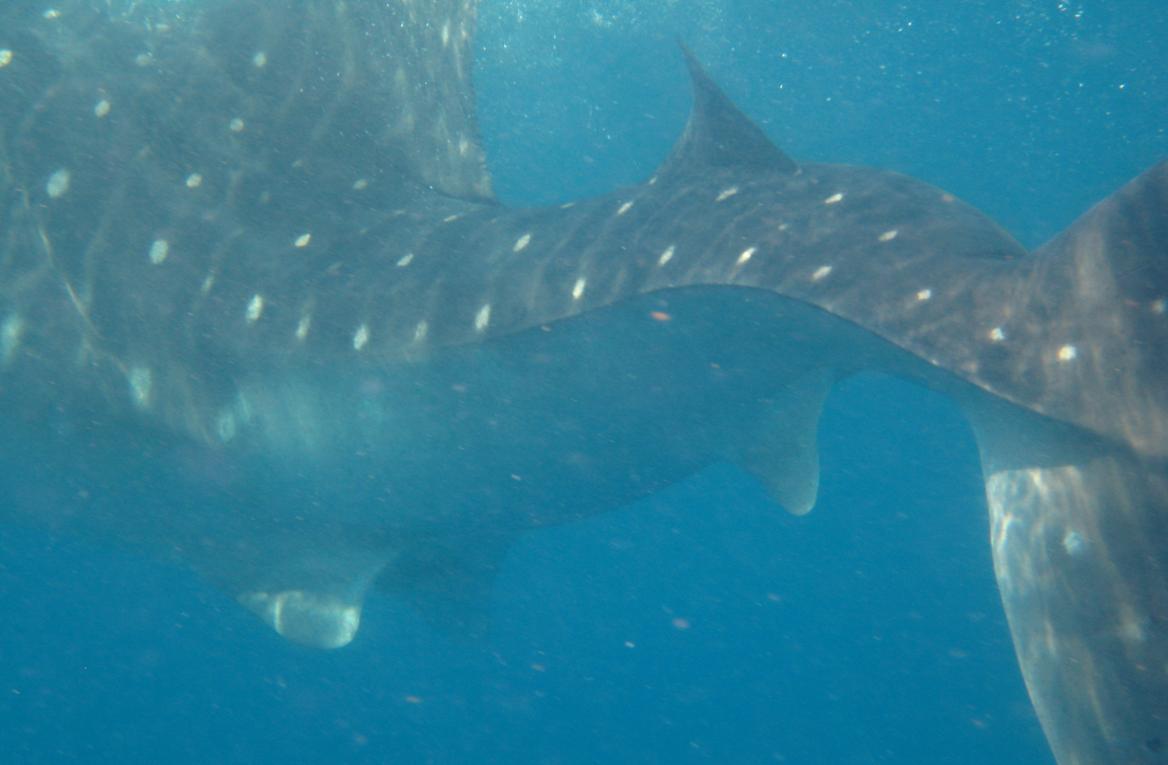
Whale sharks (Rhincodon typus) are gentle giants that slowly cruise great distances across the seas, filter feeding on plankton and small fish as they go. They’re a species of carpet shark that’s the largest known living fish species, with some individuals growing up to 18 meters (~60 feet) in length. Despite its name, it’s not a whale. In fact, it’s the largest living non-cetacean animal by a long shot.
Perhaps this slow, lumbering lifestyle was one of the reasons the whale shark with kyphoscoliosis was able to live largely unaffected by its disability.
“Although spinal deformities change the body shape of affected sharks and increase the drag an animal experiences while swimming, whale sharks do not have a great need for speed compared to their prey, like other pelagic sharks, as they are filter feeders,” the study authors wrote.
In humans, kyphoscoliosis is a condition in which the spine is abnormally curved on two planes: the coronal plane (from side to side) and the sagittal plane (or back to front).
It can be caused by a variety of factors. Some people are born with it (congenital), while others develop it due to other conditions like muscular dystrophy, cerebral palsy, or connective tissue disorders. It can also result from infections, trauma, tumors, or degenerative changes. In some cases, the cause is unknown.
Likewise, it’s unclear why this whale shark had a twisted spine, although the researchers suspect the individual was born with it.
“Although trauma caused by a ship strike or entanglement in fishing gear occurring early in the life of the shark cannot be definitively ruled out, direct observation of this whale shark in the wild on two occasions and further inspection of photographs and videos showed no obvious indication of this level of trauma (e.g., scarring or restitching of the spot pattern), suggesting the spinal deformities were most likely indicative of being congenital, having slowly progressed over time,” they write.
The study is published in the Journal of Fish Biology.