Nature



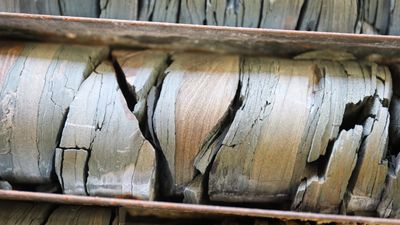


For historians, diaries are invaluable resources – they can tell us not only about a person’s life in a different time, but how those times themselves evolved. For geologists, the equivalent is a core: thin cylinders of sediment and rock, often hundreds of meters long, taken directly from the earth that provide a physical record of millions – or even billions – of years of its evolution.
In Australia, a collection of mudstone cores has now illustrated just how important these geological “diaries” can be. In a new study, researchers have described how they found thousands of tiny fossils in the record, dating from 1.4–1.75 billion years ago – and in doing so, added vital clues to the story of how complex life on Earth evolved at all.
The origins of life
As the saying goes, you have to learn to walk before you can run. In the case of evolution, you have to be simple before you can become complex.
“All life on Earth can be placed into one of two types which are fundamentally different at the cellular level,” explain Maxwell Lechte, a research associate at the University of Sydney, and Leigh Anne Riedman, a researcher at the University of California, Santa Barbara (UCSB), in an accompanying article in The Conversation.
“Prokaryotes (bacteria and archaea) have simple cellular organisation and are mostly single celled,” the pair write. “Eukaryotes – including all animals, plants, algae and fungi – are […] much more complicated[.]”
Indeed, prokaryotes are in every way the simpler organisms. They consist, usually, of one single cell; that cell has no mitochondria or nucleus; even their DNA is fundamentally different from our own, being structured primarily in rings instead of strings.
Because of this simplicity, they are incredibly successful: they make up the vast, vast majority of all living organisms on Earth – there are something like five nonillion of them, which is a number so mind-bogglingly large that words don’t really do it justice. Suffice it to say that if you were to put “every prokaryote on Earth” on one side of a scale and “the entire planet measured in individual teaspoons” on the other, the prokaryotes would still win. By a factor of, like, 1,000.
And not only are prokaryotes the most successful in terms of number, they’ve also been around far longer than anything else. The earliest life on Earth emerged around four billion years ago, and these were marine prokaryotes. As best we can tell, they had the entire planet to themselves for at least two of those four billion before they had the idea to work together and merge into the first eukaryotes.
That little symbiosis was about to change the world forever – but exactly how and when did it happen? Well, that’s a bit less settled.
The new eu-topia
Eukaryotes may be the more complex organisms, but with that comes a level of vulnerability. Prokaryotes can survive in just about any environment: at the bottom of the ocean; in the most arid place on Earth; inside your body; even in places seemingly without any of the basic ingredients for life. Eukaryotes, on the other hand… well, we come with a rider.
“Nearly all eukaryotes alive today use oxygen for their survival,” point out Lechte and Riedman. “That’s because aerobic respiration – breaking down food using oxygen – provides the vast amounts of energy that complex life demands.”
Here’s the problem, though: our planet wasn’t always the lush, oxygenated place it is today. Before about 2.5 billion years ago, the atmospheric levels of that oh-so-important element were basically negligible – rising sometimes, ebbing at other times, but never high enough to support oxygen-breathing life.
Even after that, in the wake of the so-called Great Oxidation Event – the first time in Earth’s history when oxygen levels rose to a stable, significant level – oxygen levels were still only about 1 percent of what we experience today. “We would not have been able to breathe,” pointed out Susannah Porter, a professor at UCSB and senior author of the new paper, in a statement this week.
So how did eukaryotes survive?
For some experts, the tentative answer is a radical one: maybe, they suggest, early eukaryotes didn’t need oxygen after all. “The idea that oxygen led to eukaryogenesis has been taken for granted,” argued Tim Lenton at the University of Exeter, who wasn’t involved in the new study. Lenton was a coauthor on a 2022 review that proposed that the emergence of eukaryotes depended on atmospheric hydrogen, rather than oxygen, with all respiration being anaerobic.
“In fact, mitochondrial aerobic respiration probably emerged later,” he said at the time, “having only become globally widespread within the last billion years as atmospheric oxygen approached modern levels.”
It’s possible – but it’s not a slam dunk. “The ancient world in which early eukaryotes evolved remains shrouded in mystery. And so many fundamental aspects regarding their nature are unknown,” explain Lechte and Riedman.
“Only the fossil record can tell us about long-extinct lineages,” they write. “And only geology can offer a window into the kind of world these organisms lived in.”
The core of the problem
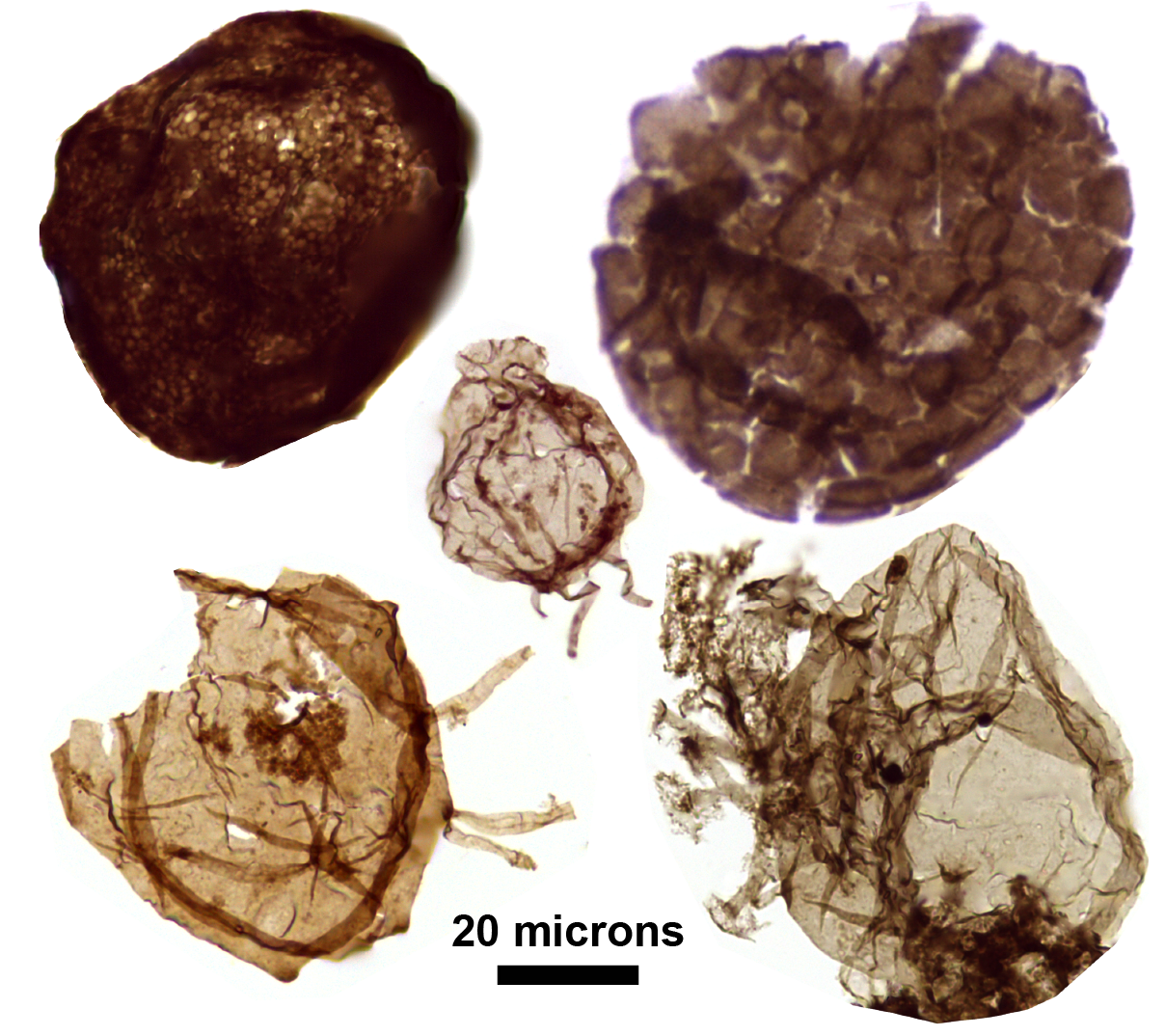
The earliest eukaryotes on Earth are now tiny fossils in the ground – they’re rare, but they turn up just about anywhere there’s rocks. The ones from Australia’s Northern Territory are special, though. At up to 1.75 billion years old, they’re the oldest confirmed eukaryote fossils ever found, anywhere.
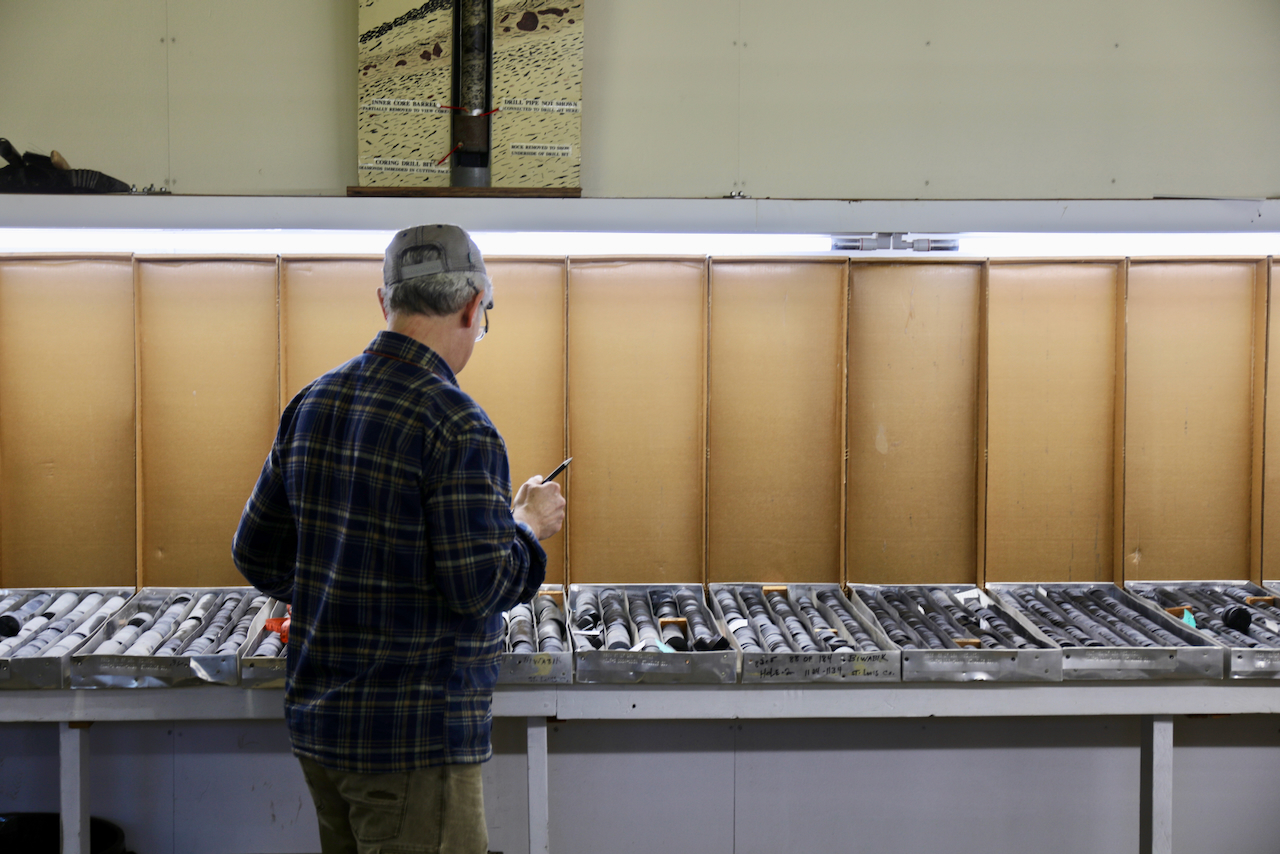
It made sense, therefore, that the Northern Territory Geological Survey is where the team behind the new study went to look for evidence of their development. “We crushed up samples of the mudstone cores stored in Darwin, then dissolved them,” Lechte and Riedman report. “We identified more than 12,000 fossils by analysing the organic residue left behind by this dissolution under a microscope.”
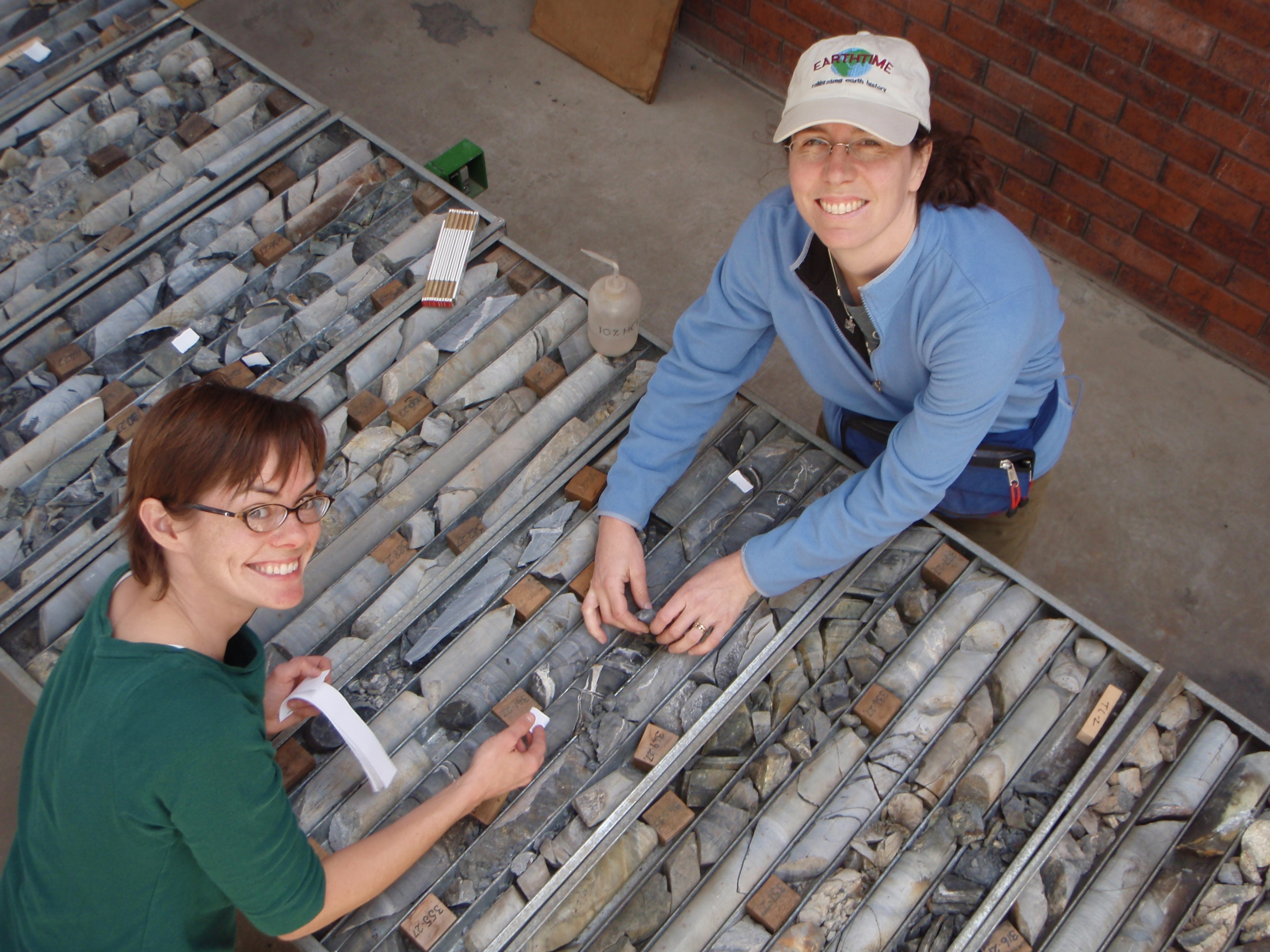
Then they took a look at the cores themselves. If you know what to look for, a core can tell you a lot about the past world: the particular type of sediment in a layer will reveal what the environment was like at a certain point; the presence or lack of certain minerals can tell you how much oxygen was present. And when the team looked for all those things, they found something surprising: that these ancient eukaryotes didn’t just prefer higher oxygen levels – they seemed to stick to them exclusively.
“Eukaryote fossils were found in environments ranging from coastal mudflats to the open sea,” explain Lechte and Riedman. “But they were present only in samples deposited in oxygenated settings.”
“Samples from oxygen-free environments contained only simple, prokaryotic forms.”
It’s a rejection of the idea that eukaryotes evolved before oxygen levels rose on Earth. In fact, it seems that high oxygen levels were crucially important to their development – so much so that the team inadvertently solved a second conundrum along the way.
Puzzles upon puzzles
For an extremely long time, eukaryotes were around, but far from diverse or abundant.
“The fossils that are 800 million years old, and the ones 1.7 billion years old are, for the most part, the same cast of characters,” said Riedman and Porter – and that’s always been a bit of a headscratcher.
It makes sense, though, if they could only survive in small, precariously oxygenated patches. It wouldn’t be until later, after a couple of mass extinctions opened up some ecological niches and various cyanobacteria grew numerous enough to make oxygen faster than everything else could gobble it up, that eukaryotes could afford to stretch their legs and become the complex beings we know, love, and are today.
Still, as far as they had to come, the eukaryote fossils were already surprisingly well-developed even all that time ago. “Although these are the oldest eukaryote fossils yet described, the diversity and variety of form achieved by this point suggest they have a deeper history,” Porter said.
And uncovering that little mystery? Well, that’s a question for a whole other study – so watch this space.
“Studies like this give us an opportunity to understand these little guys as organisms,” Riedman said. “Rather than just viewing them as a name or part of a stamp collection, we can picture where they were living, what they were doing and who they were.”
The study is published in Nature.


 1
1