Nature
 PUBLISHED
 5
5


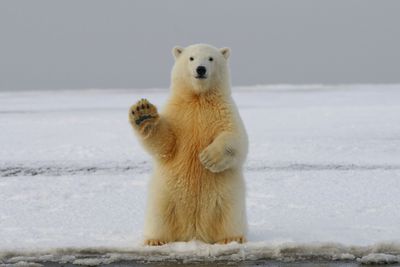


The genes of polar bears are showing they’re adapting in the face of a rapidly evolving world – and that is not necessarily good news.
Scientists at the University of East Anglia studied the genetic material from blood samples of 17 polar bears, 12 of which were living in the colder reaches of northeastern Greenland and 5 from warmer southeastern Greenland.
They paid close attention to so-called "jumping genes," aka transposons, segments that can move around within the genome and influence gene activity. Using RNA sequencing to track which genes were switched on or off, the team uncovered striking differences between the two populations.
The analysis revealed that bears living in the warmer region have changes in gene activity linked to heat stress, aging, and metabolism. This suggests, the researchers said, that the polar bears are adapting to survive warmer climates.
“Essentially this means that different groups of bears are having different sections of their DNA changed at different rates, and this activity seems linked to their specific environment and climate,” Dr Alice Godden, lead researcher from the School of Biological Sciences at the University of East Anglia, said in a statement.
“This finding is important because it shows, for the first time, that a unique group of polar bears in the warmest part of Greenland are using ‘jumping genes’ to rapidly rewrite their own DNA, which might be a desperate survival mechanism against melting sea ice,” she added.
While it's positive that polar bears do have some capacity to adapt to a warmer world, the new research suggests that this struggling species is facing a huge challenge ahead.
“As the rest of the species faces extinction, these specific bears provide a genetic blueprint for how polar bears might be able to adapt quickly to climate change, making their unique genetic code a vital focus for conservation efforts,” Dr Godden commented.
“However, we cannot be complacent, this offers some hope but does not mean that polar bears are at any less risk of extinction. We still need to be doing everything we can to reduce global carbon emissions and slow temperature increases.”
This is just one way polar bear populations are reacting to climate change. Over in North America, scientists have documented that warming temperatures and melting sea ice are forcing polar bears to move further inland and grizzlies north, causing their habitats to overlap. This had led to a rise of the two species interbreeding, creating hybrid “pizzly” bears.
The researchers of this latest study are keen to look at other polar bears scattered across the upper stretches of the Northern Hemisphere. There are around 20 sub-populations around the world, and they're eager to see how they’re faring in a time of dramatic flux.
“I also hope this work will highlight the urgent need to analyse the genomes of this precious and enigmatic species before it is too late,” said Dr Godden.
The study is published in the journal Mobile DNA.