Nature
 PUBLISHED


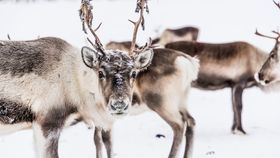


Reindeer vs climate change. The age-old battle. This year, climate change has definitely been winning, but now new research from Sweden has shown that reindeer are actually pawing back ground as it turns out they have a part to play in slowing down climate change.
Writing in the journal Environmental Research Letters, scientists have revealed that reindeer grazing on shrubbery on the Arctic tundra make the ground more reflective, increasing the amount of solar radiation being reflected back into space rather than being absorbed.
The amount of solar energy the Earth reflects back is called albedo. Ice and snow have a high albedo, as they prevent heat absorption of the Sun by reflecting the light and heat back into space. High shrubbery cover lowers the icy tundra’s surface albedo, as the reflective ground is not accessible, which means higher energy absorption, warming, and of course melting.
So when the reindeer graze, especially in the summer, they are effectively clearing the ground, boosting the landscape’s albedo.
"Our theory was that heavy grazing by reindeer increases summer albedo, through a reduction in shrub height, abundance and leaf area index,” explained lead author Dr Mariska te Beest of Umeå University in Sweden in a statement. “The effect reindeer grazing can have on albedo and energy balances is potentially large enough to be regionally important.”
Reindeer, otherwise known as caribou, can range up to 5,000 kilometers (3,100 miles) on their migration to the Arctic. The researchers carried out their study in the Troms region in the far north of Norway during the summer. Using land surface computer modeling, the researchers determined that higher densities of reindeer changed the tundra vegetation landscape, which corresponded with a substantial increase in albedo.
“Our results show that reindeer have a potential cooling effect on climate, by changing the summer albedo,” Dr te Beest added. “Although the estimated differences might appear small, they are large enough to have consequences for the regional energy balance.”
The authors suggest that their finding “highlights the importance of mammalian herbivores for the Earth system beyond their local grazing impacts,” and that the management of reindeer could be a potential tool for combating future global warming.
Of course, the irony is that climate change has been the reindeers’ biggest threat over the last few years, with warming weather causing mass starvation, melting permafrost resurrecting deadly diseases and resulting in large culls, and the changing climate even causing them to shrink in size. So we can't help but give a little cheer that reindeer themselves might actually be a way of combating global warming.
Suck it climate change, we’re on Team Reindeer.