


 Nature
 PUBLISHED




In David Attenborough’s TV career he has ventured to the heart of Papua New Guinea in search of birds-of-paradise. He’s sailed through the treetops in Croatia to admire some of Earth’s most impressive botanical species, and even plunged into the deep in submersibles to explore coral reefs. For all that distance and ambition, however, he’s never actually done a deep dive into the wildlife in his homeland. That is, until now.
Wild Isles is the latest release from Sir David Attenborough and the BBC, and it focuses on the animals found in nature across the British Isles. While most people might think of foxes, seagulls, and badgers when contemplating British wildlife (all of which feature), there are some surprising species that crop up across the series.
The first episode, Our Precious Isles (the title screen to which is backdropped by a seal being batted in the air by an orca), features memorable moments including woodland "lords and ladies" plants (Arum maculatum) that hold insects hostage just long enough to cover them in pollen.
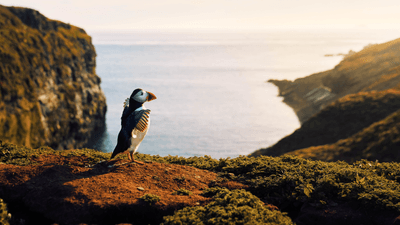
Then there's dormice that travel immense distances in the space of a single evening to secure enough honeysuckle for their young. And our favorite? The tough side to the gentle puffin that goes to war with gulls trying to steal its food.
Filmed in the Farne Islands, Northumberland, and Skomer Island in Pembrokeshire, the sequence sees greedy gulls trying to mug puffins returning to their burrows for their hard-won catch. The bulky beaks of puffins come in handy when fishing as they typically scoop up around 10 eels before heading back to their burrows, but reports have put the record number of sand eels in a birds’ beak at around 50 to 80 fish. Not a bad swag bag for thieving gulls, but one worth fighting for when you've got hungry chicks waiting.
Puffins, looking like sad clowns as they do, might seem like easy pickings for a rambunctious gull, but we soon see these black and white birds aren’t so easily pushed around. Catch the full, nail-biting sequence when Wild Isles airs on BBC One and iPlayer on March 12 at 7pm GMT.

"In my long life, I’ve been lucky enough to travel to almost every part of the globe and gaze upon some of its most beautiful and dramatic sights,” said Sir David Attenborough in a statement seen by IFLScience. “But I can assure you that nature in these islands, if you know where to look, can be just as dramatic and spectacular as anything I’ve seen elsewhere."
"The British Isles are globally important for nature. In this series we’ll show you why that is so and celebrate the wonders of these islands that we call home.”


 1
1