Humans
 PUBLISHED




Excrement may not strike us as something doctors should use to treat patients. In fact, most people today would view feces with revulsion – but this was not always the case. In fact, there are many ancient Greco-Roman medical texts that mention the waste product being used for medical purposes. Now, researchers have found the first direct evidence that such remedies were used by some Roman-era physicians.
Ancient medicine was very different from its modern variation, though one could argue that the shadows of the past still linger in some areas of modern practice and wider culture. Regardless, for centuries before the advent of modern scientific medicine, health, illness, and treatment were all intimately wrapped up with scent and ritual. Consider the incense-filled temples of ancient Egypt or the perfumed baths of Imperial Rome; fragrances and smells played an important role in purification, healing, and protection.
It is within this complex medical framework that the use of feces in treatments fits. In addition to the use of strong-smelling oils, herbs, and resins for treating disease or warding off evil forces, excrement – particularly animal dung – was mentioned in numerous medical texts as a remedy for various ailments. Egyptian sources from the 16th century BCE describe the medicinal value of dung mixed with other aromatic agents.
Later still, authorities like Pliny the Elder and Galen regarded dung treatments as good for conditions such as inflammation, infections, and reproductive disorders. Although they may have been spoken about with euphemisms, they were nevertheless understood as part of ancient pharmacology.
But despite their prevalence in medical texts, there has been no direct material confirmation of these remedies in Roman medicine. This is likely due to the fragile nature of the substance, which easily breaks down over time, as well as the taboo surrounding the topic among scholars. Another impediment relates to the potential location of the evidence in question.
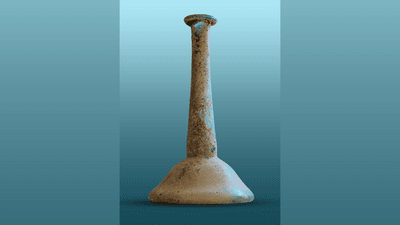
For instance, ancient medicine was closely associated with what we would identify as cosmetics today. Within this context, old unguents often blurred the lines between healing, hygiene, and magic, but very few researchers have paid attention to a particular form of glass vessel, known as unguentaria, which are typically classed as perfume or oil containers.
As such, evidence of poop-related treatments may have been hiding under the noses of generations of researchers who were looking in the wrong place. That is, according to a new study.
The evidence for this came from an unguentarium discovered in a storage room of the Bergama Museum in Turkey by Cenker Atila, an archaeology professor at Sivas Cumhuriyet University. He noticed that the glass vials, which dated to the 2nd century CE, contained crusty substances.
Using gas chromatography-mass spectrometry (GC-MS), an analytical technique that breaks down samples into their chemical parts, Atila and his colleagues, Dr İlker Demirbolat, a chemist, and Dr Rana Babaç Çelebi, a specialist in the history of medicine, found coprostanol and 24-ethylcoprostanol molecules in the crust. These are produced in the guts of humans and other animals and are a biomarker for poop.
From their analysis, the team believes the ratio of these molecules means the vial crust came from human excrement.
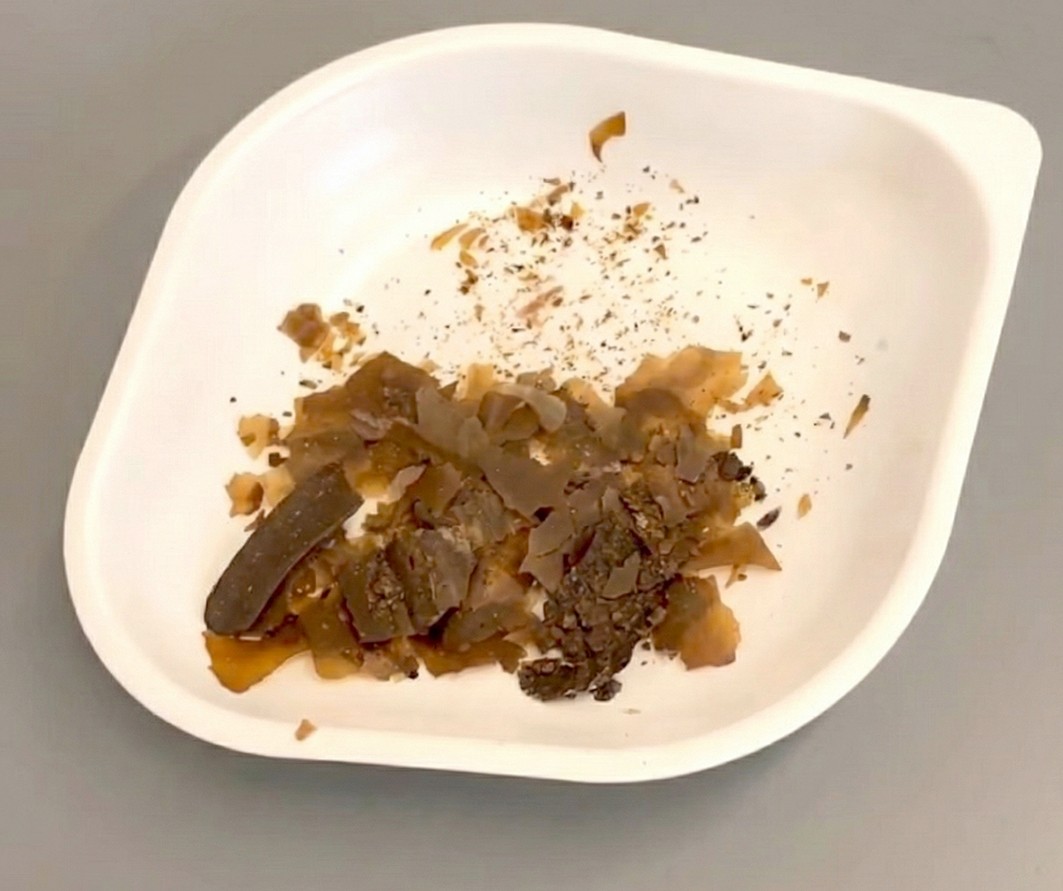
The team also found traces of carvacrol in the substance, which is a chemical that comes from thyme oil.
“I specialize in ancient glass artifacts, and several years ago I wrote a book titled Glass Objects from Bergama Museum,” Atila told IFLScience. “While working in the storage rooms of the Bergama Museum for this book, I noticed that some glass vessels contained residues.”
“I later mentioned these residues to my research colleagues. We then visited Bergama together, obtained the necessary permits, and collected material from the glass bottles (unguentaria),” Atila continued.
“Residues were found in a total of seven different vessels, but only one yielded conclusive results. In this sample, we identified human feces mixed with thyme. Because we are well acquainted with ancient textual sources, we immediately recognized this as a medicinal preparation used by the famous Roman physician Galen. We therefore proceeded to publish our findings without delay.”
Can we conclude that these vessels are indeed the elusive evidence of therapeutic feces? Well, there are some compelling reasons to think so. Firstly, the vessels were discovered in Bergama, which used to be known as Pergamon, the hometown of Galen, the influential Roman and Greek doctor who described the use of dung in his own work. Galen lived from 129 to 216 BCE, which is also the right date range for the glass vials.
It is likely, if this is evidence of a medical remedy, that the carvacrol was used to mask the scent of the feces for the patient. There is no way for us to ascertain at this point what the remedy may have been used to treat, but it nevertheless appears to be a rare leftover that supports their use in reality, not just in the medical texts.
The study is published in the Journal of Archaeological Science: Reports.