Nature
 PUBLISHED
 3
3


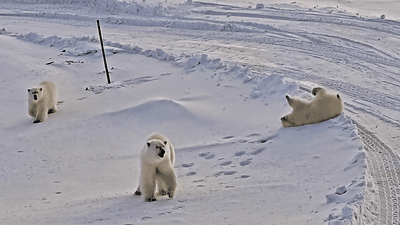


Polar bears are one of Earth’s most impressive animals. They are immensely powerful and highly intelligent, which is great right up until you remember they’re also apex predators capable of hunting humans.
A bear’s got to eat, but we humans like to live, so wouldn’t it be great if there was a way we could spot a polar bear before anyone actually saw it? Turns out, there’s an emerging Artificial Technology (AI) for that.
After years of development, seeing the Bear-Dar simply doing its job as intended is very satisfying.
Alysa McCall
Introducing “Bear-Dar”, an AI-powered radar system developed by Polar Bears International (PBI) in partnership with Spotter Global. It eliminates the element of surprise for human and polar bear encounters by setting off an advanced warning. If the polar bears continue to get too close for comfort, a deterrent can be initiated. A nice idea, but does it work?
PBI has now announced that, for the first time, Bear-Dar has been successfully deployed in the High Arctic. The technology was able to detect a polar bear mom and her two cubs and alert staff at the Eureka Research Station in Nunavut, Canada.
Research station teams then safely guided the family away using trucks and, with minimal encouragement, they were headed back towards sea ice – their preferred hunting habitat. Humans: safe. Polar bears: safe. Scientists: happy.
“After years of development, seeing the Bear-Dar simply doing its job as intended is very satisfying,” PBI Director of Science Alysa McCall told IFLScience. “Knowing that it detected wild polar bears in Eureka for the first time gave station staff time to raise the alert for the bears’ approach and safely plan their response, and ultimately helped avoid an encounter feels like a big achievement that we’ve been working toward for a while.”
A moment to celebrate, then, but there’s still work to be done on ironing out a few inconsistencies with Bear-Dar’s detection. One notable issue is that polar bears appear much smaller on the radar tech than they are in real life and in comparison to Arctic wolves, which are much smaller.
We are kind of thinking about it as a 'stealth mode' for polar bears
Elbert Bakker
“We don’t know why this is yet – we are kind of thinking about it as a 'stealth mode' for polar bears,” explained Elbert Bakker, Research Support Specialist at PBI, to IFLScience.
“It could be that their soft furry bodies absorb some radar signal, or something to do with their hair scattering the signal? Those are just initial thoughts, but we need to examine more data to look at this more closely.”
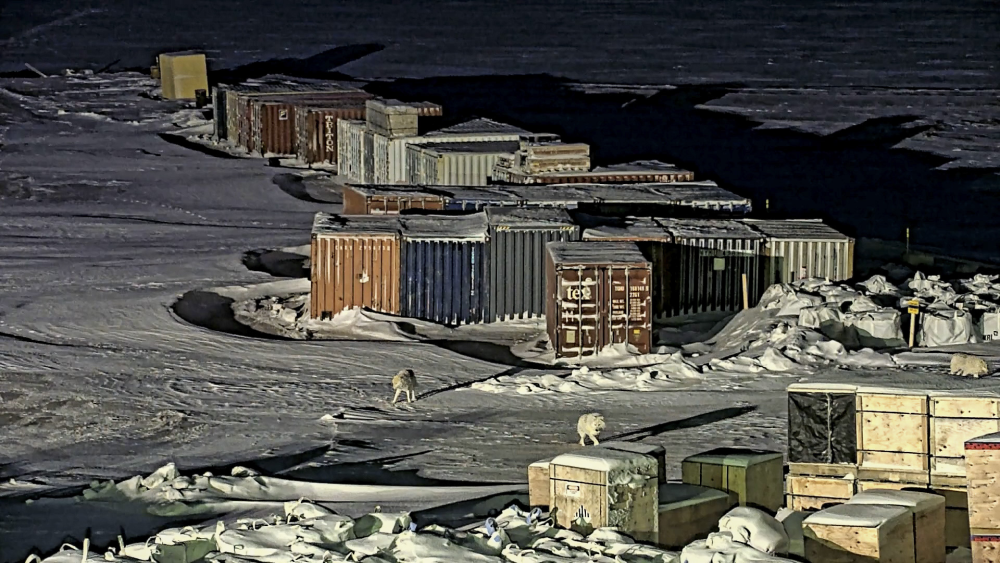
It seems location is key to fine-tuning Bear-Dar so it’s tailored to a region’s geography, weather, wildlife, and the activities of the staff working there. The teams will continue to refine the model, but its success at Eureka marks a pivotal moment for a deterrent we’ll probably be needing more often in the future.
Polar bear attacks, though rare, are highly fatal and research by PBI found that polar bears in poor condition are the most likely to be involved. As sea ice shrinks under climate change, there are going to be more hungry polar bears spending more time on land. So, there’s never been a more critical time to innovate technologies that can safeguard both bears and people.
Bear-Dar is helping us to love polar bears the right way – from a healthy distance.