Nature
 PUBLISHED
 19
19





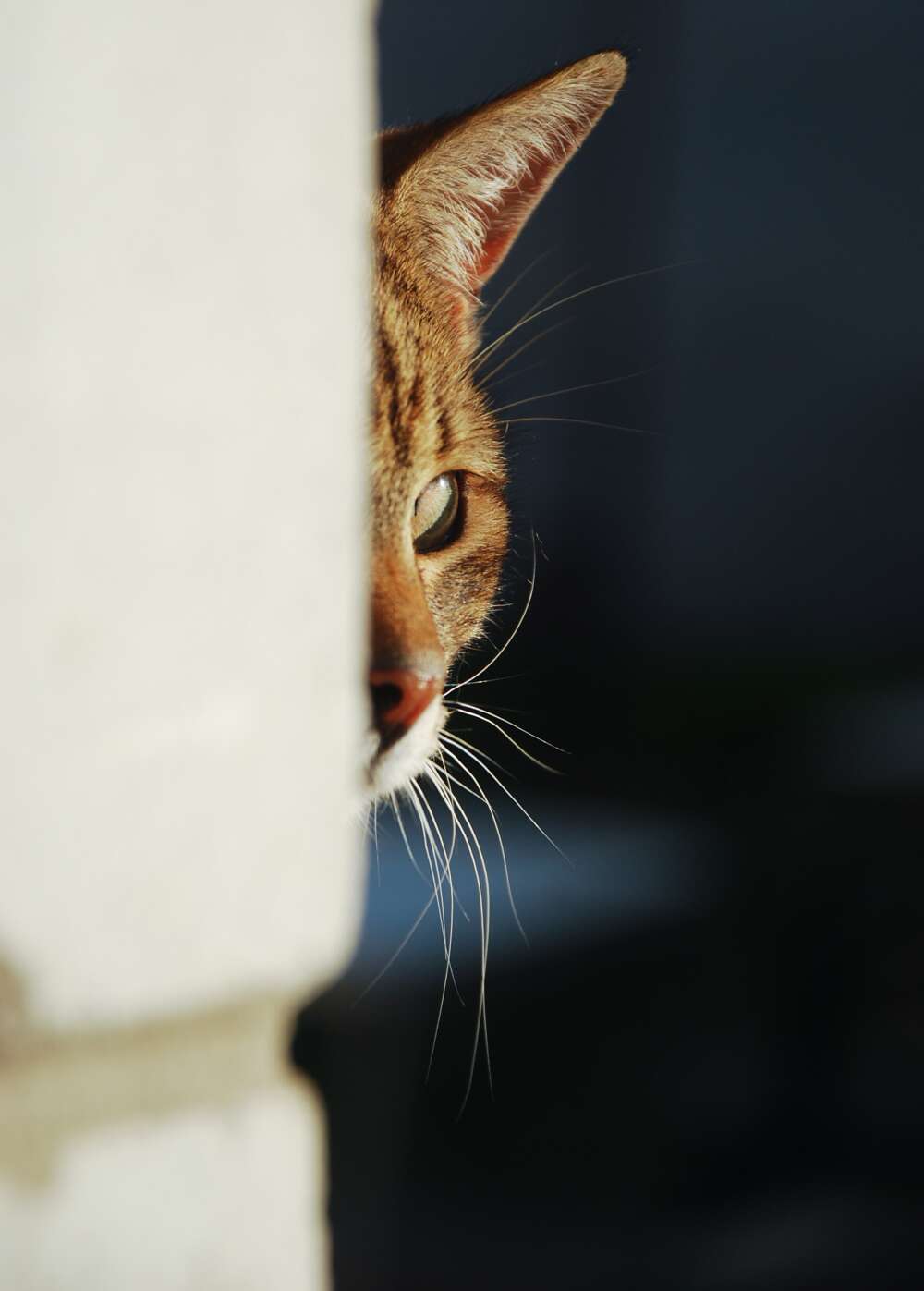
Is your cat a total creep? Do you wonder how it is they always know where you are, and why they're looking at you like that? Well, now science has an answer as to why your cat can always find you, as researchers have discovered that cats can use the sound of their owner's voice to mentally map out where they are in the house.
This discovery demonstrates that cats’ cognition ticks off something called “object permanence” meaning they’ve established that something can still exist even if they can’t see it. While previous studies have demonstrated this cognitive talent in the humble house cat (Felis catus), this is a novel discovery in establishing how hearing can play a role in monitoring their environment and the moving objects within.
The task of pinning down the science of cat creeping fell to cat-owner Saho Takagi of Kyoto University, Japan. Takagi and colleagues put 50 cats to the test for a new paper published in the journal PLOS ONE. The cats were a combination of pets and cats cared for at cat cafes.
They were looking to see if the cats exhibited something called socio-spatial cognition, whereby an animal mentally keeps tabs on the whereabouts of others. This can be achieved through several senses (ever smelt someone coming?) but for the purposes of this study, the researchers were looking at sound.
Cats were placed alone in a room that had a window, two doors, and was kitted out with cameras for observation. Speakers were positioned outside the room to play recordings of either a stranger’s voice, an owner’s voice, the vocalization of a cat familiar to the one being tested, or non-social sounds (generic electrical noises). These were then played at either the same location, or changing locations, to see how the cats reacted to sound sources “teleporting” or staying still as the sound moved between speakers.
Analyses of the video recordings later revealed that cats seemed less surprised when their owners' voices sounded from the same speaker — and therefore same location — but were perplexed when their owners’ voices suddenly moved to a different location/speaker. In case you’re not familiar with the expression of a confused cat, it’s often portrayed with fervent ear twitching.
“Results showed that cats were surprised when their owner appeared to be “teleported” to a new, unexpected location, but they did not react in the same way when tested with non-social stimuli,” wrote the study authors. “These results suggest that cats hold a mental representation of the unseen owner and map their owner’s location from the owner’s voice, showing evidence of socio-spatial cognition.”
So, if you spent lockdown working on your hide-and-seek skills we wouldn’t recommend taking on your cat. They don’t need to have eyes on you to know where you are.