Nature
 PUBLISHED
 6
6


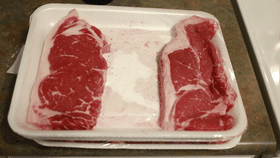


While fine diners might think ordering a steak “bloody” is the correct way to order, it’s actually incorrect as a statement. The red liquid that leaks out of meat and soaks into its little packaging diaper isn’t actually blood at all. According to the American Meat Science Association, it’s a natural byproduct known to those in the business as “weep” or “purge”. Delicious.
While it’s a short leap to imagine that blood might seep from a piece of decapitated muscle, the red liquid is a mixture of water and myoglobin. It’s released as a result of the way meat is most commonly transported, which involves it being frozen and defrosted.
What is myoglobin?
Myoglobin is a protein that binds to iron and oxygen and is found in the cardiac and skeletal muscles of most vertebrates and pretty much all mammals. That includes the cows, pigs, and sheep that are widely consumed worldwide.
When meat is frozen, water contained within it (don’t forget that our own meat is 76 percent water) turns to ice crystals. When switching states of matter, the water expands and develops spiky edges, which cuts up muscle cells.
Why is it red if it's not blood?
When the above-mentioned ice crystals later defrost, the water leaks out of the meat with some myoglobin in tow. Being a protein that binds to iron and oxygen, the myoglobin brings with it that blood-red we associate with, well, blood. This also explains why steaks appear to shrink as they're cooked because the proteins lose their abilities to hold onto water and more myoglobin-touting water leaks out.
While fresh cuts of meat from a farmer’s shop or market might have a small amount of real blood seeping out of them, animal carcasses are bled after being killed removing the vast majority from the body. Meat bought from larger stores usually has some way to travel and to survive the journey without going bad it's frozen and defrosted. This is why meat packaging often comes complete with a little towel for soaking up that myoglobin juice.
That said, not everybody is so concerned with the freshness of the meat they eat. Have you heard about high meat? A "trend" where people willingly consume meat that’s already begun to decompose.
Yikes.
[H/T: Business Insider]