Nature
 PUBLISHED
 15
15

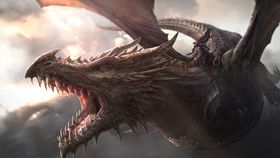


The fossilized remains of a toothy pterosaur that once soared the skies more than 130 million years ago has been reassigned to a newly identified group of pterosaurs named for none other than House Targaryen, Game of Thrones' most notorious family.
Targaryendraco wiedenrothi represents one of the most intact skeletons of its genera to have been discovered, complete with ribs, long wings, and a snappy lower jaw characterized by two sharp, jutting teeth. The unusually dark colored fossil bones were first discovered in a clay pit in 1985 by an amateur fossil hunter named Kurt Wiedenroth and were subsequently donated to a natural history museum.
But before the pterosaur joined the ranks of George RR Martin’s fictional beast brood, the flying reptilian was first classified within the Ornithocherius group, an “elusive” species with a “complex history” of taxonomic disputes. Over the decades, several of the species have been transferred to different genera, largely because of a lack of both discovered fossils and an understanding of flying reptile species.
A phylogenetic analysis of data and anatomical comparisons with other species found that six other already known pterosaurs are closely related to the Targaryendraconia group. These species are similarly described in the journal Historical Biology.
“All these species are from shallow coastal environments and probably fed on fish,” Rodrigo Pêgas, study leader and paleontologist at Universidade Federal do ABC in São Bernardo do Campo, Brazil, told National Geographic. “The slenderness of jaw is the main feature they share… it’s the most extreme slenderness in the jaws of any toothed pterosaurs.”

Reassigning new fossils through analytical methods is expanding scientific understanding of the “overlooked lineage of flying reptiles,” reports the publication.
“Our results help in filling the ghost lineage and unveils a previously unappreciated diversity for the lineage leading to Cimoliopterus, allowing for the recognition of a new clade that dates back to the Hauterivian and that reached a global distribution by the beginning of the Late Cretaceous. More discoveries of pterosaurs increases our understanding,” wrote the authors. Altogether, Targaryendraconia demonstrates “that the diversity of Cretaceous toothed pterosaurs was higher than previously thought.”
Targaryendraconia’s newly categorized genus is largely determined by its narrow jaw, which was found to be different than the Ornithocherius group’s rounded jaw. As for its unusual name, which translates as Targaryen dragon? The fossils are abnormally dark in color, a possible result of the minerals found in the rocks that have housed them since the Cretaceous period. The Engelbostel clay pit in Hannover, Germany, is home to claystone and silty mudstones that are partly calcareous and may have contributed to the dragon-like coloring.
That and Pêgas said he was a fan of the show.
[H/T: National Geographic]