Nature
 PUBLISHED




When it comes to sex, things can get pretty weird in the wild. Unusual mating rituals from the elaborate to the downright dangerous are rife in all walks of life, and among the deadliest sits spider courtship. Many arachnid species exhibit sexual dimorphism where the female is larger than the male, and when mating it's usually the biggest who sits in the seat of power. As such, males must tentatively take their approach as, if the female’s not feeling it, one false step could spell death.
Some spider species have adapted a behavior where they wrap up food as a gift to reduce his risk of being cannibalized. Others perform elaborate dances meant to impress. Now, new research published in the journal Animal Behaviour has revealed that some spiders opt for a slightly less charming approach to securing reproductive success by tying up their partner to avoid injury or escape. Grim.
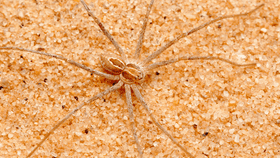
Far from the drawn out and elaborate approaches of other arachnids, a group of running crab spiders will simply dash in and start biting when they come across a female. The “attack”, as study author Lenka Sentenská from the University of Toronto Scarborough, Canada, describes it, sees the male bite the female which triggers a “playing dead” response. At this point, the male would round up her limbs with some silk and proceed to mate for up to 19 minutes, on average, before making his exit.
While undeniably brutal, the approach improves the males’ chances of surviving the encounter. Some males were observed rushing in to begin the attack only to get eaten by the female before they could start biting, demonstrating the risk involved in such escapades. Females were also not entirely powerless after being bound and several were observed busting out of their chains with a few quick jerks.

Sentenská suspects that the difference between encounters where the female stays still and where she breaks free may be the influence of chemical signals in the silk binding, which communicate information about the male’s suitability. If he is considered worthy, she will tolerate the encounter but if she suspects he’s no use they may break free and try to kill them.
Running crab spiders are a group of around 600 species found in Europe, Asia, and Africa, with the focus for this study being Thanatus fabricii from Israel. Their aggressive mating strategies had eluded scientists until now because the initial approach that sees the female tied up is over so quickly it required slow-motion footage to get a clear idea of what was going on.